
Table of Contents
You’ve made a grilled chicken sandwich before. Maybe a dozen times. And yet something about the last one left you thinking it was fine — not memorable, just fine. That gap between fine and genuinely great is smaller than you think. These three recipes close it, one honest upgrade at a time.
Here’s what most cooking content won’t say out loud: the grilled chicken sandwich fails not because of bad ingredients, but because of small, fixable habits. Skipping the rest. Using the wrong bun. Forgetting acid. Grilling cold chicken straight from the fridge. Each mistake costs you something — moisture, texture, flavor — and the result is a sandwich that’s technically cooked but culinarily flat.
This article gives you three distinct grilled chicken sandwich recipes, each built around a real improvement over the average version. You’ll also get a clear breakdown of what actually makes this sandwich work — and why — so every batch you make from here gets better automatically.
What you’re probably getting wrong (and how to fix it before you even light the grill)
Before you look at any recipe, it helps to understand the structural problems. Most grilled chicken sandwiches fall short in one or more of these areas:
- Cooking cold chicken: Straight-from-the-fridge chicken takes longer to cook through, which means the outside overcooks by the time the center is safe to eat. Pull your chicken out 20–25 minutes before it hits the grill.
- No moisture insurance: Chicken breast has almost no internal fat to protect it from heat. Without a brine or marinade, you’re relying entirely on timing — and that’s a narrow margin. A 30-minute saltwater brine (1 tablespoon of salt per cup of cold water) changes the game entirely.
- Uneven thickness: A chicken breast that’s thicker on one end than the other will always give you one part undercooked and one part dry. Pound it to roughly three-quarter inch thickness before marinating.
- No acid in the build: Every great sandwich has something sharp to cut through the richness — pickles, slaw dressed with vinegar, a citrus aioli. Without it, the sandwich tastes one-dimensional even when the chicken is excellent.
- Skipping the bun toast: A toasted bun isn’t a garnish — it’s a structural element. It creates a barrier that slows moisture absorption and adds a layer of texture that makes every bite more interesting.
- Not resting the meat: Five minutes under foil after grilling lets the juices redistribute through the muscle instead of running straight out when you cut. This alone is worth practicing.
Quick note on chicken cuts: Thighs outperform breasts on the grill for most people — they’re fattier, more forgiving with heat, and frankly more flavorful. If you’ve been defaulting to breasts, try a thigh version of your usual recipe and compare. The difference is meaningful.
Recipe 1: The classic grilled chicken sandwich with garlic herb marinade
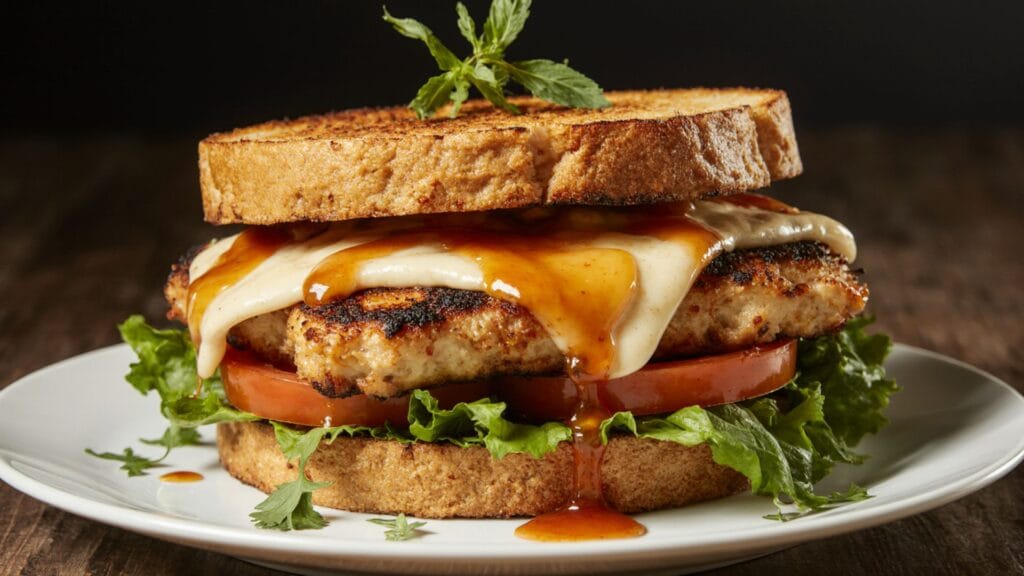
This is your anchor recipe — the one that demonstrates what a properly built grilled chicken sandwich looks and tastes like when the fundamentals are respected. The marinade is simple, the assembly is clean, and the result is the kind of sandwich people ask you to make again. For a slightly different take on the classic build, the team at Jam Jar Kitchen put together a version worth seeing — you can browse their grilled chicken sandwich approach here for additional inspiration before you start.
Classic garlic herb grilled chicken sandwich
The foundational version. Works with thighs or butterflied breasts.
Prep
35 min
Cook
10 min
Total
45 min
Serves
4
Ingredients
- 4 boneless, skinless chicken thighs (or pounded chicken breasts)
- 3 tablespoons olive oil
- 4 garlic cloves, finely minced
- 1 teaspoon dried oregano
- 1 teaspoon smoked paprika
- ½ teaspoon black pepper, ½ teaspoon fine sea salt
- Juice of 1 lemon
- 4 brioche or potato buns, split and toasted
- 4 leaves of romaine or butter lettuce
- 1 large ripe tomato, sliced thick
- Sliced dill pickles
- For the garlic aioli: ½ cup good mayonnaise, 1 roasted garlic clove (mashed), juice of half a lemon, pinch of salt
Instructions
- Whisk together olive oil, garlic, oregano, paprika, salt, pepper, and lemon juice in a bowl. Add the chicken and turn to coat. Cover and refrigerate for at least 30 minutes, or up to 4 hours.
- While the chicken marinates, stir together all aioli ingredients. Refrigerate until you’re ready to build.
- Pull the chicken out 20 minutes before grilling. Preheat your grill to medium-high (around 200°C / 400°F). Clean and lightly oil the grates.
- Grill the chicken for 5 minutes per side without pressing down. You want actual grill marks and a crust — let the heat do its work. Pull when the internal temperature reaches 74°C (165°F).
- Rest the chicken under a loose tent of foil for 5 minutes.
- Toast the buns cut-side down on the grill for about 60 seconds.
- Spread aioli on both inner faces of each bun. Layer: lettuce first (it acts as a moisture shield), then chicken, then tomato, then pickles. Top bun goes on last.
Why it works: The acid in the lemon marinade begins breaking down the muscle fibers gently, so the chicken stays tender even at grill temperature. The aioli on both bun faces means every bite has something rich and tangy regardless of where you bite in.
Recipe 2: Spicy honey sriracha grilled chicken sandwich
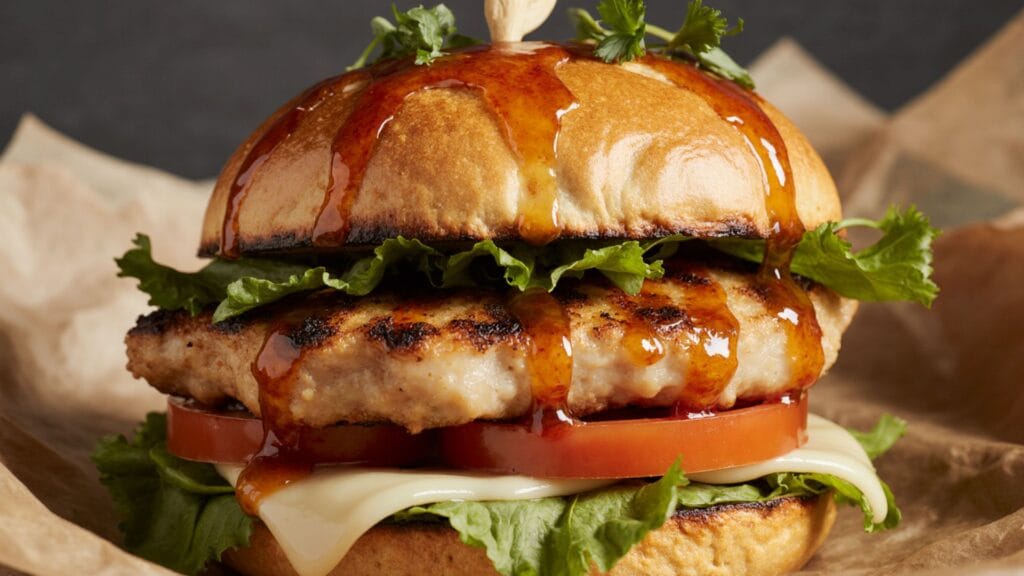
This version is built for people who want more from their sandwich — more heat, more color, more contrast. The honey-sriracha glaze caramelizes against the grill grates in the last two minutes of cooking, creating a sticky, deeply flavored exterior. The cooling slaw underneath it is not optional — it’s doing structural work.
Spicy honey sriracha grilled chicken sandwich
Sweet heat with a vinegar slaw. The glaze caramelizes — watch it closely.
Prep
20 min
Cook
12 min
Total
32 min
Serves
4
Ingredients
- 4 boneless chicken thighs, lightly pounded to even thickness
- 3 tablespoons sriracha
- 2 tablespoons raw honey
- 1 tablespoon soy sauce or tamari
- 1 teaspoon garlic powder
- 1 tablespoon neutral oil (avocado or vegetable)
- 4 brioche buns, toasted
- Sliced jalapeños to taste
- For the slaw: 2 cups thinly shredded green cabbage, 2 tablespoons mayonnaise, 1 tablespoon apple cider vinegar, 1 teaspoon honey, salt to taste
Instructions
- Combine sriracha, honey, soy sauce, garlic powder, and oil in a small bowl. Divide evenly: half for marinating, half reserved for basting.
- Coat the chicken in the marinade portion. Let it sit at room temperature for 15–20 minutes.
- Make the slaw: toss all slaw ingredients together, taste for salt and acid, and refrigerate until you build the sandwiches.
- Grill the chicken over medium-high heat for 5–6 minutes per side. In the final 2 minutes, brush the reserved glaze over the top face. Watch it — the honey catches fast. Keep the lid open and the heat at medium if you see it darkening too quickly.
- Rest 5 minutes.
- Build: slaw on the bottom bun, chicken placed glaze-side up, jalapeños, top bun. No additional sauce needed — the glaze handles it.
Recipe 3: Mediterranean grilled chicken sandwich with tzatziki
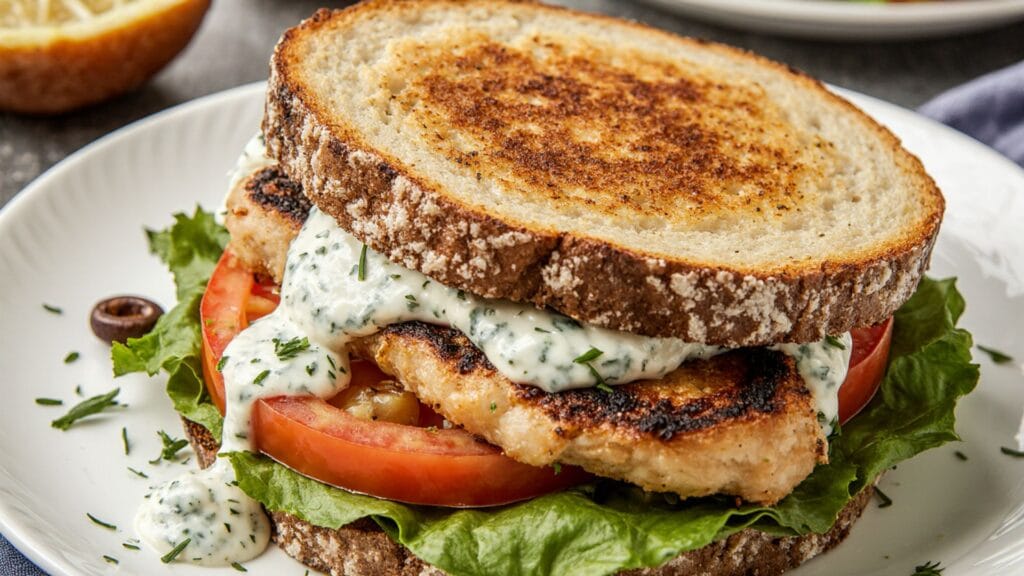
This is the lightest of the three — herb-forward, bright with lemon, and finished with cool tzatziki that contrasts beautifully with the charred za’atar crust. If you want to extend your weeknight dinner repertoire beyond sandwiches, Palatable Recipes has a solid collection of dinner recipes worth exploring once you’ve nailed these three. But for now — this is the one to make when it’s hot outside and you want something that doesn’t feel heavy.
Mediterranean grilled chicken sandwich with tzatziki
Za’atar crust, cool tzatziki, fresh mint. Works in a pita or ciabatta roll.
Prep
40 min
Cook
10 min
Total
50 min
Serves
4
Ingredients
- 4 boneless chicken thighs or breasts
- 3 tablespoons olive oil
- 1½ tablespoons za’atar
- Juice and zest of 1 lemon
- 3 garlic cloves, minced
- Salt and black pepper to taste
- 4 pita pockets or ciabatta rolls, warmed
- ½ cucumber, thinly sliced into rounds
- ¼ red onion, very thinly sliced
- A small handful of fresh mint leaves
- For the tzatziki: 1 cup full-fat Greek yogurt, ½ cucumber (grated, liquid squeezed out), 1 minced garlic clove, 1 tablespoon lemon juice, 1 tablespoon fresh dill, salt to taste
Instructions
- Start the tzatziki: combine all ingredients, stir well, and refrigerate for at least 30 minutes. The flavor develops significantly as it sits.
- Whisk together olive oil, za’atar, lemon juice and zest, garlic, salt, and pepper. Coat the chicken and marinate for 30 minutes.
- Grill over medium-high heat, 5 minutes per side. The za’atar will char slightly — that’s exactly what you want. It deepens the herbal flavor and adds texture. Pull at 74°C (165°F) internal.
- Rest 5 minutes, then slice the chicken crosswise into thick strips.
- Warm the pita or roll briefly on the grill. Spread tzatziki generously inside. Add cucumber slices, then chicken strips, then red onion, then mint leaves. Fold and serve immediately.
On the pita vs. ciabatta question: Pita is more traditional and lets you eat it held in two hands without much drip. Ciabatta gives you more crust contrast and holds the filling more stably if you’re eating at a table. Both are excellent — the choice is about the experience you want.
Five habits that separate a good grilled chicken sandwich from a great one
Across all three recipes above, these principles apply without exception. Think of them less as rules and more as instincts worth building:
- Always bring chicken to room temperature before grilling. Cold protein on a hot grill creates uneven cooking from the first moment. Twenty minutes on the counter makes a measurable difference.
- Let the grill do the releasing. If your chicken isn’t releasing from the grate when you try to flip it, it isn’t ready. Don’t force it. Another 60 seconds and it’ll lift cleanly.
- Use a thermometer, not timing. Every grill runs differently. Every piece of chicken is a different thickness. An instant-read thermometer at 74°C (165°F) is the only reliable signal.
- Season twice — once in the marinade, once right before grilling. A light pinch of salt and pepper just before the chicken hits the grate amplifies the crust formation and gives you a more layered flavor.
- Build the sandwich immediately before eating. A grilled chicken sandwich assembled 20 minutes before eating is a different (worse) sandwich. The bun softens, the crunch disappears, the temperature contrast collapses. Build it at the last possible moment.
Toppings, sides, and the full plate
Topping upgrades worth trying
- Charred pineapple ring — pairs specifically well with the sriracha honey version and adds a caramelized sweetness that works against the heat
- Crispy shallots or fried onion strings — adds crunch and depth without changing the flavor profile
- Smashed avocado with a squeeze of lime — works as a replacement for mayo-based sauces when you want something lighter
- Sharp cheddar or pepper jack melted directly on the chicken in the final minute of grilling
- Sun-dried tomato spread — particularly good in the Mediterranean version as an addition to the tzatziki layer
Sides that complete the meal without competing with it
- Grilled corn with chili butter
- Baked sweet potato wedges seasoned with smoked paprika
- A simple cucumber and dill salad dressed with red wine vinegar and olive oil
- Charred broccolini with lemon and flaked salt
- Classic vinegar coleslaw — which can also double as a sandwich topping
If you’re looking to branch out further on weeknight dinners, Palatable Recipes’ dinner collection is a reliable place to find ideas that pair well with the cooking techniques you’re already using here.
Conclusion
The grilled chicken sandwich earns its place as one of the most reliable meals in any cook’s rotation — but only when you treat it with the same attention you’d give anything else worth eating. The three versions in this article represent three different directions you can take from the same starting point: a well-marinated piece of chicken, a toasted bun, and a thoughtfully assembled build.
What they share is more important than what separates them. Room temperature chicken. A rest after grilling. Acid in the build. Sauce on both bun faces. A toasted bun that holds everything together. Get those five things right in any version and you’ll land somewhere genuinely good every time.
Pick the one that fits what’s in your fridge tonight. Make it once to get the feel. Make it again next week and notice what you’d adjust. That’s how any dish becomes yours — not by following a recipe once, but by making it often enough that the decisions become instinct. And if you want a side-by-side comparison with another take on the classic, Jam Jar Kitchen’s grilled chicken sandwich is worth bookmarking next to this one.
Ready to put these to the test?
Choose your recipe, screenshot the ingredients list, and start your marinade tonight. Then come back and share which version you tried — or ask a follow-up question about any step in the process.Help me pick my recipe ↗
Frequently asked questions about the grilled chicken sandwich
What is the best way to keep a grilled chicken sandwich juicy?
The two most effective habits are marinating for at least 30 minutes before grilling and resting the chicken for 5 minutes after you pull it from the grill. Internal temperature matters too — pull at exactly 74°C (165°F), not above it.
Which bun works best for a grilled chicken sandwich?
Brioche and potato buns are the most reliable choices — soft enough to compress with each bite without tearing, and their mild sweetness doesn’t fight the savory chicken. Always toast them before building.
Can I make a grilled chicken sandwich without an outdoor grill?
Yes. A cast-iron grill pan over high heat on your stovetop produces near-identical results — you’ll get grill marks and a proper crust if you preheat the pan for at least 3 minutes before adding the chicken. A heavy skillet also works well.
Is a grilled chicken sandwich good for meal prep?
The chicken itself is excellent for meal prep — it keeps in the refrigerator for up to 4 days and reheats well in a covered skillet with a small splash of water. Store everything separately and assemble only at the moment of eating.
How is a grilled chicken sandwich different from a crispy chicken sandwich?
The crispy version uses a battered and fried piece of chicken — which adds significant fat, calories, and a very different texture. The grilled chicken sandwich relies on direct heat contact to build its crust, with no batter involved. Both are legitimate; they’re just different sandwiches with different strengths.
What marinade works best for a grilled chicken sandwich?
Any marinade that includes an acid (lemon juice, vinegar, yogurt), a fat (olive oil), and seasoning will produce good results. The three marinades in this article — garlic herb, honey sriracha, and za’atar-lemon — all follow this structure and represent the most commonly searched flavor directions for this sandwich.