
Table of Contents
A Bowl Of Comfort That Feels Like Home
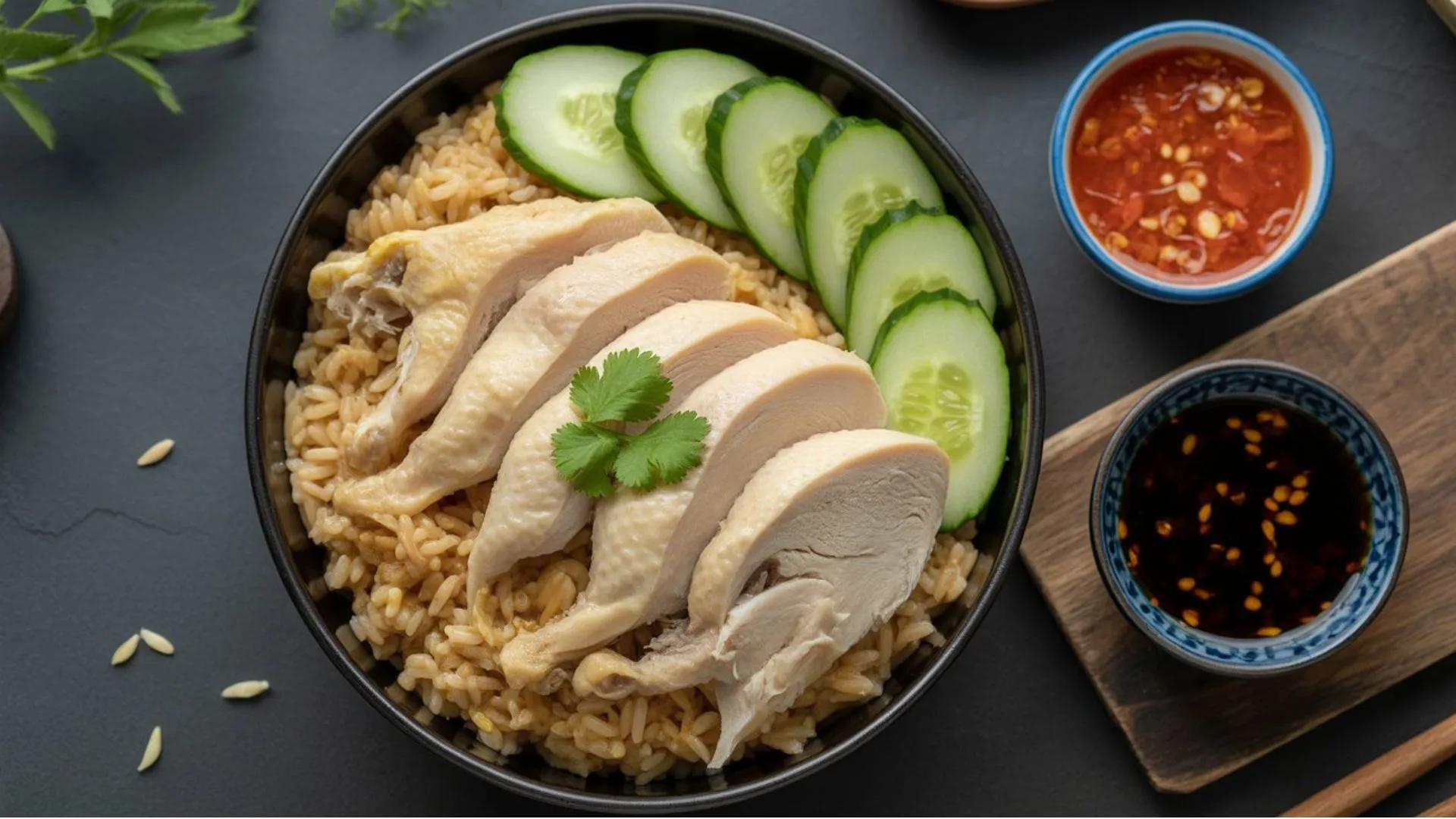
You know those meals that calm you down the moment the aroma hits your kitchen? That is exactly what happens when you cook your first recipe for Hainan chicken rice. The steam carries the scent of warm chicken broth, ginger, and garlic, and suddenly your space feels quieter, softer, and more inviting. In front of you, there is a plate of silky chicken, glossy rice, and bright sauces that promise both comfort and character in every bite.
Even though it looks like a simple pairing of chicken and rice, this dish has earned legendary status across Southeast Asia and among food lovers worldwide. When you learn to make it at home, you are not just following a recipe—you are giving yourself a reliable ritual of warmth you can share with friends, family, or keep just for yourself on days when you need a little calm.
What Is Hainan Chicken Rice?
Hainan chicken rice, often called Hainanese chicken rice, traces its roots to immigrants from Hainan island in China who adapted their home-style poached chicken and rice to local tastes in Southeast Asia. Over time, it became iconic in places like Singapore and Malaysia, where it is now a must-try street food and a staple in food courts and hawker centers.
At its heart, this dish is built around four parts: gently poached chicken, fragrant rice cooked in chicken stock, a clean-tasting broth served on the side, and at least one punchy dipping sauce. What makes it stand out is how every component is connected—the same bird gives you the meat, the stock for your rice, and the broth in your bowl. Nothing is wasted, and everything tastes like it belongs together.
Essential Ingredients For The Best Recipe For Hainan Chicken Rice
When you make this recipe for Hainan chicken rice at home, you rely on a short list of ingredients, but each one plays an important role. You do not need complicated seasonings; you just need fresh chicken, good rice, and a few aromatics that quietly transform the dish.
Chicken And Aromatics
For the most flavourful and juicy result, you usually work with a whole chicken or at least bone-in pieces. The bones give you deeper stock, and the skin keeps the meat moist. You then layer in aromatics that gently perfume the bird as it cooks.
You typically use:
- A whole chicken (around 1.5–1.8 kg), cleaned
- Salt for rubbing and seasoning
- Fresh ginger slices
- Crushed garlic cloves
- Spring onions
- Optional pandan leaves for a subtle floral note
These aromatics sit in the pot with the chicken and in some cases inside the cavity, so as everything simmers, the flavors move through the meat and into the cooking liquid you later use for rice and broth.
Fragrant Chicken Rice
The rice is where your kitchen really starts to smell like a hawker stall. Instead of plain steamed grains, you cook jasmine rice in a mixture of chicken fat, garlic, ginger, and chicken broth. This turns every spoonful into something that could almost stand alone as a full dish.
For the rice, you usually prepare:
- Jasmine rice, rinsed until the water runs nearly clear
- Rendered chicken fat (or neutral oil if needed)
- Minced garlic
- Sliced ginger
- Optional pandan leaves
- Hot chicken poaching broth
- A little salt
When you toast the rinsed rice in the aromatic fat before adding broth, you coat each grain and build layers of flavour. The result is fluffy, glossy rice that tastes savoury and comforting without feeling heavy.
Sauces And Garnishes
No recipe for Hainan chicken rice feels complete without the sauces and fresh garnishes that you can adjust to your liking. This is where the dish goes from simple to personal.
You will usually have:
- Chili–garlic sauce, bright and spicy
- Ginger–scallion (spring onion) sauce, rich and aromatic
- Dark soy sauce, for sweetness and umami
- Sliced cucumber, fresh cilantro, and lime wedges
These add colour, texture, and personality to your plate. With them, you can make each bite mild or fiery, tangy or deep and savoury, depending on your mood.
Step‑By‑Step Recipe For Hainan Chicken Rice
Below is a complete, beginner-friendly recipe for Hainan chicken rice, including description, ingredients, instructions, and timing.
Hainan Chicken Rice Recipe Overview
You are about to make a full meal built from one pot of gently poached chicken and its golden broth. The same chicken gives you tender meat, fragrant rice, clear soup, and most of the flavour for your sauces. It takes some time, but each step is straightforward and very doable in a home kitchen.
Time And Yield
- Preparation Time: 25 minutes
- Cooking Time: 50–60 minutes
- Total Time: 1 hour 15–25 minutes
- Serves: 4–6 people
Ingredients
For The Chicken
- 1 whole chicken (about 1.5–1.8 kg), cleaned
- 1–2 tablespoons salt (for rubbing and seasoning)
- 4–5 slices fresh ginger
- 4 garlic cloves, lightly crushed
- 4 stalks spring onion
- 2–3 pandan leaves, tied in a knot (optional)
- Enough water to fully submerge the chicken
For The Chicken Rice
- 2 cups jasmine rice, rinsed well
- 2–3 tablespoons chicken fat or neutral oil
- 3 garlic cloves, minced
- 3–4 slices ginger
- 2 pandan leaves, tied (optional)
- About 2½ cups hot chicken poaching broth
- ½ teaspoon salt, or to taste
For The Sauces
Chili–Garlic Sauce
- 4 red chilies (adjust to your heat level)
- 2 garlic cloves
- 1–2 tablespoons lime juice
- 2–3 tablespoons chicken broth
- 1 teaspoon sugar
- Salt to taste
Ginger–Scallion Sauce
- 3 tablespoons finely grated ginger
- 3 spring onions, finely chopped
- 4 tablespoons hot vegetable or peanut oil
- ½ teaspoon salt
To Serve
- Dark soy sauce
- Sliced cucumber
- Fresh cilantro
- Lime wedges
Instructions: How To Make Hainan Chicken Rice
Step 1 – Prep And Poach The Chicken
- Rub the chicken all over with salt, then rinse and pat it dry. This cleans the skin and helps season the meat.
- Stuff the cavity with ginger slices, crushed garlic, spring onions, and pandan leaves (if using).
- Place the chicken in a large pot and cover completely with cold water.
- Bring the pot slowly to a gentle simmer over medium heat. Avoid a full boil; aim for small, lazy bubbles.
- Once it reaches a simmer, lower the heat so it stays very gentle, and cook until the thickest part of the thigh is cooked through (usually 40–50 minutes).
- Turn off the heat and let the chicken rest in the hot broth for another 10–15 minutes; this allows the heat to even out without overcooking.
- Prepare a large bowl of ice water. Carefully lift the chicken from the pot and place it in the ice bath for a few minutes. This cools the skin quickly, giving it a smooth, pleasant texture.
- Remove from the ice bath, pat dry, and set the chicken aside to rest while you make the rice and sauces. Keep the broth on the stove, as you will use it for rice and soup.
Step 2 – Make The Fragrant Chicken Rice
- Skim 2–3 tablespoons of chicken fat from the surface of the broth and set aside (top up with oil if needed).
- In a pot or rice cooker insert, heat the fat over medium heat.
- Add the minced garlic and ginger slices, sautéing gently until fragrant but not browned.
- Stir in the rinsed jasmine rice, coating every grain in the aromatic fat.
- Add the pandan leaves, pour in about 2½ cups of hot chicken broth, and season with salt.
- Cook the rice as you normally would: bring to a boil, cover, lower the heat, and let it simmer until the liquid is absorbed and the rice is tender.
- Once done, let it rest, covered, for 5–10 minutes before fluffing with a fork so the grains stay separate and glossy.
Step 3 – Prepare The Sauces
Chili–Garlic Sauce
- Combine the chilies and garlic in a blender or small food processor.
- Add lime juice, chicken broth, sugar, and a pinch of salt.
- Blend until smooth and taste.
- Adjust the flavours: more lime for brightness, more sugar for balance, or more chilies for heat.
Ginger–Scallion Sauce
- Place the grated ginger and chopped spring onions in a heatproof bowl.
- Sprinkle with salt and mix lightly.
- Heat the oil until it is very hot but not smoking.
- Carefully pour the hot oil over the ginger and spring onions; it should sizzle on contact.
- Stir, taste, and adjust the salt if needed.
Step 4 – Carve And Serve
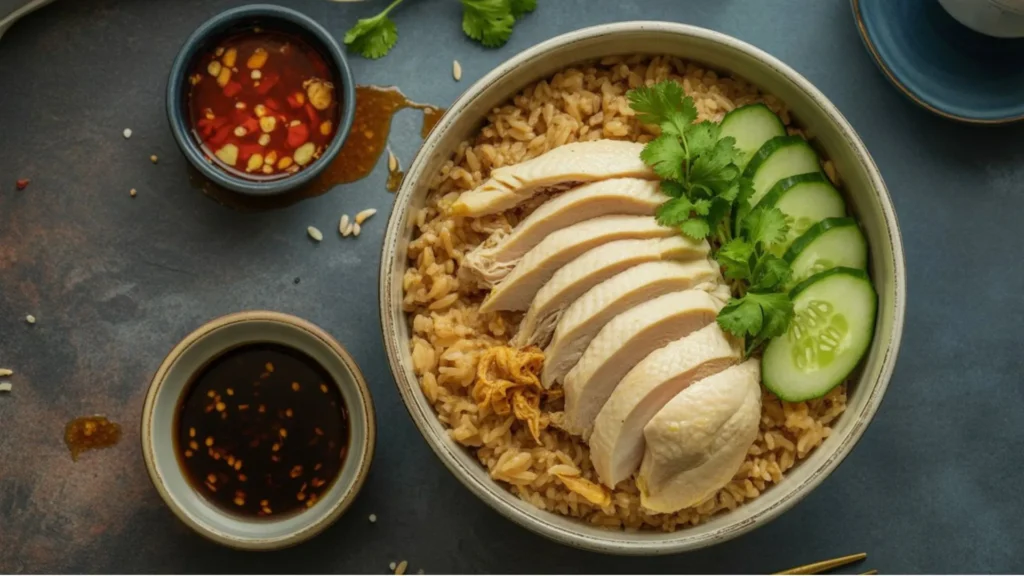
- Using a sharp knife or cleaver, cut the chicken into serving pieces. You can chop it through the bone into traditional bite-sized segments or slice the breasts and thighs off the bone for neater pieces.
- Arrange a mound of fragrant rice on each plate.
- Place pieces of chicken beside or over the rice.
- Ladle some hot broth into small bowls to serve on the side.
- Garnish each plate with cucumber slices and cilantro.
- Drizzle a little dark soy sauce over the chicken if you like, and serve with small dishes of chili–garlic and ginger–scallion sauces.
5 Reasons Foodies Love This Classic Recipe For Hainan Chicken Rice
1. Clean, Comforting Flavour
You get a bowl that feels soothing without ever becoming dull. The broth is gentle and savory, the rice is rich yet not greasy, and the chicken is tender and mild enough that you can enjoy it even when you are not in the mood for something intense. This makes it the kind of dish you reach for when you want to feel grounded and taken care of.
2. Remarkable Texture In Every Component
Texture is a huge part of why this recipe for Hainan chicken rice is so beloved. Slow, gentle poaching keeps the meat juicy, while the brief cooling step firms the skin to a pleasant, delicate bounce. At the same time, the rice finishes slightly glossy and soft but still separate, forming a perfect contrast with the crisp cucumber and the silky sauces.
3. Built‑In Customisation With Sauces
You are never locked into one fixed flavor profile. With chili–garlic sauce, you add brightness and heat; with ginger–scallion sauce, you bring warmth and aroma; with dark soy sauce, you deepen savory notes and add a slight sweetness. You can adjust each spoonful to your taste, so every plate can be different, even when everyone at the table is eating the same base dish.
4. A Taste Of Southeast Asia Without Leaving Home
If you have traveled through Singapore, Malaysia, or other parts of Southeast Asia, Hainan chicken rice is probably on your list of unforgettable meals. Cooking it at home lets you revisit those flavors without a plane ticket, using widely available ingredients. Each time you make it, you recreate a little piece of that street-food or hawker-center experience in your kitchen.
5. Impressive, Budget‑Friendly And Efficient
From a practical point of view, this recipe for Hainan chicken rice stretches your ingredients very well. One bird becomes meat, rice, broth, and sauces, and any leftover chicken or rice can transform into fried rice, noodle soup, or rice bowls. It looks impressive enough for guests while staying far more cost‑effective than ordering several separate dishes.
Pro Tips To Master Your Recipe For Hainan Chicken Rice
- Keep your poaching water at a gentle simmer, never a rolling boil. This gives you clearer broth and tender chicken.
- Use a thermometer if you have one and aim for safe doneness without overcooking; then rely on resting time to even out the heat.
- Always rinse your jasmine rice thoroughly before cooking and toast it in fat with aromatics for extra flavour.
- Taste and balance your sauces; they should feel bright and lively, not flat or overwhelmingly salty.
If you want a benchmark to compare your version against a more traditional approach, you can explore an authentic take like this one.
You can also look at a broader collection of chicken dishes for inspiration on how to use leftover chicken, adapt seasoning styles, or experiment with other poultry recipes here.
Variations, Leftovers And Easy Tweaks
- For a lighter version, you can remove some skin after poaching and reduce the amount of fat you use to toast the rice.
- To save time, you can work with bone‑in chicken thighs and a pressure cooker while still following the same basic method for rice and sauces.
- Leftover chicken and rice can quickly become fried rice, noodle soup, or simple rice bowls with vegetables and a soft‑boiled egg.
These tweaks help you fit the recipe for Hainan chicken rice into different schedules, diets, and occasions without losing the soul of the dish.
FAQ About The Recipe For Hainan Chicken Rice
Can you make this recipe for Hainan chicken rice if you are a beginner?
Yes, you can. As long as you keep the heat gentle and follow the timing, this recipe is very approachable even if you are still learning your way around the kitchen.
What kind of rice should you use?
Jasmine rice works best because it has a natural fragrance and cooks up fluffy, absorbing the broth beautifully without turning mushy.
Can you prepare Hainan chicken rice in advance?
You can poach the chicken and make the sauces in advance, then cook or reheat the rice with hot broth close to serving time so it stays fresh and aromatic.
Is there a faster version?
Yes. You can use chicken thighs, a pressure cooker, and a slightly smaller batch of rice to cut down the overall cooking time while keeping the same core flavors.
How do you store leftovers?
Cool the chicken, rice, broth, and sauces, then store them separately in airtight containers in the fridge. Reheat gently with a bit of extra broth to keep everything moist.
Conclusion: Bring This Classic Into Your Kitchen
Once you learn this recipe for Hainan chicken rice, you give yourself a dish you can lean on again and again—whether you want comfort food on a quiet night or an impressive meal for guests. It is gentle yet flavorful, simple yet special, and built from ingredients you can find easily. Every step, from poaching the chicken to toasting the rice and stirring together your sauces, adds up to a plate that feels like more than the sum of its parts.
Now that you have the full method, it is time to turn it into your own signature version. Gather your ingredients, set aside an evening, and cook your first batch. Then tweak the sauces, adjust the aromatics, or compare your results to the authentic style for more ideas. And when you are ready to expand your chicken repertoire even further, explore more regional variations and chicken recipes to keep your table exciting and your skills growing.
Have You Given This Recipe A Try?
There are no reviews yet. Be the first one to write one.