
Table of Contents
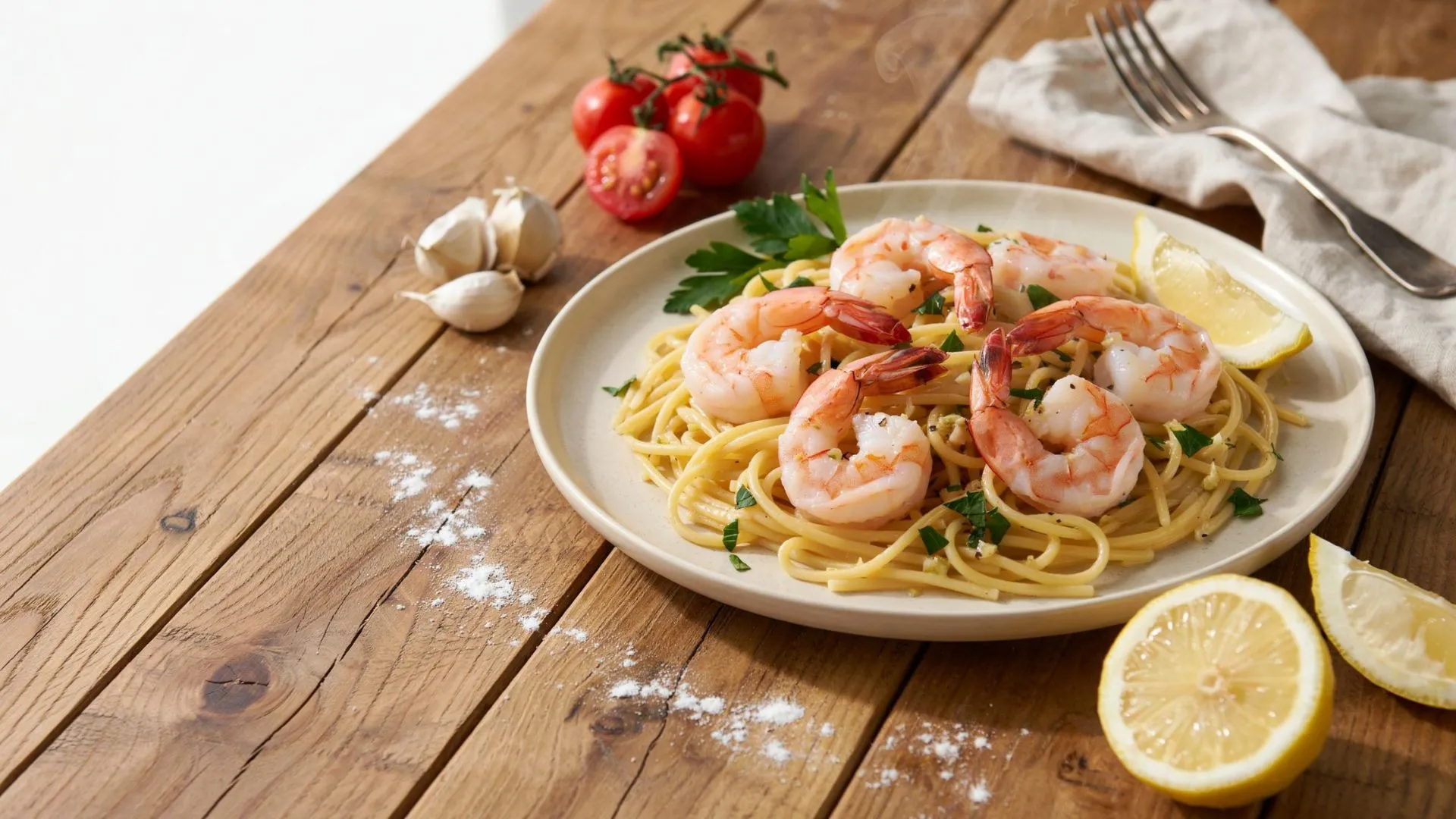
There’s a dish I’ve been making on Friday nights for years, and it never fails to make the kitchen smell like a restaurant on the Italian coast — even though it was practically invented in New York. That dish is shrimp scampi pasta, and if you haven’t fallen in love with it yet, tonight might just change things.
Whether you found this post because you’re planning dinner, trying to figure out what wine to open, or wondering if shrimp scampi pasta fits into a healthier eating routine — you’ve landed in the right place. Let’s dig into everything: the sauce, the wine, the origins, and a few things most recipes never bother to tell you.
✦ ✦ ✦
Is Shrimp Scampi Actually a Pasta Dish?
This question comes up more than you’d expect, and the answer is: it depends on who you ask. Traditionally, “scampi” refers to a type of small lobster-like crustacean common in European waters — specifically the Norway lobster. Italian cooks prepared it simply, sautéed in garlic and olive oil, and served it on its own.
When Italian immigrants arrived in the United States and couldn’t easily find those same crustaceans, they substituted shrimp — and served the whole thing over pasta. The name stuck, the pasta stayed, and the rest is culinary history. So technically, shrimp scampi without pasta is the older preparation. But the pasta version? That’s the one the world fell in love with.
“Shrimp scampi pasta is one of those rare dishes where an adaptation became the thing itself — and nobody’s complaining.”
If you’re curious about the technique behind a truly great version of this dish, Serious Eats has an exceptional shrimp scampi pasta recipe that breaks down every step with the detail it deserves. It’s the kind of recipe worth bookmarking.
What Kind of Sauce Actually Makes It Scampi?
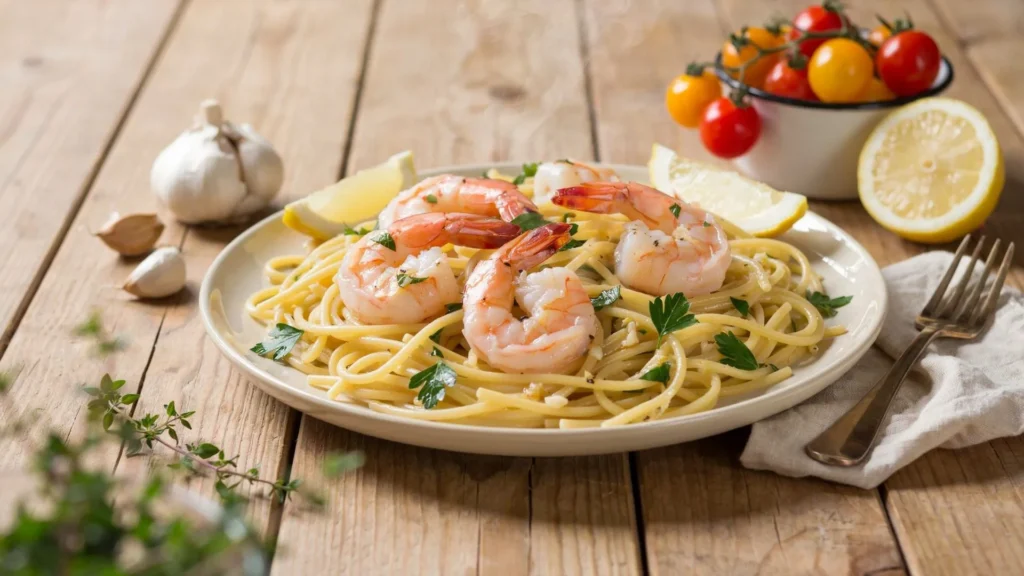
Here’s where I have to be honest with you: if someone offers you shrimp pasta with marinara sauce and calls it scampi, they’re being generous with the definition. Real shrimp scampi pasta is built on a light, glossy, garlicky butter and white wine sauce — nothing more, nothing less.
The magic happens when you let the shrimp cook quickly in a generous pour of butter, a heap of minced garlic, a splash of dry white wine, and a squeeze of lemon. The pan sauce that forms as those ingredients meld together is what coats every strand of linguine or spaghetti. It’s rich without being heavy, and deeply savory without needing a jar of anything.
But what about tomato sauce?
Shrimp and tomato absolutely work together — think fra diavolo or a simple pomodoro with prawns. But that’s a different dish. Swapping in marinara sauce on shrimp scampi pasta changes its entire character: it goes from a light, wine-forward plate to something fuller and more robust. Both are delicious. They’re just not the same thing.
Pro Tip
Don’t skip the pasta water. Adding a ladle of starchy cooking water to your pan sauce turns a loose, oily sauce into something that clings to the pasta beautifully. It’s the step home cooks most often miss.
Is Shrimp Scampi Pasta a Good Choice for Health-Conscious Eaters?
Short answer: shrimp themselves are excellent. They’re low in calories, high in protein, and naturally very low in carbohydrates. A 100g serving of cooked shrimp delivers around 20g of protein for roughly 100 calories — that’s impressive by any measure.
The pasta and butter obviously add carbs and fat to the equation, but shrimp scampi pasta is far from the heaviest dish on any Italian-American menu. If you’re managing blood sugar or watching carbs, there are easy swaps — zucchini noodles, spaghetti squash, or a smaller pasta portion with extra shrimp — that keep the spirit of the dish fully intact.
The garlic, olive oil, and lemon in the sauce also bring genuine nutritional value: allicin from garlic has well-documented anti-inflammatory properties, and a little olive oil goes a long way toward keeping the sauce feeling satisfying without going overboard.
Common Mistakes to Avoid When Making Shrimp Scampi Pasta
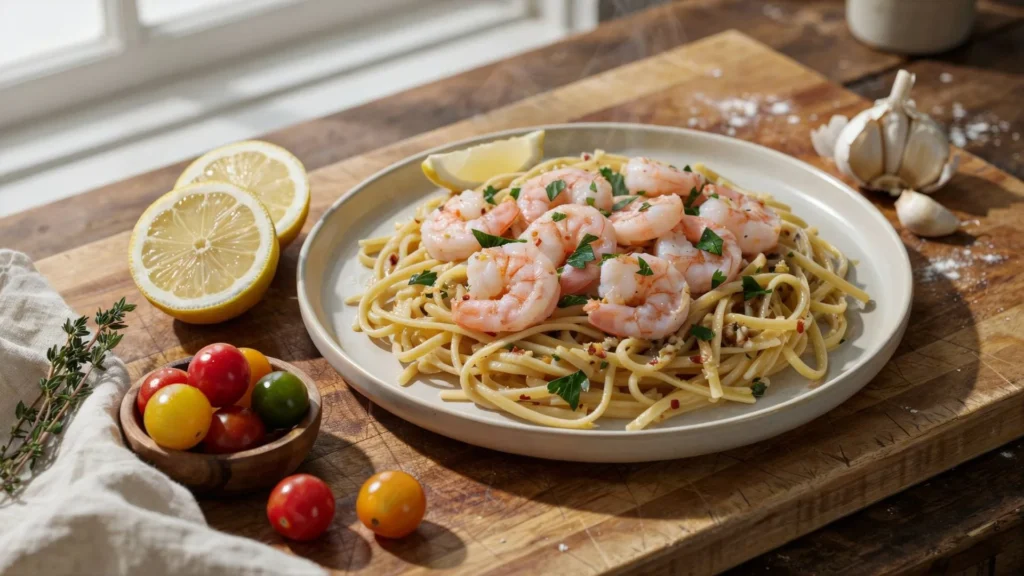
After making this dish more times than I can count, a few pitfalls keep showing up — even in otherwise good home kitchens.
Overcooking the shrimp. This is the cardinal sin of shrimp scampi pasta. Shrimp cook in two to three minutes per side over medium-high heat. The moment they curl into a tight “C” shape and turn opaque, get them off the heat. An overcooked shrimp turns rubbery and loses the sweetness that makes the whole dish work.
Using pre-minced jarred garlic. Fresh garlic makes a noticeable difference here. The sauce is simple enough that every ingredient is front-and-center — jarred garlic often tastes flat or slightly fermented compared to a freshly minced clove.
Skipping the wine. I know not everyone cooks with alcohol, and that’s completely valid. But if you do use it, don’t substitute with chicken broth and expect the same result. The acidity and aroma the wine brings to the sauce is part of what makes shrimp scampi pasta taste the way it does. Use what you’d actually drink.
Salting the pasta water like you’re afraid of salt. Pasta water should taste like the sea. Properly salted pasta is the difference between a dish that tastes flat and one that tastes complete.
Worth Knowing
Shrimp scampi pasta is endlessly riffable. Add red pepper flakes for heat, a handful of cherry tomatoes for brightness, or finish with a shower of fresh breadcrumbs toasted in olive oil for crunch. The base recipe is a canvas, not a rulebook.
Save your favorite recipes and follow us on Pinterest: @PalatableRecipesDotCom
Step-by-Step Recipe
Classic Shrimp Scampi Pasta
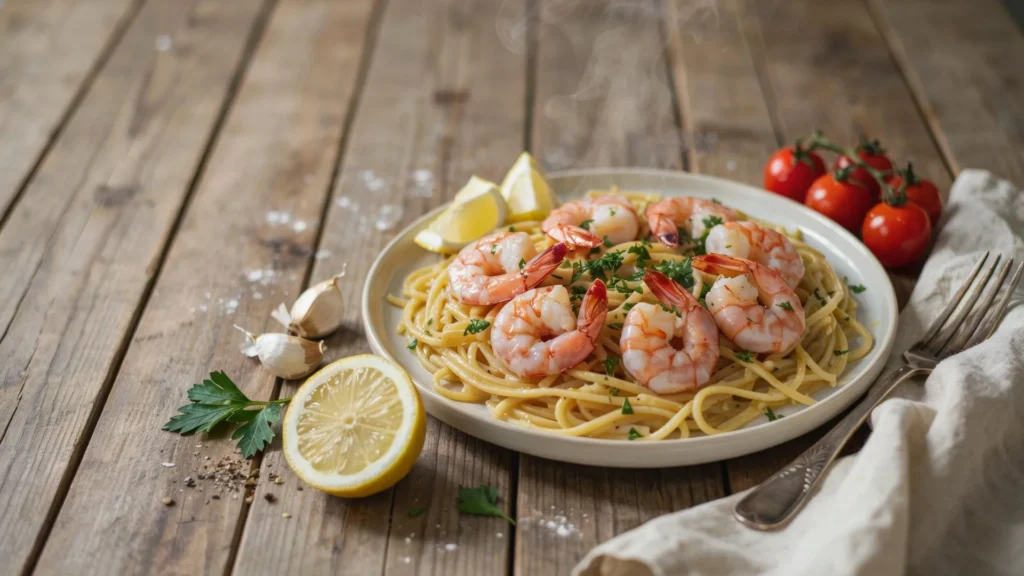
Butter, garlic, white wine, lemon — restaurant results in 30 minutes flat.
Prep Time10 min
Cook Time20 min
Total Time30 min
Servings4
DifficultyEasy
Ingredients
The pasta
- 400 glinguine or spaghetti
- 1 tbspcoarse sea salt (for the water)
The shrimp
- 500 glarge raw shrimp, peeled & deveined
- ½ tspfine sea salt
- ¼ tspblack pepper, freshly cracked
- ¼ tspred pepper flakes (optional)
The scampi sauce
- 4 tbspunsalted butter, divided
- 2 tbspextra-virgin olive oil
- 6 clovesgarlic, freshly minced
- 120 mldry white wine (Pinot Grigio or Sauvignon Blanc)
- 60 mlreserved pasta water
- 2 tbspfresh lemon juice
- 1 tsplemon zest
- 3 tbspflat-leaf parsley, roughly chopped
To finish
- 30 gParmesan, freshly grated (optional)
- 1 tbspolive oil for drizzling
Instructions
- Bring a large pot of water to a boilFill your largest pot with water and set it over high heat. While it heats, prep everything else — garlic, parsley, lemon. Once boiling, add a generous tablespoon of coarse salt. The water should taste pleasantly salty, like a light broth. This is the only chance you have to season the pasta itself.
- Season and dry the shrimpPat the shrimp very dry with paper towels — this is more important than most people realize. Moisture is the enemy of a good sear. Season them with salt, black pepper, and the red pepper flakes if you’re using them. Set aside while the pasta water heats.
- Cook the pasta until just shy of al denteAdd the linguine to the boiling water and cook it for 2 minutes less than the package suggests. It will finish cooking in the pan with the sauce, absorbing all that garlicky, buttery goodness. Before draining, scoop out at least a full cup of the starchy pasta water — you’ll need it.
- Sear the shrimp in butter and olive oilIn a large, wide skillet over medium-high heat, melt 2 tablespoons of butter with the olive oil. When the butter starts to foam and the pan is genuinely hot, add the shrimp in a single layer — don’t crowd them or they’ll steam instead of sear. Cook for exactly 90 seconds per side until pink and just barely opaque at the center. Transfer them to a plate immediately. They’ll finish cooking when you add them back later.
- Build the garlic butter sauceReduce the heat to medium and add the remaining 2 tablespoons of butter to the same pan. Once melted, add the minced garlic and let it cook gently for about 60 to 90 seconds, stirring constantly. You want it fragrant and very lightly golden — not brown. The moment it starts to color, move quickly to the next step.
- Deglaze with white winePour the white wine into the pan and let it bubble enthusiastically for 2 to 3 minutes, scraping up any golden bits from the bottom of the pan. Those bits are pure flavor. Let the wine reduce by roughly half — you should smell the alcohol cooking off, leaving behind just the bright, acidic backbone of the wine. Add the lemon juice and zest now.
- Add pasta and emulsify the sauceTransfer the drained pasta directly into the pan using tongs. Add about 60 ml of the reserved pasta water and toss everything together over medium heat. The starch in the water will help the butter and olive oil bind into a silky, cohesive sauce that coats every strand. If the sauce looks tight, add a splash more pasta water. If it looks too loose, keep tossing — it’ll come together in under a minute.
- Return the shrimp and finish with parsleyNestle the seared shrimp back into the pasta and toss gently to warm them through — no more than 60 seconds over the heat. Add the chopped flat-leaf parsley and toss one more time. Taste and adjust: does it need more lemon? More salt? A little more butter? Trust your palate. This is your dish now.
- Plate and serve immediatelyDivide the shrimp scampi pasta between warmed bowls using tongs — twist the pasta into a nest, arrange the shrimp on top, and finish with a drizzle of good olive oil, a little extra parsley, and freshly grated Parmesan if you like. Serve right away with a cold glass of Pinot Grigio alongside. This dish waits for no one.
Chef’s Note — Leftovers keep in the fridge for up to 2 days. Reheat gently in a pan with a splash of water or white wine over low heat. Never the microwave — it turns the shrimp rubbery. For a dairy-free version, swap all the butter for high-quality extra-virgin olive oil and finish with a little more lemon.
Frequently Asked Questions
What sauce is used in shrimp scampi pasta — and what makes it so good?
The classic scampi sauce is a white wine butter sauce — not cream, which is a common misconception. It’s built from dry white wine, fresh lemon juice, lots of garlic, and cold butter that’s whisked in at the end to create a glossy emulsion. The basic ingredients for shrimp scampi are shrimp, butter, olive oil, garlic, white wine, lemon juice, and parsley. The best butter to use is unsalted European-style butter, which has a higher fat content and richer flavor. What makes it exceptional is balance: bright acidity from the lemon, richness from the butter, and depth from the white wine. Creamy scampi sauce — when requested — is simply this base with a splash of heavy cream added, but the traditional Italian-American version stays lean and bright.
What are the most common mistakes to avoid when making shrimp scampi?
The biggest pitfalls are: burning the garlic (it turns the whole dish bitter), overcooking the shrimp (follow the “C” not “O” rule — a “C” means cooked, an “O” means overcooked), skipping the pasta water (which is essential for emulsifying the sauce), and overcrowding the pan. Two more worth knowing: the 1-10-100 rule for pasta means 1 liter of water, 10 grams of salt, and 100 grams of pasta per person — this ensures properly seasoned noodles. And to elevate shrimp scampi even further, consider adding a small amount of white miso paste or anchovy to the sauce for umami depth. What Italians call “scampi” is actually a langoustine — the American version using shrimp is a delicious adaptation, but knowing the origin helps you understand why the dish is so butter- and wine-forward.
Is shrimp scampi pasta served over rice or noodles — and which pasta shape is best?
In American restaurants, shrimp scampi is almost always served over pasta — typically linguine or spaghetti. Both shapes have enough surface area to catch the thin, silky sauce and hold it without it pooling at the bottom of the bowl. Linguine is the most traditional choice. That said, shrimp scampi over rice is a popular low-carb alternative and is just as satisfying — jasmine rice or cauliflower rice both work well for that version. The best pasta shape, if you want to go beyond linguine, is angel hair (capellini), which pairs especially well with lighter, more delicate sauces. Avoid short, ridged pasta like rigatoni — the thick shape overpowers the delicate scampi flavors. Ina Garten famously serves her version over linguine, which remains the gold standard for the dish.
Can diabetics eat shrimp scampi pasta — and how can it be made more diabetes-friendly?
Shrimp itself is an excellent protein choice for people with type 2 diabetes — it’s high in protein, very low in carbohydrates, and contains no sugar. Shrimp is widely considered one of the best seafood options for diabetics. The main concern with shrimp scampi pasta is the pasta itself, which raises blood sugar. For a more diabetes-friendly version, substitute regular pasta with chickpea pasta, whole wheat pasta, or zucchini noodles (zoodles), all of which have a lower glycemic impact. The butter and olive oil in the sauce are not a concern in moderate quantities. It’s also worth noting that serving the dish with non-starchy vegetables — asparagus, spinach, or cherry tomatoes tossed into the pan — adds fiber that further slows glucose absorption. As always, portion size matters: a smaller serving over a larger volume of vegetables is a smart approach.
What vegetables go well with shrimp scampi pasta?
Several vegetables pair beautifully with shrimp scampi pasta without overpowering its delicate garlic-butter flavors. Asparagus is the classic choice — its slight bitterness balances the richness of the sauce perfectly. Cherry tomatoes added to the pan during the last minute of cooking burst and release a sweet acidity that brightens the whole dish. Baby spinach wilts directly into the hot pasta and adds color and nutrients without any extra cooking. Zucchini, thinly sliced and quickly sautéed, blends seamlessly into the sauce. For a heartier version, artichoke hearts or sun-dried tomatoes add an earthy, Mediterranean character that works beautifully alongside the white wine and lemon base. Whatever vegetable you choose, add it to the pan just before combining with the pasta so it stays vibrant rather than going soggy.
The Bottom Line
Shrimp scampi pasta has earned its place as a weeknight hero and a dinner-party showstopper for one simple reason: it delivers restaurant-level results with minimal effort and a handful of pantry staples. Butter, garlic, white wine, lemon, shrimp, pasta. That’s it. That’s the whole secret.
Once you understand the sauce, know which wine to open alongside it, and sidestep the handful of common mistakes, this dish becomes something you make on autopilot — and love every single time.
Ready to cook? Head over to our dinner recipes collection at Palatable Recipes for more dishes built around the same philosophy: real ingredients, bold flavors, and nothing fussy about them.