Table of Contents
There’s a specific kind of kitchen chaos that happens every summer: a produce bag, a farmers market haul, or a garden vine that just won’t quit, and suddenly you’re staring down two pounds of cherry tomatoes with no plan. If you’ve landed here searching for a cherry tomatoes recipe that actually solves that problem, you’re in the right place. This guide isn’t just another cherry tomato recipe list — it’s a real answer to what to cook, how to store the extras, and why this little fruit deserves way more credit than it gets.
Cherry tomatoes are one of those ingredients that quietly do a lot of heavy lifting. They’re sweeter than their beefsteak cousins, they caramelize beautifully under heat, and they can go from raw snack to blistered sauce in under fifteen minutes. Whether you’re trying to use up a surplus or just want a reliable cherry tomatoes recipe for a weeknight dinner, here’s everything worth knowing.
Why Cherry Tomatoes Deserve More Than a Salad
Most people default to tossing cherry tomatoes into a salad and calling it a day. That’s a fine use, but it barely scratches the surface. A good cherry tomato recipe leans into what makes this ingredient special: concentrated sweetness that only gets better with heat. Roasting or pan-searing draws out natural sugars and deepens the flavor into something closer to sun-dried tomato than raw produce. That’s why so many popular cherry tomatoes recipes online revolve around blistering, roasting, or simmering rather than eating them straight from the carton.
Pasta is probably the most requested cherry tomatoes recipe out there, and for good reason — the tomatoes burst into a natural sauce with almost no effort. If you want to see this technique done exceptionally well, Love and Lemons’ cherry tomato pasta is a great reference point for how simple ingredients can produce a restaurant-quality dish. Beyond pasta, cherry tomatoes pair naturally with basil, garlic, good olive oil, burrata, crusty bread, and sharp cheeses — building blocks for endless variations on a single cherry tomato recipe theme.
What to Do With an Abundance of Cherry Tomatoes
If you’re dealing with more cherry tomatoes than you know what to do with, the first instinct shouldn’t be panic — it should be preservation. Here’s the practical breakdown:
Storage: Keep cherry tomatoes on the counter, not in the fridge, if you plan to use them within a few days. Cold temperatures break down the cell walls and turn that satisfying snap into a mealy texture, which is why refrigeration is usually the wrong call for fresh tomatoes.
Roasting and freezing: If you can’t use them fast enough, roast a batch with olive oil, salt, and garlic, then freeze the roasted tomatoes in a container. This single move turns a “going bad soon” problem into a ready-made base for any future cherry tomatoes recipe — sauces, soups, or a quick pasta night months later.
Snacking and small plates: Not every cherry tomato needs to become a full meal. Marinated cherry tomatoes, tomato bruschetta, or a simple caprese skewer make excellent low-effort appetizers. For more ideas along these lines, this snacks and appetizers collection is worth browsing when you want something quick that doesn’t require turning on the oven.
Moderation: Cherry tomatoes are nutritious, but like anything, portion matters. A handful a day fits comfortably into most diets without issue; going well beyond that occasionally causes mild digestive discomfort in some people due to natural acidity, so listen to your body rather than treating them as an unlimited snack.
The Best Way to Cook Cherry Tomatoes
There’s genuine debate over whether to cook cherry tomatoes whole or cut in half, and the honest answer depends on the dish. Whole tomatoes hold their shape longer and give a satisfying pop when you bite into them — ideal for roasting trays or skewers. Halved tomatoes release their juices faster and break down into sauce more quickly, which is exactly what you want for a fast weeknight cherry tomato recipe like a pan sauce or a quick pasta toss.
Pan-frying works beautifully too. A hot skillet with a bit of olive oil, tossed cherry tomatoes, and a pinch of salt takes about five to seven minutes to blister and soften — no need to peel or seed them first. For oven roasting, 400°F (200°C) for 15 to 20 minutes is the sweet spot: long enough for the skins to blister and the juices to concentrate, short enough that they don’t turn to mush. This single technique underpins the majority of great cherry tomatoes recipes, from pasta sauces to grain bowl toppers.
Step-by-Step Recipe: Garlic-Roasted Cherry Tomato Pasta
This is the cherry tomato recipe worth bookmarking — simple, fast, and endlessly adaptable depending on what’s in your fridge.
Prep time: 10 minutes | Cook time: 20 minutes | Total time: 30 minutes | Servings: 4
Ingredients
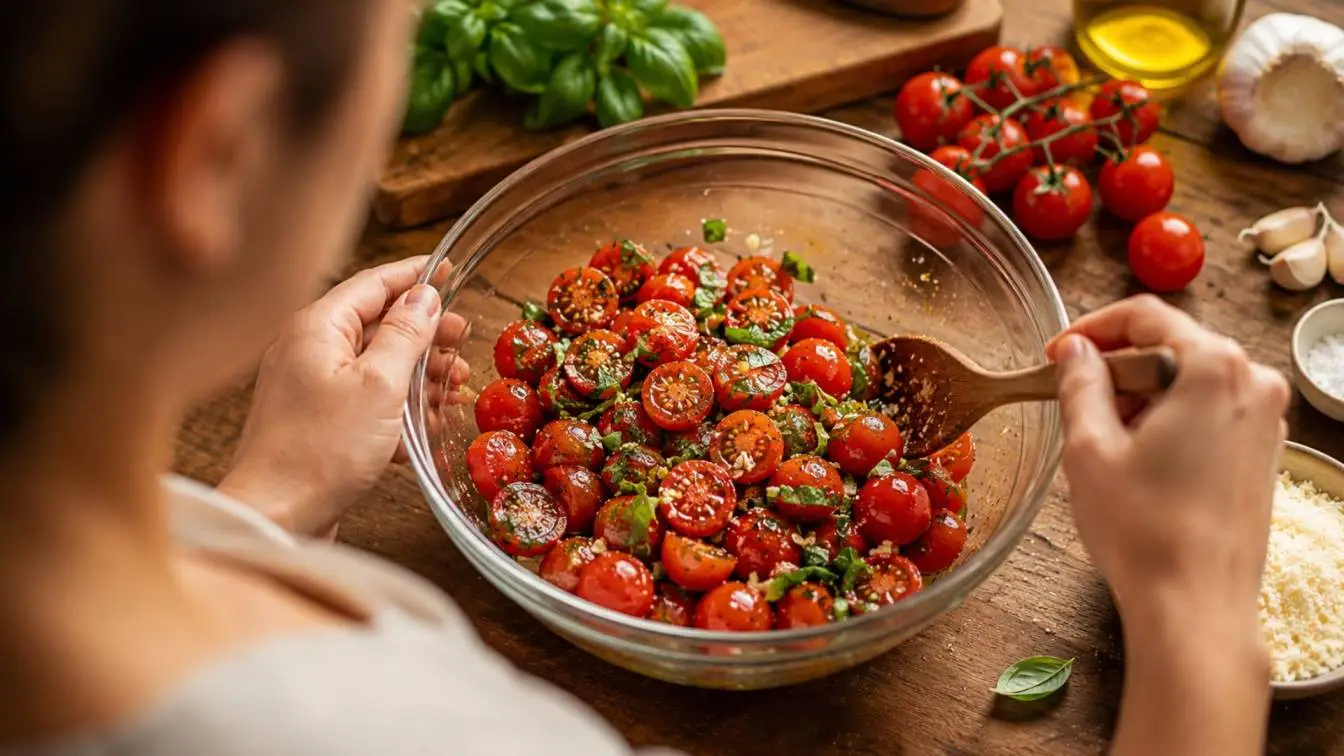
Cherry Tomatoes
Ingredients
Instructions
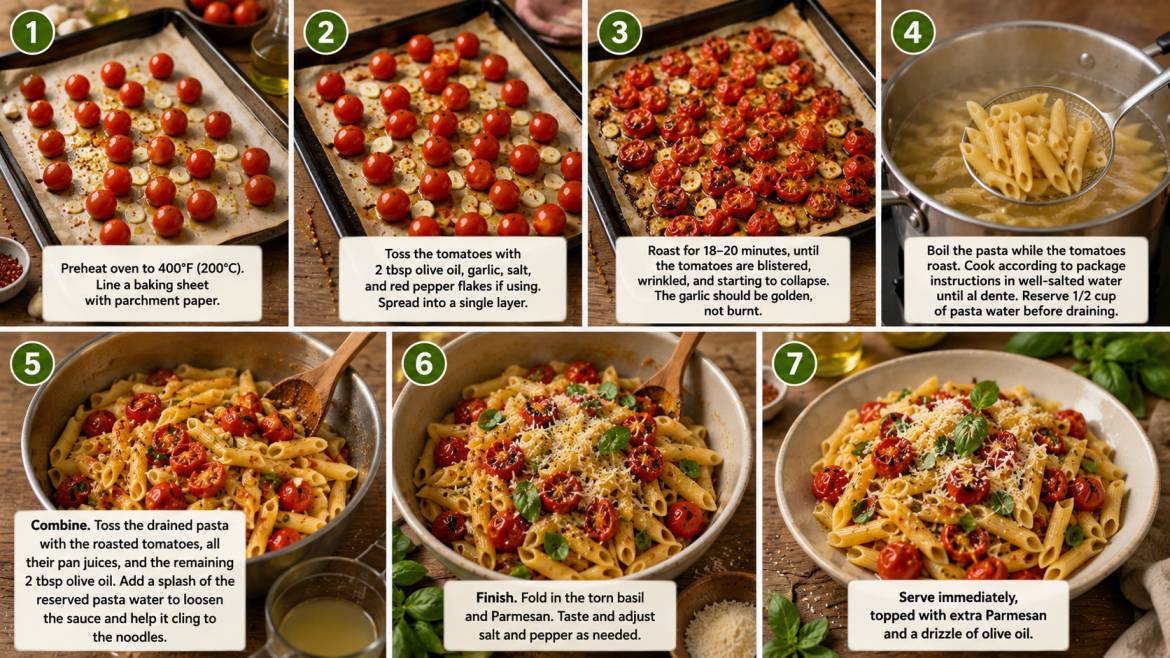
Preheat the oven
to 400°F (200°C). Line a baking sheet with parchment paper.
Toss the tomatoes
On the baking sheet, toss the whole cherry tomatoes with 2 tablespoons of olive oil, the sliced garlic, salt, and red pepper flakes if using. Spread into a single layer.
Roast for 18–20 minutes
until the tomatoes are blistered, wrinkled, and starting to collapse. The garlic should be golden, not burnt — check at the 15-minute mark if your oven runs hot.
Boil the pasta
while the tomatoes roast. Cook according to package instructions in well-salted water until al dente. Reserve 1/2 cup of pasta water before draining.
Combine.
In a large bowl or back in the warm pasta pot, toss the drained pasta with the roasted tomatoes, all their pan juices, and the remaining 2 tablespoons of olive oil. Add a splash of the reserved pasta water to loosen the sauce and help it cling to the noodles.
Finish.
Fold in the torn basil and Parmesan. Taste and adjust salt and pepper as needed.
Serve immediately,
topped with extra Parmesan and a drizzle of olive oil.
Variation tip: Stir in a spoonful of tomato paste before roasting for a deeper, richer sauce, or add torn burrata on top just before serving for extra creaminess.
Can You Freeze Cherry Tomatoes?
Yes — and it’s one of the most useful tricks for anyone who ends up with more tomatoes than time. Wash and thoroughly dry the tomatoes first, since excess moisture leads to freezer burn. Freeze them whole in a single layer on a baking sheet for a few hours, then transfer to a freezer bag once solid; this prevents them from clumping into one giant tomato block. Stored this way, cherry tomatoes keep well in the freezer for around 8 to 10 months.
Frozen cherry tomatoes are best used in cooked applications rather than fresh ones, since freezing breaks down their structure — think soups, sauces, stews, or a quick simmered topping for any cherry tomatoes recipe that doesn’t require a crisp bite. If you find yourself with green cherry tomatoes at the end of the season, those freeze well too and work nicely in relishes, chutneys, or a fried green tomato-style dish once thawed.
Key Takeaways
- Store fresh cherry tomatoes on the counter, not the fridge, to preserve texture.
- Roasting at 400°F (200°C) for 15–20 minutes is the most versatile cooking method for any cherry tomato recipe.
- Halve tomatoes for quick sauces; keep them whole for roasting trays and skewers.
- Freeze roasted or raw tomatoes (washed and dried first) for up to 8–10 months.
- A simple garlic-roasted pasta is one of the fastest ways to turn a surplus into a full meal.
Frequently Asked Questions
What can I do with cherry tomatoes before they go bad?
Roast them. A quick 15–20 minute roast with olive oil and garlic extends their usefulness for days and can be frozen for even longer storage. Roasted tomatoes also form the base of countless quick meals, so nothing goes to waste.
Is it better to cook cherry tomatoes whole or cut in half?
It depends on the dish. Whole tomatoes hold their shape and work best for roasting trays or skewers, while halved tomatoes break down faster and are ideal for quick pan sauces or pasta dishes that need that sauce to come together fast.
Can you freeze cherry tomatoes in a Ziploc bag?
Yes, but flash-freeze them on a tray first so they don’t stick together into one solid mass. Once frozen solid, transfer to the Ziploc bag and remove as much air as possible before sealing.
Is cherry tomato healthier than regular tomato?
Both offer similar nutritional benefits, including vitamin C, potassium, and antioxidants like lycopene — cherry tomatoes just carry them in a sweeter, more concentrated form because of their higher sugar-to-water ratio, which is also why they taste so good roasted.
Bring It Back to the Table
At the end of the day, a good cherry tomatoes recipe isn’t complicated — it’s about respecting an ingredient that’s already doing most of the work for you. Roast them, freeze what you can’t use, and don’t be afraid to build an entire meal around a small, unassuming tomato. The next time you’re staring at a bowl of cherry tomatoes wondering what comes next, you’ll have an answer.
If this guide helped, save it for later and follow along for more practical, no-fuss recipes on Pinterest @PalatableRecipesDotCom — it’s where new cherry tomato recipe ideas and seasonal cooking inspiration get pinned first. Got a favorite way to use up a tomato surplus? Drop it in the comments — the best ideas usually come from someone else’s kitchen experiment.