

Table of Contents
The first time I fried a green tomato, I ruined the whole batch. I was sixteen, standing in my grandmother’s kitchen in a haze of confidence I hadn’t earned, and I dropped those poor tomato slices straight into oil that wasn’t nearly hot enough. What came out of the pan wasn’t the crackly, golden slices I’d been dreaming about — it was a greasy, sad mess that slid right off its breading. My grandmother didn’t say much. She just handed me a fresh tomato, turned the burner up, and said, “Watch this time.” That lesson stuck with me for twenty years, and it’s the reason this recipe exists in the form it does today.
If you’ve ever typed that search into a bar at 5 p.m. while staring at a bowl of unripe tomatoes from your garden, you already know the questions that come next. Do you soak them first? Flour or cornmeal? Do you really need buttermilk? And why, no matter how careful you are, do they sometimes turn soggy the second they hit the plate? I’ve spent years testing this recipe in real Southern kitchens, and I’m going to walk you through exactly what works — step by step, no guesswork required.
Why This Fried Green Tomatoes Recipe Actually Works
Here’s the truth nobody tells you: the “secret” to a great result isn’t a secret ingredient. It’s technique. Green tomatoes are firm, tart, and hold far less moisture than their ripe red cousins, which actually makes them perfect for frying — if you handle that moisture correctly. Most disappointing results come down to three things: oil that isn’t hot enough, breading that isn’t properly layered, and tomatoes that sit too long before they hit the pan.
This recipe solves all three. We’re using a classic three-step breading station — flour, buttermilk, cornmeal — because that combination gives you a crust that’s genuinely crisp, not just coated. It’s the same method you’ll find behind the best Southern-style version, whether it’s your grandmother’s recipe or one adapted from Paula Deen’s classic approach.
Key Takeaways Before You Start
- Choose firm, unripe green tomatoes — the greener, the better for structure and tang.
- Skip the soaking step; salting and resting briefly does more work than a water bath.
- Use the flour–buttermilk–cornmeal breading order for a crust that actually sticks.
- Fry at 350–375°F (175–190°C) in a shallow layer of oil, and don’t crowd the pan.
- Drain on a wire rack, not paper towels, to avoid steaming your crispy coating into mush.
Fried Green Tomatoes Recipe: Step by Step
Prep time: 15 minutes | Cook time: 15 minutes | Total time: 30 minutes | Servings: 4
Ingredients
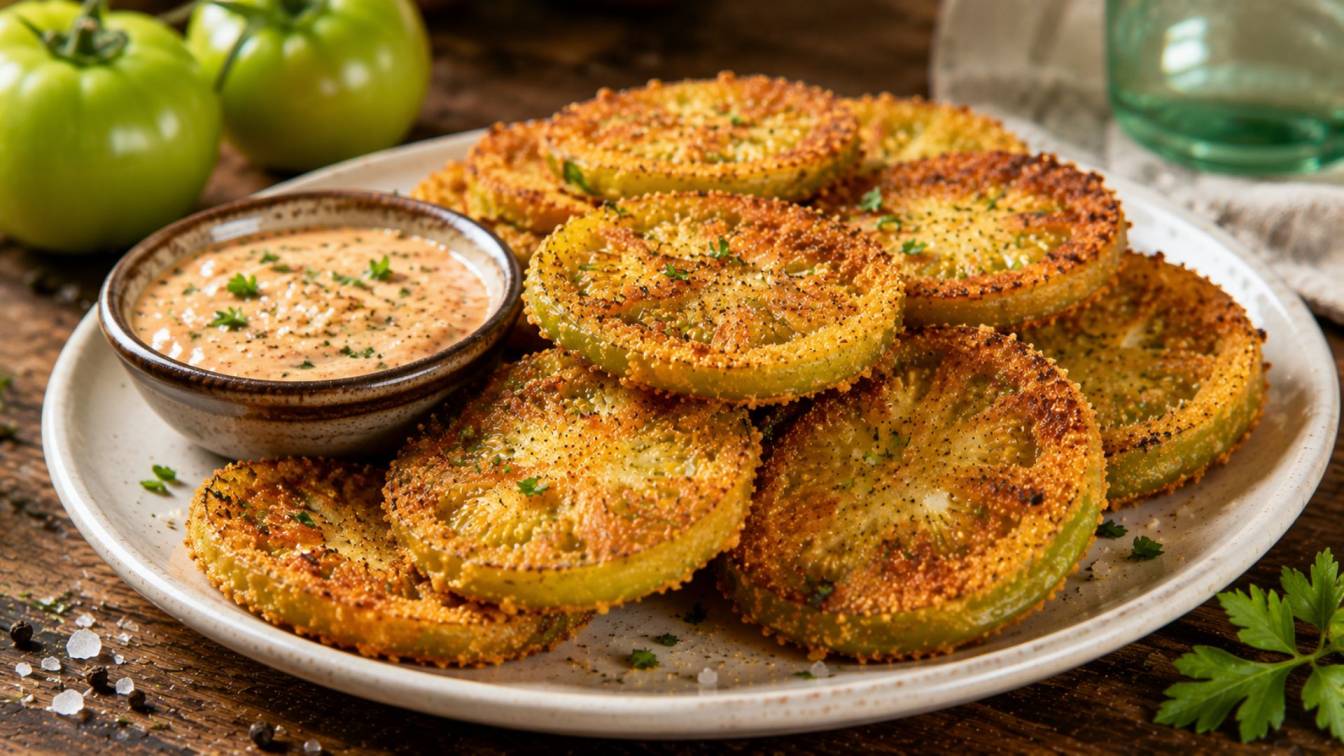
Fried Green Tomatoes
Ingredients
Instructions
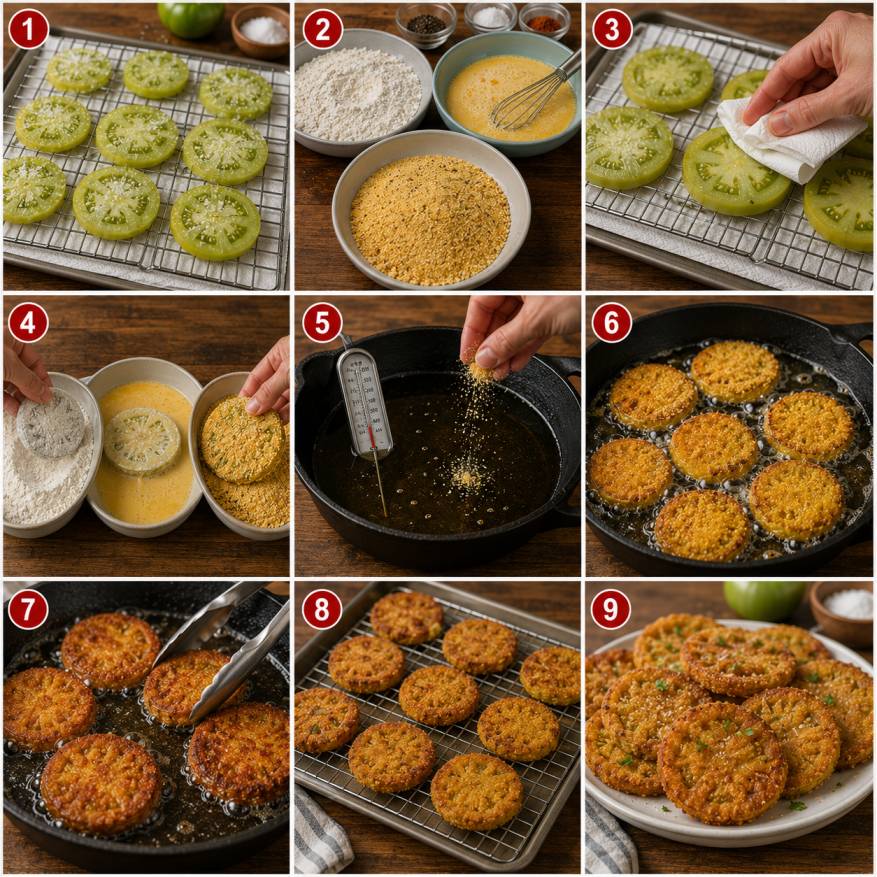
1-Salt the tomatoes
Lay the tomato slices on a wire rack or paper towels and sprinkle both sides with salt. Let them rest for 10 minutes — this draws out excess moisture and is genuinely all the “soaking” this recipe needs.
2-Set up your breading station
In one shallow bowl, add the flour. In a second bowl, whisk the buttermilk and egg together. In a third bowl, combine the cornmeal, breadcrumbs (if using), pepper, garlic powder, and cayenne.
3-Pat the tomatoes dry
Blot away the moisture that surfaced after salting so your flour actually adheres.
4-Bread each slice
Dredge in flour first, shaking off the excess. Dip into the buttermilk mixture. Finish by pressing firmly into the cornmeal mixture, coating both sides completely.
5-Heat the oil
Pour oil into a heavy skillet (cast iron is ideal) to about 1 inch deep and heat to 350–375°F. Test with a pinch of cornmeal — it should sizzle immediately on contact.
6-Fry in batches
Add tomato slices without crowding the pan. Fry 2–3 minutes per side, until deep golden brown and crisp.
7-Drain properly.
Transfer to a wire rack set over a baking sheet, not directly onto paper towels, so trapped steam can’t soften your crust.
8-Season and serve
Sprinkle with a touch more salt immediately after frying, while they’re still hot, and serve right away.
Common Mistakes That Ruin This Dish
Even a solid recipe can go wrong in the pan. The most common culprit is oil temperature — too low, and the breading absorbs oil instead of crisping, leaving you with that greasy, soggy texture everyone dreads. Overcrowding the skillet does the same thing by dropping the oil temperature all at once. Another frequent mistake is skipping the flour layer before the buttermilk dip; without it, the wet batter has nothing to grip, and your breading slides right off in the oil.
One more thing worth knowing, since it comes up constantly: no, this dish has nothing to do with cannibalism or anything sinister — that association actually traces back to the 1991 film “Fried Green Tomatoes,” not the recipe itself. It’s simply a beloved Southern comfort food with a great movie named after it.
Frequently Asked Questions
Should I soak green tomatoes before frying?
No — soaking in water isn’t necessary and can actually add moisture you don’t want. A better method is salting the slices for 10 minutes to draw excess liquid out, then patting them dry before breading. This gives you a crisper, less soggy result than soaking ever will.
Do you fry green tomatoes in cornmeal or flour?
The best results use both. Flour first helps the wet buttermilk mixture adhere to the tomato, and cornmeal on the outside is what gives you that signature crunchy, slightly gritty Southern texture. Skipping either layer weakens the final crust.
Do you need buttermilk for fried green tomatoes?
Buttermilk isn’t strictly mandatory, but it makes a real difference. Its acidity helps tenderize the tomato slightly and helps the cornmeal coating cling far better than plain milk or egg alone. If you’re out of buttermilk, a mix of milk with a splash of lemon juice or vinegar works as a substitute.
How do you keep fried green tomatoes from getting soggy?
Three things matter most: fry at the correct temperature (350–375°F), avoid overcrowding the pan, and drain your finished tomatoes on a wire rack instead of paper towels. Paper towels trap steam underneath the tomatoes, which softens the crust within minutes — a wire rack lets air circulate and keeps every batch crisp.
Final Thoughts
Twenty years after that disastrous first attempt in my grandmother’s kitchen, this dish has become one of the recipes I make most often in late summer, right when the garden is overflowing with tomatoes that haven’t quite ripened yet. There’s something satisfying about turning what looks like an “unfinished” ingredient into one of the crispiest, most craveable dishes on the table. If you’re looking for another cozy, tomato-forward take on this Southern classic, this fried green tomatoes recipe from Butter Be Ready is worth a look for comparison. And if you’re in the mood to round out your spread with more bite-sized Southern favorites, this collection of snack and appetizer recipes is a great next stop.
Give this recipe a try this weekend, and let me know in the comments how your batch turned out — soggy tomato stories welcome, we’ve all been there. If you want to save this for later or see what else is cooking, come find me on Pinterest @PalatableRecipesDotCom — I’m pinning new recipes there every week, and I’d love to see you there.