
Table of Contents
From choosing the right mozzarella to avoiding the five most common mistakes — this is the only guide you’ll ever need.
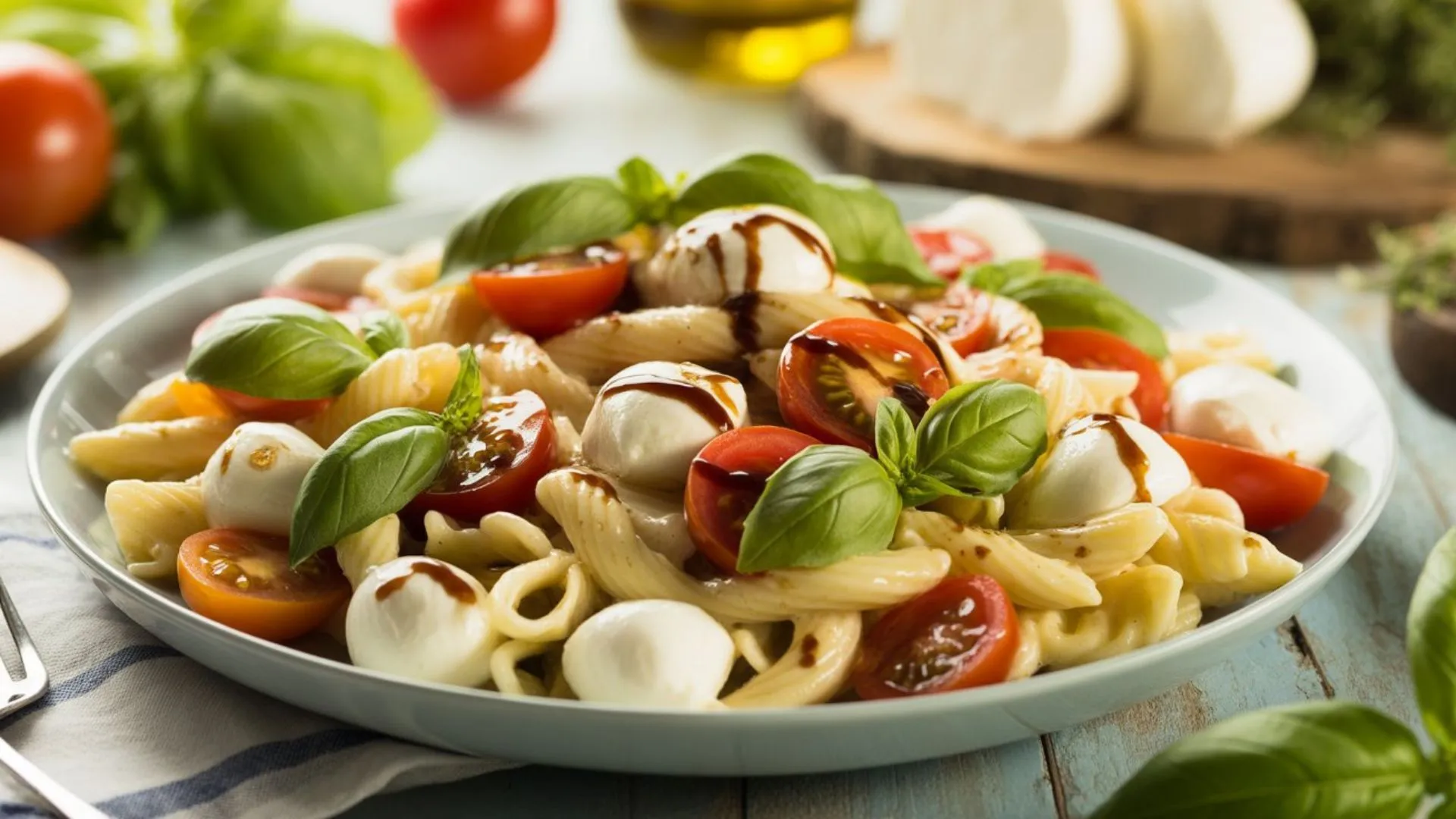
There’s a dish that shows up at every summer gathering, potluck, and backyard barbecue — and somehow, it still manages to steal the show every single time. Caprese pasta salad is one of those rare recipes that feels effortlessly Italian, looks beautiful on the table, and comes together in under 30 minutes. But here’s the thing: most people aren’t making it as well as they could be.
After spending time testing different versions of this dish — experimenting with pasta shapes, dressings, mozzarella types, and layering techniques — it’s clear there’s more to this “simple” salad than meets the eye. Whether you’re making it for the first time or you’ve done it a hundred times, this guide will help you understand every dimension of a truly great caprese pasta salad: what goes in it, what ruins it, and how to make it your own.
Key Takeaways
- Fresh mozzarella (preferably buffalo) makes a dramatic difference in taste and texture.
- Never rinse your pasta — it strips away the starch that helps the dressing cling.
- The best dressing is a simple balsamic-olive oil combo, and yes — balsamic vinegar absolutely belongs on caprese salad.
- This dish can be made ahead of time; just add the fresh basil and dressing right before serving.
- Four core ingredients form the foundation — the rest is about quality and technique.
What Exactly Is Caprese Pasta Salad?
At its heart, caprese pasta salad is a fusion of two Italian classics: the traditional Insalata Caprese (that gorgeous trio of tomatoes, mozzarella, and basil from the island of Capri) and cold pasta salad. The result is something greater than the sum of its parts — a dish that’s hearty enough to serve as a meal but light enough to feel like summer on a plate.
Italians eat caprese in its simplest form — a few slices of ripe tomato, fresh mozzarella, a handful of basil leaves, a drizzle of olive oil, and a pinch of salt. No fuss. No complicated layering. The pasta version builds on that simplicity and makes it more filling and portable. The genius is in keeping that clean, fresh flavor profile while giving it a little more substance.
The 4 Core Ingredients (And Why Each One Matters)
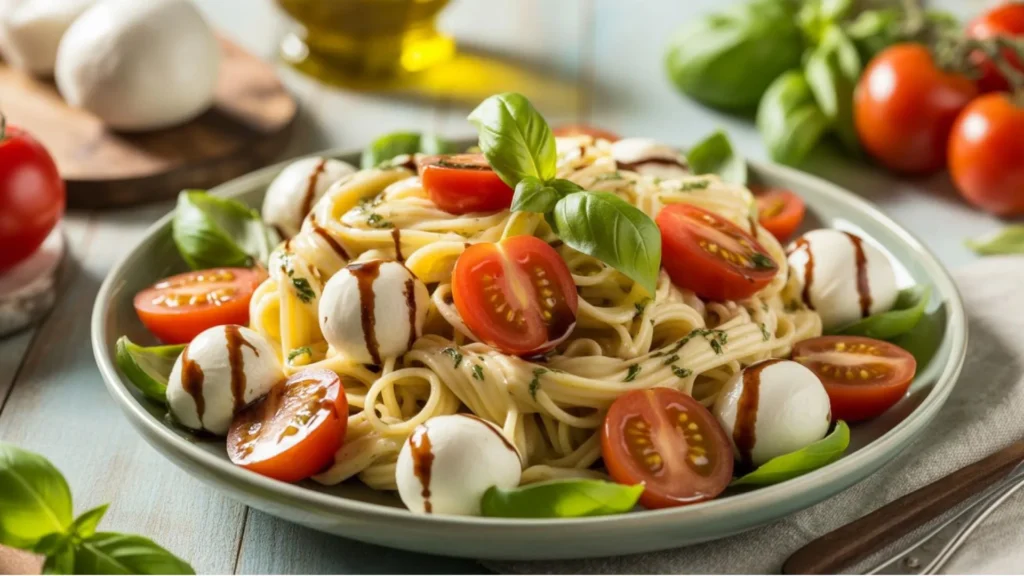
When people ask what the four ingredients in pasta salad are, in the caprese world, there’s a very clear answer. Get these right, and everything else falls into place.
1. Pasta
Shape matters more than you’d think. You want something that holds dressing in its curves and grabs onto the other ingredients — think rotini, fusilli, farfalle, or penne. Avoid long pasta like spaghetti; it’s awkward to eat cold and doesn’t mix well with chunky ingredients. Cook your pasta to al dente, not beyond. Overcooked pasta turns mushy when it sits in dressing. And whatever you do — do not rinse it under cold water. This is one of the biggest pasta mistakes people make. Rinsing removes the surface starch that helps sauces and dressings adhere. Instead, drain it and let it cool at room temperature, tossing occasionally.
2. Fresh Mozzarella
Not all mozzarella is created equal. For caprese pasta salad, fresh mozzarella is non-negotiable — the low-moisture shredded kind you’d put on pizza will not give you the same result. Fresh mozzarella comes packed in water or whey and has a soft, pillowy texture with a gentle milky flavor. Even better? Go for mozzarella di bufala (buffalo mozzarella) if you can find it. It’s richer, creamier, and more complex. Bocconcini (small balls) or ciliegine (cherry-sized) work perfectly in pasta salads since you don’t even need to cut them.
3. Tomatoes
Cherry tomatoes or grape tomatoes are the go-to choice here — they’re naturally sweeter, hold their shape, and don’t release as much water as sliced beefsteak tomatoes would. Halve them for easier eating. If you’re feeling adventurous, mix colors: red, yellow, and orange tomatoes make the salad look stunning. Whatever you do, use ripe tomatoes. An unripe tomato will drag the whole dish down.
4. Fresh Basil
Dried basil is not a substitute here. Fresh basil is bright, aromatic, and almost floral — it’s one of the things that makes this dish feel alive. Tear the leaves by hand rather than chopping them; cutting basil causes oxidation and turns the leaves black at the edges. Add the basil right before serving to preserve its color and fragrance.
The Dressing: Balsamic Vinegar and Olive Oil
Yes, balsamic vinegar absolutely goes on caprese salad. There’s a reason people ask — balsamic can be polarizing, and a cheap, overly acidic balsamic can ruin an otherwise perfect dish. But a good quality balsamic (look for “Modena” on the label, or use a balsamic glaze) adds a subtle sweetness and depth that makes the whole salad sing.
The simplest dressing is also the best: extra virgin olive oil, balsamic vinegar, a pinch of salt, and cracked black pepper. Whisk them together in a 3:1 ratio (three parts oil to one part vinegar) and you’re done. You can add a small clove of minced garlic or a teaspoon of Dijon mustard if you want a little more punch, but honestly — the simpler the better with caprese.
💡 Pro Tip: Dress the pasta while it’s still slightly warm. It will absorb the flavors of the dressing much better than cold pasta would. Then refrigerate, and add the fresh basil and any remaining dressing just before serving.
5 Mistakes to Avoid When Making Pasta Salad
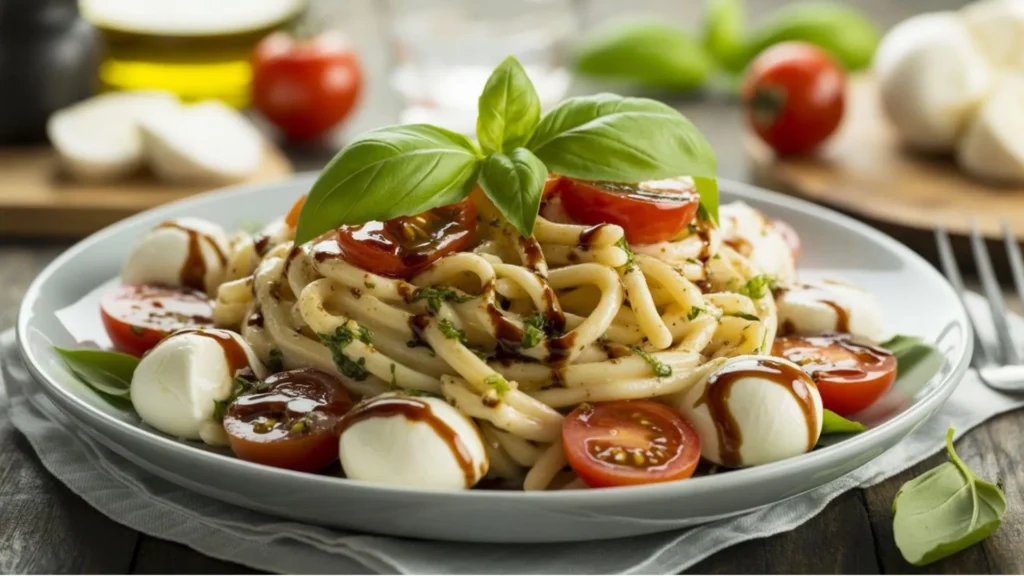
This is where a lot of home cooks go wrong — and small mistakes make a big difference in the final result.
Mistake #1: Rinsing the Pasta
As mentioned above, this is the number one pasta mistake people make. Cold water rinse = no dressing adhesion = bland, slippery pasta. Skip the rinse, every time.
Mistake #2: Using Mediocre Ingredients
Caprese pasta salad has very few ingredients, which means each one is on full display. There’s nowhere to hide a watery tomato or a rubbery mozzarella. Quality matters enormously in a dish this simple.
Mistake #3: Under-Seasoning
Cold food needs more seasoning than hot food — our taste receptors are less sensitive at lower temperatures. Season your pasta water generously (it should taste like the sea), and taste your salad again after refrigerating. It will likely need another pinch of salt before serving.
Mistake #4: Dressing Too Far in Advance
While you can make this dish ahead (see below), dressing it hours before serving causes the pasta to absorb all the liquid and the tomatoes to release water, leaving you with a soggy, diluted salad. Save some dressing to add right before serving.
Mistake #5: Forgetting the Finish
A final drizzle of good olive oil, a few fresh basil leaves, and a crack of black pepper right before plating — this finishing touch is what separates a memorable caprese pasta salad from a forgettable one. Don’t skip it.
Can You Make Caprese Pasta Salad Ahead of Time?
Absolutely — and in fact, it benefits from a little rest in the fridge. Thirty minutes to an hour allows the flavors to meld beautifully. Here’s how to do it right:
Cook, drain, and cool the pasta, then toss it with half the dressing. Add the tomatoes and mozzarella, cover, and refrigerate. Hold the basil and remaining dressing until right before serving. When you’re ready to plate, toss with the rest of the dressing, scatter on the fresh basil, and finish with a drizzle of olive oil. This two-stage dressing approach keeps the salad fresh and vibrant even if it’s been sitting for a few hours.
For more inspiration on building the perfect version of this dish, check out this wonderful take on caprese pasta salad from Cookie and Kate — it’s a beautifully crafted recipe worth bookmarking.
Classic Caprese Pasta Salad — Step-by-Step Recipe
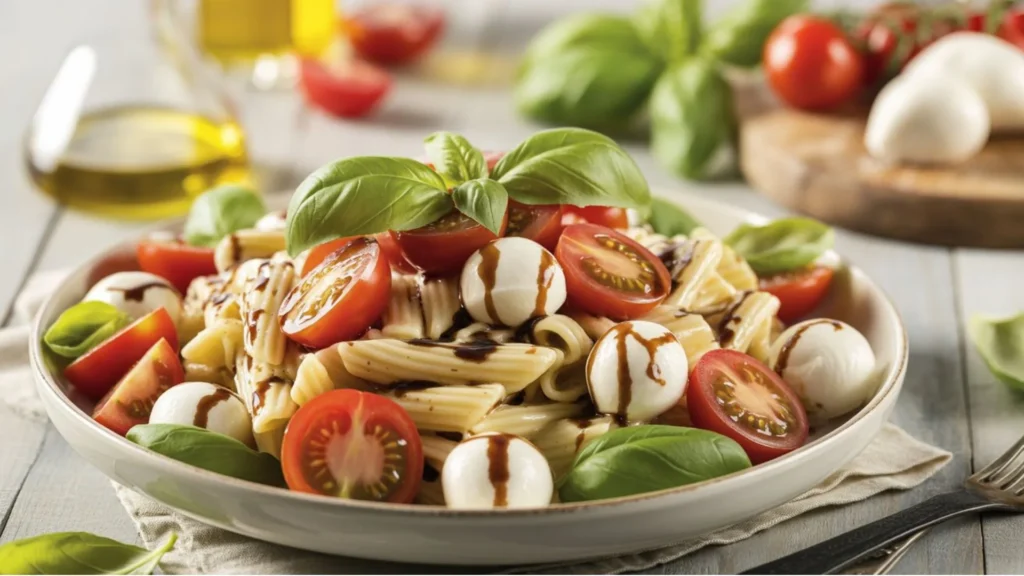
Prep Time15 minutesCook Time12 minutesRest Time30 minutesTotal Time~1 hourServings6DifficultyEasy
Ingredients
- 12 oz (340g) rotini or fusilli pasta
- 2 cups cherry tomatoes, halved
- 8 oz (225g) fresh mozzarella balls (bocconcini or ciliegine), halved if large
- 1 large bunch fresh basil leaves (about 1 cup loosely packed), torn
- 3 tablespoons extra virgin olive oil (plus extra for finishing)
- 1 tablespoon high-quality balsamic vinegar (or balsamic glaze)
- 1 small clove garlic, minced (optional but recommended)
- 1 teaspoon Dijon mustard (optional, for an emulsified dressing)
- Salt and freshly cracked black pepper, to taste
- Red pepper flakes, to taste (optional)
Step-by-Step Instructions
- Salt your water generously — then cook the pasta. Bring a large pot of water to a rolling boil. Add a generous amount of salt — the water should taste noticeably salty, like a light broth. This is your one chance to season the pasta itself. Add the rotini or fusilli and cook according to package instructions until just al dente (usually 8–10 minutes). You want a slight bite — it will soften further as it absorbs the dressing. Taste it one minute before the suggested time to catch it at the right moment.
- Drain — but do NOT rinse. Drain the pasta in a colander and shake off as much water as possible. Resist every urge to rinse it under cold water. The surface starch on each piece of pasta is what allows the dressing to cling. Rinse it away, and you’ll end up with a slippery, bland salad. Spread the pasta out on a baking sheet or large bowl to help it cool faster if you’re in a hurry.
- Make the balsamic dressing. While the pasta cools, whisk together the olive oil, balsamic vinegar, minced garlic (if using), and Dijon mustard (if using) in a small bowl or jar. Season with a good pinch of salt and several cracks of black pepper. Taste it — it should be well-balanced, slightly tangy, and fragrant. If you want it a little sweeter, add a tiny drizzle of honey or use balsamic glaze instead of plain vinegar.
- Dress the warm pasta first. Once the pasta has cooled to room temperature (not cold — slightly warm is ideal), transfer it to a large mixing bowl. Pour about two-thirds of the dressing over the pasta and toss well to coat every piece. Warm pasta absorbs flavors like a sponge, and this first coat is what gives the salad its depth. Let it sit for 5 minutes, then toss again.
- Add the tomatoes and mozzarella. Fold in the halved cherry tomatoes and mozzarella balls. Be gentle here — you don’t want to break up the cheese or squash the tomatoes. Season everything lightly with a pinch of salt. Taste and adjust. At this stage, the salad might look a little dry — that’s intentional. The tomatoes will release some juice as they sit, and you’ll add more dressing at the end.
- Refrigerate to let the flavors develop. Cover the bowl with plastic wrap or transfer to an airtight container and refrigerate for at least 30 minutes and up to 4 hours. This resting time is not optional — it’s where the magic happens. The pasta absorbs the dressing, the tomatoes soften slightly and release their juices, and all the flavors come together into something coherent and delicious.
- Taste and re-season before serving. Take the salad out of the fridge about 10–15 minutes before serving. Cold dulls flavors, so let it come up slightly in temperature. Taste it again — cold food almost always needs more salt than you think. Add the remaining dressing, toss gently, and adjust the seasoning with salt, pepper, and a tiny splash more balsamic if needed.
- Add the fresh basil and finish like a pro. Tear the fresh basil leaves by hand and scatter them over the salad. Fold them in gently — you want some leaves to be visible on top. Finish with a generous drizzle of your best extra virgin olive oil, a final crack of black pepper, and a pinch of red pepper flakes if you like a little warmth. Plate it, step back, and take a moment to appreciate how beautiful it looks.
💡 Make-Ahead Notes: This salad keeps well in the refrigerator for up to 2 days. If making more than 2 hours ahead, hold the basil separately and add just before serving to prevent wilting and darkening. Always re-taste and re-dress before serving — pasta absorbs a lot of dressing as it sits.
Variations to Try
- Add protein: Grilled chicken, shrimp, or white beans turn this into a complete meal.
- Make it more interesting: Add pitted Kalamata olives, sun-dried tomatoes, or a handful of arugula for peppery bite.
- 3-ingredient shortcut version: Pasta + cherry tomatoes + mozzarella, dressed with just olive oil and salt. Sometimes the simplest version is the best.
- Layer caprese properly: For a presentation-worthy platter version, layer sliced tomatoes and mozzarella first, then pile the dressed pasta on top and garnish with basil sprigs.
Looking for more crowd-pleasing salad ideas and easy entertaining recipes? Browse the full collection at Palatable Recipes — Snacks & Appetizers for more inspiration.
Frequently Asked Questions About Caprese Pasta Salad
What kind of mozzarella is best for caprese pasta salad?
Fresh mozzarella is the only real option — and if you can get your hands on buffalo mozzarella (mozzarella di bufala), even better. It has a creamier, richer flavor than cow’s milk fresh mozzarella and melts almost on the tongue. For pasta salads specifically, look for bocconcini or ciliegine (small balls) that you can toss in whole or halved without much fuss. Avoid low-moisture, part-skim mozzarella at all costs — it’s rubbery, bland, and completely misses the spirit of the dish.
Should pasta be rinsed for a cold pasta salad?
This is one of the most Googled pasta questions — and the answer is a firm no. Rinsing cooked pasta under cold water washes away the surface starch that acts as a natural glue for sauces and dressings. Without it, your dressing slides right off the pasta and pools at the bottom of the bowl. The right approach is to drain the pasta well, then let it cool at room temperature while tossing it occasionally to prevent sticking. If you’re really in a hurry, spread it out on a baking sheet — it cools in minutes without losing that precious starch.
Does balsamic vinegar go on caprese salad?
Yes — and it’s one of the most classic additions. The key is using good balsamic. A cheap, harsh balsamic vinegar can overpower everything else in the dish, while a well-aged balsamic or balsamic glaze adds a nuanced sweetness and acidity that complements the creamy mozzarella and ripe tomatoes beautifully. In Italy, a balsamic drizzle over fresh caprese is completely standard. For pasta salad, whisk it into the dressing with olive oil and let it do its thing.
Can caprese pasta salad be made ahead of time?
Absolutely — and it actually gets better with a little time in the fridge. The trick is a two-stage dressing approach: dress the pasta with two-thirds of your dressing right after cooking (while it’s still warm), then refrigerate. Add the remaining dressing, fresh basil, and a finishing drizzle of olive oil right before serving. This prevents the salad from drying out while keeping the basil bright and fragrant. Made this way, caprese pasta salad holds well for up to 4 hours before serving and keeps in the refrigerator for up to 2 days.
Did You Try This Recipe?
We’d love to see your version! Share your caprese pasta salad photos and tag us — or drop your questions and tips in the comments below. This dish has so many wonderful variations and we’re always excited to discover new twists on a classic.
For more delicious recipe ideas and food inspiration, follow along on Pinterest:
📌 @PalatableRecipesDotCom on Pinterest
Save this recipe for later and share it with someone who loves Italian food as much as you do.