
Table of Contents
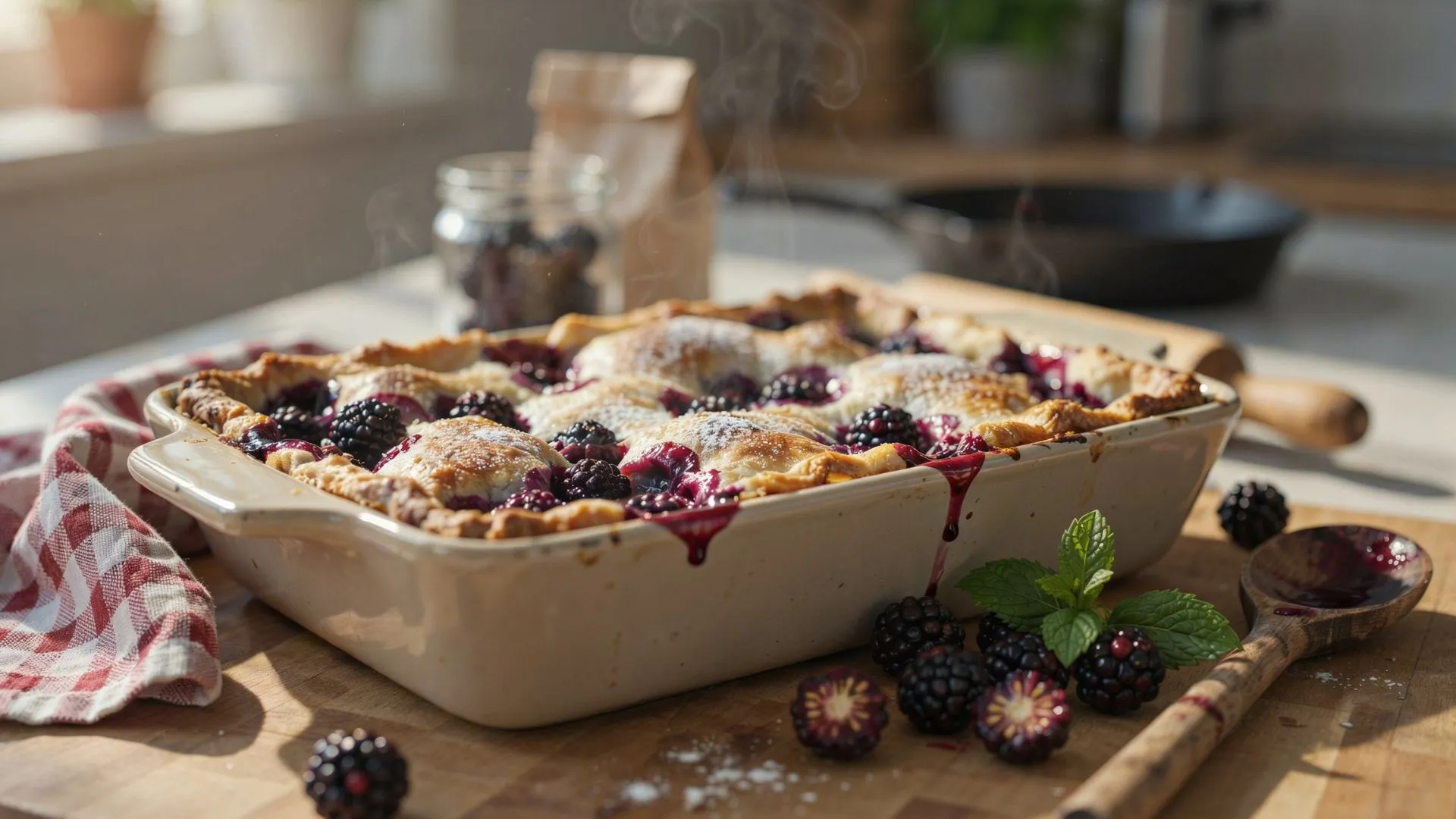
There’s a specific kind of summer afternoon that only exists in memory — the kind where a pan of hot blackberry cobbler is cooling on the counter, the kitchen smells like warm fruit and brown sugar, and someone is already hovering near the oven with a spoon. If you grew up with a version of that memory, this blackberry cobbler recipe is going to bring it right back. And if you didn’t? You’re about to make one.
Blackberry cobbler is one of those rare desserts where the whole is genuinely greater than the sum of its parts. A handful of pantry staples, a pound or two of berries, forty-five minutes in the oven — and somehow the result tastes like you spent all afternoon on it. But there’s a real difference between a blackberry cobbler that’s merely good and one that people ask you about for weeks afterward. The difference usually comes down to a few key decisions: how you treat the berries, what goes into the topping, and what you absolutely should not do (a soggy blackberry cobbler is a tragedy we will fully address below).
This guide covers everything — a full step-by-step blackberry cobbler recipe, flavor tips, the fresh vs. frozen berry debate, common mistakes, and answers to the questions people search most. Whether you’re attempting your very first blackberry cobbler or trying to level up a family recipe, you’ll find something useful here.
Quick Takeaways Before You Bake
- Lemon juice and a pinch of cinnamon are the two biggest flavor upgrades for your blackberry cobbler filling.
- Frozen berries work just as well as fresh — just don’t thaw them before putting them in the oven.
- The number one blackberry cobbler mistake is covering the pan while it bakes. Don’t do it.
- A thick, golden biscuit topping — not a thin cake batter — is the mark of an old-fashioned version done right.
- Cornstarch is your best friend for a jammy, non-watery filling that holds its shape beautifully.
What Gives Blackberry Cobbler More Flavor?
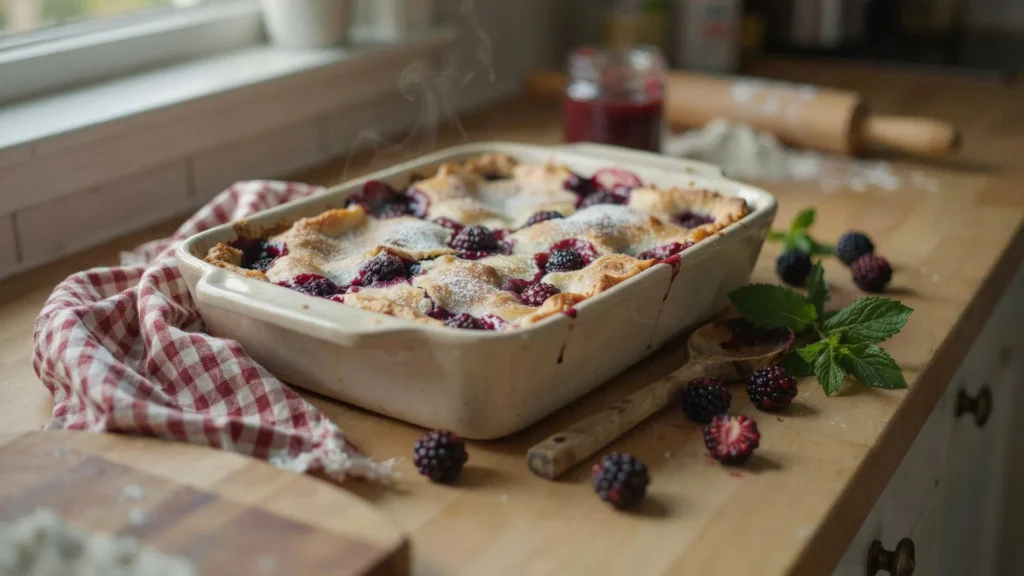
This is the question that separates a forgettable blackberry cobbler from one that makes people put down their forks to ask what you did differently. The answer is layered — and once you know it, you’ll use it every time.
Blackberries are naturally tart, which is both their greatest asset and their biggest challenge in a cobbler. Left alone, they can taste a little one-note. The goal is to amplify their depth without covering them up. Here’s how:
Lemon juice. A tablespoon or two of fresh lemon juice added to the blackberry cobbler filling does something almost magical — it intensifies the berry flavor rather than making things taste lemony. The acidity brightens everything and makes the fruit taste more like itself. This is the single most impactful addition you can make, and it’s backed up by virtually every classic recipe, including the beloved version over at Love and Lemons.
Warm spices. A half teaspoon of cinnamon, a tiny whisper of nutmeg, or even a pinch of cardamom worked into the filling adds a background warmth that rounds out the sharpness of the berries beautifully. Don’t go heavy — you want people to taste the fruit, not spice cake.
Vanilla extract. Add it to the topping batter, not just the filling. A teaspoon of good vanilla in your biscuit dough ties the whole blackberry cobbler together in a way that’s hard to pinpoint but impossible to miss.
Brown sugar instead of white. The molasses notes in brown sugar pair exceptionally well with blackberries. Use it in your filling and, if you like, sprinkle a little on top before baking for a caramelized crust.
A complementary flavor: peach. Blackberry and peach is a classic combination for a reason. If you have a ripe peach on hand, slice it in with your berries. It adds sweetness, complexity, and makes the dessert taste like pure summer.
“A tablespoon of lemon juice doesn’t make your blackberry cobbler taste lemony — it makes the blackberries taste more like blackberries. That’s the secret every great blackberry cobbler recipe shares.”
Fresh or Frozen Blackberries — Which Is Actually Better?
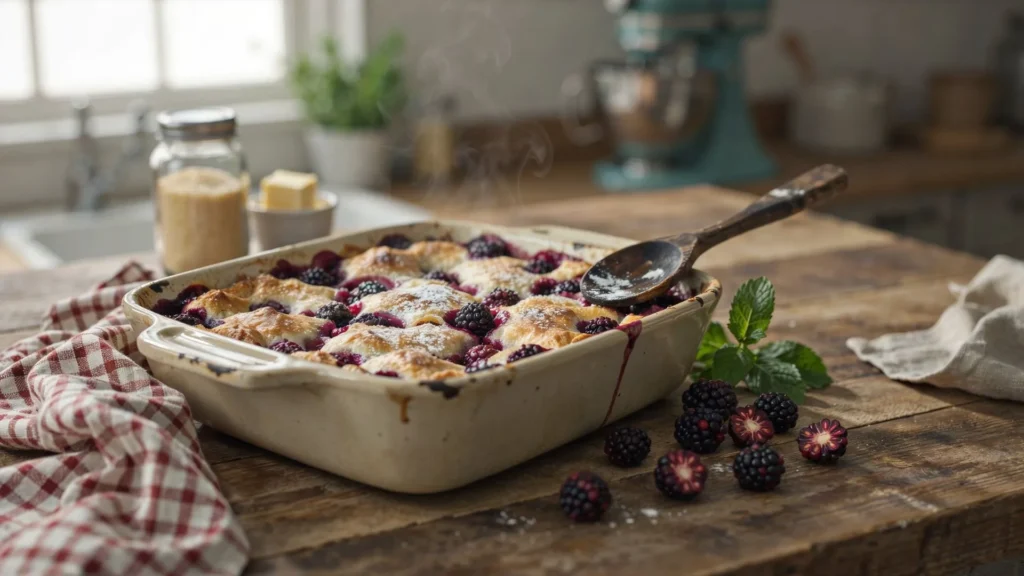
The honest answer: both work for a blackberry cobbler, and the difference is smaller than you think. But context matters.
Fresh blackberries are the dream when they’re in season (late June through August in most of the US). They’re plump, they hold their shape beautifully under heat, and they give your cobbler a brightness that’s hard to replicate. If you’re at a farmers market and the blackberries look perfect, buy them and bake tonight.
Frozen blackberries are picked at peak ripeness and flash-frozen, which means they often have more flavor than out-of-season fresh berries shipped across the country. For a blackberry cobbler baked in January or March, frozen is the better call — full stop.
The key difference in technique: do not thaw frozen berries before baking. Toss them frozen directly into the baking dish with your sugar and cornstarch mixture. Thawed berries release too much liquid at once, making your filling watery before the topping even has a chance to set.
One practical note: you’ll need about 4 cups of berries (roughly 20–24 oz) for a standard 9×13 blackberry cobbler. If you’re working with fresh, that’s about 2 pints. If frozen, a standard 24 oz bag is perfect.
Step-by-Step Recipe
Old-Fashioned Blackberry Cobbler
Prep15 min
Bake40 min
Serves8
Temp350°F
🫐 Berry Filling
- 4 cups fresh or frozen blackberries (≈ 24 oz)
- ½ cup granulated sugar
- 2 tbsp brown sugar
- 2 tbsp cornstarch
- 1 tbsp fresh lemon juice
- ½ tsp cinnamon
- Pinch of nutmeg (optional)
- 1 tsp lemon zest
Biscuit Topping
- 1½ cups all-purpose flour
- ½ cup granulated sugar
- 1½ tsp baking powder
- ¼ tsp baking soda
- ¼ tsp fine salt
- 6 tbsp cold unsalted butter, cubed
- ⅔ cup cold whole milk (or buttermilk)
- 1 tsp pure vanilla extract
- 1 tbsp coarse sugar (for topping)
Method
- Preheat your oven to 350°F (175°C)Lightly butter or spray a 9×13-inch baking dish. Set it aside. Preheating fully before the cobbler goes in ensures the topping starts cooking immediately, which is key to avoiding a dense, doughy layer.
- Prepare the blackberry cobbler fillingIn a large bowl, combine the blackberries, granulated sugar, brown sugar, cornstarch, lemon juice, lemon zest, cinnamon, and nutmeg if using. Toss gently until the berries are evenly coated. Pour into your prepared baking dish and spread it into an even layer. If using frozen berries, do this while they’re still frozen — don’t wait for them to thaw.
- Make the biscuit toppingIn a medium bowl, whisk together the flour, sugar, baking powder, baking soda, and salt. Add the cold cubed butter and use your fingertips (or a pastry cutter) to work it into the flour until the mixture looks like coarse, shaggy crumbs with some pea-sized butter pieces still visible. Cold butter = flaky, layered topping. Don’t overwork it.
- Add the wet ingredientsStir the vanilla extract into the cold milk, then pour it into the flour-butter mixture. Stir with a fork just until a shaggy dough forms. It should look a little rough — that’s exactly right. Overworking the dough at this stage develops gluten and leads to a tough, dense topping.
- Top the blackberry cobbler fillingDrop spoonfuls of the biscuit dough over the filling. You don’t need to cover every inch — the topping will spread as it bakes and the gaps let the berry juices bubble up around the edges, which is part of the beauty of a good cobbler. Sprinkle coarse sugar over the top of the dough.
- Bake your blackberry cobbler — uncovered — for 38–42 minutesPlace the baking dish on the center rack and bake until the topping is deep golden brown and the filling is bubbling at the edges. A toothpick inserted into the biscuit should come out clean. Do not cover the pan at any point — covering it traps steam and turns your beautiful topping into something sad and gummy.
- Rest, then serve your blackberry cobblerRemove it from the oven and let it rest for at least 10–15 minutes before serving. This allows the filling to thicken from bubbling to jammy and properly set. Serve warm with a generous scoop of vanilla ice cream, fresh whipped cream, or nothing at all — it’s wonderful on its own.
💡 Pro Tip: If the filling looks very liquid when you pull the blackberry cobbler from the oven, don’t panic. The cornstarch continues thickening as it cools. Give it 15 minutes and it’ll be perfectly jammy.
Common Mistakes to Avoid When Making Blackberry Cobbler
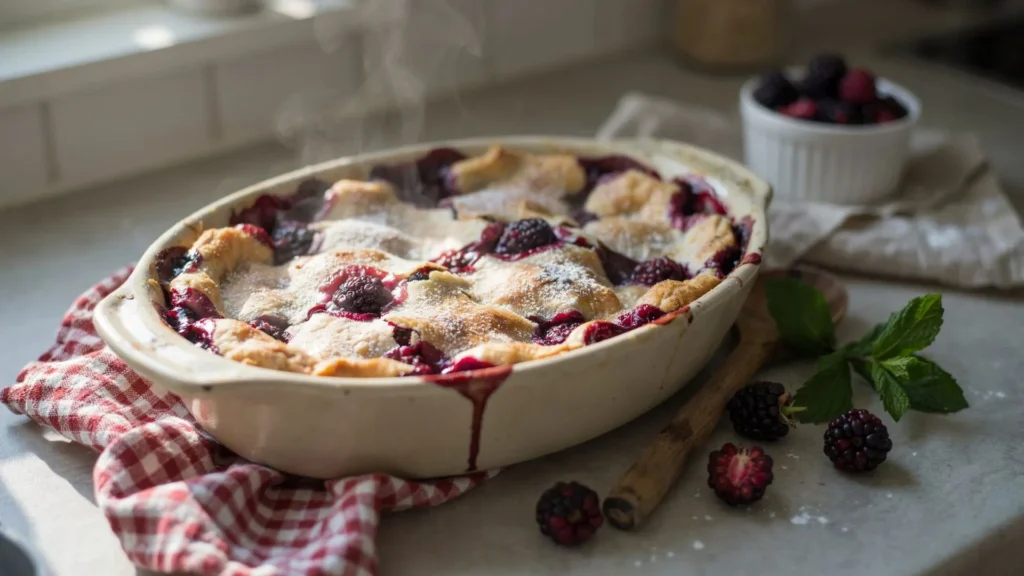
This classic dessert is forgiving — but it’s not immune to a few recurring errors that turn a beautiful bake into a disappointment. Here’s what goes wrong most often and exactly how to fix it:
| The Mistake | What Happens | The Fix |
|---|---|---|
| Covering the pan while baking | Steam builds up, topping becomes gummy and dense | Always bake uncovered |
| Thawing frozen berries first | Excess liquid makes filling watery and topping soggy | Use frozen berries straight from the freezer |
| Skipping cornstarch in the filling | Soupy, watery filling that pools under the topping | Always add 2 tbsp cornstarch to the berry mix |
| Overworking the biscuit dough | Gluten develops → topping becomes tough, not tender | Mix just until combined; lumpy is fine |
| Using warm butter in the topping | Butter melts into dough prematurely, no flaky layers | Keep butter ice-cold; cube it and refrigerate |
| Serving it immediately out of the oven | Filling is too loose and runny to hold its shape | Rest 10–15 minutes before serving |
The most asked-about issue with blackberry cobbler is the soggy bottom — and the truth is it almost always comes down to one of three things: too much liquid in the filling, covering the pan, or pulling it out of the oven too early. Nail those three and your blackberry cobbler will be golden-topped and jammy-bottomed every single time. For more inspiration and baking ideas, check out the full recipe collection at Palatable Recipes.
How Many Cups of Blackberries Do You Need for a Cobbler?
For a standard 9×13-inch baking dish blackberry cobbler that serves 8, you want about 4 cups of blackberries, which is roughly 20–24 ounces by weight. That’s approximately two standard pint containers of fresh berries or one 24 oz bag of frozen.
If you’re making a smaller 8×8 version for 4 people, scale down to 2–2½ cups of berries and halve all other quantities. The ratio of berry filling to biscuit topping should feel roughly equal by volume — you want each spoonful of this blackberry cobbler to have real fruit and real biscuit in it, not just one or the other.
Final Thoughts: Why This Cobbler Is Worth Making
There’s something grounding about making a blackberry cobbler from scratch. It doesn’t require a stand mixer, a digital scale, or any equipment beyond a bowl, a fork, and a baking dish. The whole thing comes together in under an hour. And yet the result — bubbling black-purple fruit beneath a golden, crackly biscuit topping — looks and tastes like something that required genuine effort and skill.
That’s the quiet magic of old-fashioned baking. Recipes that have survived generations aren’t complicated. They’re just good — made with quality ingredients, a little patience, and the knowledge of a few key techniques that separate a good blackberry cobbler from a truly great one.
Try this recipe once and you’ll understand why it keeps showing up in people’s warmest food memories. Then share it with someone, because that’s exactly what a great blackberry cobbler is for.
Made this blackberry cobbler recipe? Leave a comment below and tell me how it turned out — or what tweak you made that made it even better. I’d genuinely love to know.
Frequently Asked Questions
How do you prevent a soggy cobbler bottom?
The three main culprits behind a soggy cobbler are: too much liquid in the filling, covering the pan while baking, and underbaking. To prevent it, always add cornstarch to your berry mixture (it thickens the juices as they heat), bake the cobbler completely uncovered so steam escapes freely, and make sure the topping is fully golden and a toothpick comes out clean before you pull it. Also, let the cobbler rest for 10–15 minutes after baking — the filling continues thickening as it cools.
Are fresh or frozen blackberries better for cobbler?
Both work beautifully, but the better choice depends on the season. Fresh blackberries are ideal in peak summer (June–August) when they’re ripe and full-flavored. Outside of berry season, frozen blackberries are actually the smarter option — they’re picked and frozen at peak ripeness, which means more flavor than underripe fresh berries shipped from far away. The key with frozen: don’t thaw them before baking. Add them frozen directly to the dish with your sugar and cornstarch, otherwise you’ll get a watery filling.
What is the secret spice twist in blueberry (or blackberry) cobbler?
The “secret” most experienced bakers use is a small amount of cinnamon — about ½ teaspoon — combined with a tablespoon of fresh lemon juice in the berry filling. The cinnamon adds background warmth without making the cobbler taste spiced, and the lemon juice amplifies the natural berry flavor in a way that’s hard to identify but impossible to miss. Some bakers also add a tiny pinch of cardamom or nutmeg for an extra layer of depth. Use any one of these additions and your cobbler will taste noticeably more complex than the basic version.
Why did my cobbler come out gummy?
A gummy cobbler topping is almost always caused by one of two things: the pan was covered during baking (trapping steam that makes the biscuit wet and dense), or the cobbler was underbaked. Make sure you bake the cobbler fully uncovered on the center rack, and don’t pull it until the topping is deep golden brown — not pale golden, but genuinely dark and crisp on top. A third possibility: the dough was overworked, which develops too much gluten and makes the biscuit chewy rather than tender and crumbly.