
Table of Contents
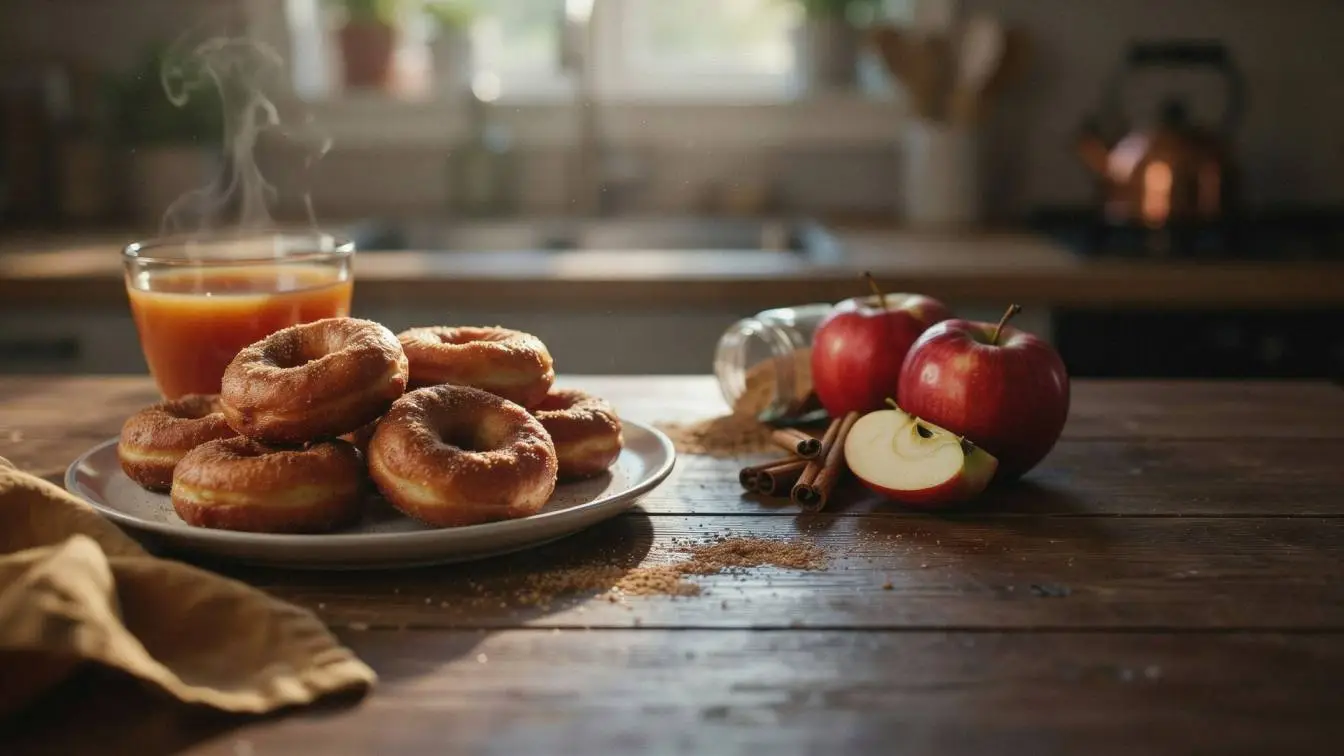
There’s a smell that means autumn has officially arrived, and it’s not pumpkin spice — it’s a warm apple cider donut, fresh out of the fryer or oven, rolled in cinnamon sugar while it’s still steaming. If you’ve ever stood in line at an orchard on a crisp October morning just for a bag of these, you already understand the appeal. This apple cider donuts recipe guide is for anyone who wants to bring that experience home, minus the drive and the line.
This apple cider donuts recipe leans into everything that made the orchard version so good in the first place. Apple cider donuts have a cult following for a reason. They’re denser and more cake-like than a typical yeast donut, spiced with cinnamon and nutmeg, and built around real reduced apple cider rather than just apple flavoring. Whether you’re chasing a Dunkin’-style version, trying to recreate a Trader Joe’s favorite, or just want a reliable apple cider donut recipe for the season, here’s everything worth knowing before you start mixing.
What Actually Makes a Good Apple Cider Donut?
The best apple cider donuts recipe starts with one non-negotiable step: reducing the cider. Simmering apple cider down to a concentrated syrup — usually from two cups down to about half a cup — is what separates a donut that merely tastes like cinnamon from one that actually tastes like apples. Skip this step and you’ll end up with a donut that’s spiced but flavorless at its core.
Cinnamon-sugar coating is essentially mandatory here; it’s the flavor most people associate with the category, and it’s part of what makes apple cider donuts feel distinctly East Coast and fall-specific, tied closely to orchard culture in states known for apple growing. Texture matters just as much as flavor. A good apple cider donut recipe produces something tender but sturdy enough to dunk in coffee without falling apart — cake donut territory, not bread donut territory.
What’s So Special About Apple Cider Donuts, Really?
Part of the appeal is nostalgia — this is a treat tied to a specific season and often a specific memory, whether that’s an orchard visit or a farmers market stand. But there’s also a genuine textural and flavor difference from other donuts that keeps people coming back. Compared to a glazed yeast donut, apple cider donuts are less sweet, more spiced, and carry a moisture and density from the cider reduction that a standard donut recipe simply doesn’t have.
On the nutrition side, it’s worth being realistic: a donut is a treat regardless of the apple content, and eating one occasionally fits comfortably into a balanced diet, while making it a daily habit is where things tip into “worth reconsidering” territory — same logic that applies to any baked good. If you’re looking at nutrition strictly by the numbers, an apple cider donut typically lands somewhere between 200 and 300 calories depending on size and coating, similar to many standard cake donuts.
Baked or Fried: Which Apple Cider Donut Recipe Wins?
This is the debate that comes up in nearly every apple cider donuts recipe search, and honestly, both camps have a point. Any solid apple cider donut recipe should acknowledge upfront that neither method is “wrong.” Fried apple cider donuts have that classic crisp exterior and slightly greasy richness that traditionalists swear by — it’s the orchard-stand version most people grew up on. Baked apple cider donuts trade a bit of that crispness for convenience: no hot oil, no splatter, and a donut pan instead of a thermometer and a pot of frying oil.
For a foolproof baked version with excellent texture, Sally’s Baking Addiction’s baked apple cider donuts is a widely trusted reference and a great benchmark for what a properly moist, well-spiced baked version should taste like. If you’re baking, all-purpose flour works fine, but make sure your baking powder is fresh — that’s the single biggest factor in getting a light, fluffy crumb instead of a dense one. Donuts, baked or fried, are best stored at room temperature in an airtight container rather than the fridge, since refrigeration dries out the crumb faster than it preserves it.
Step-by-Step Recipe: Baked Apple Cider Donuts
This is the apple cider donut recipe worth keeping on hand all season — baked, evenly spiced, and finished with a proper cinnamon-sugar coating.
Prep time: 15 minutes | Cook time: 15 minutes | Total time: 30 minutes (plus cider reduction) | Servings: 12 donuts
Ingredients
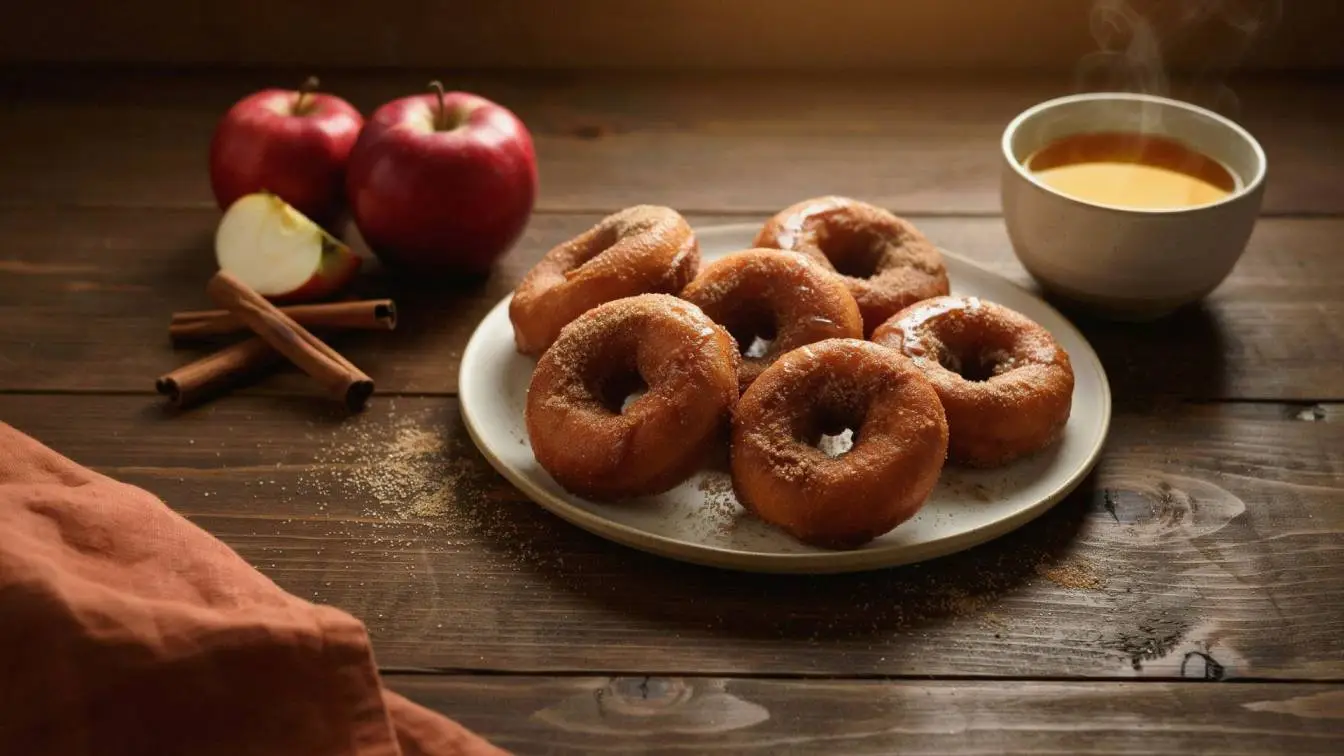
Apple Cider Donuts Recipe
Ingredients
Equipment
Instructions
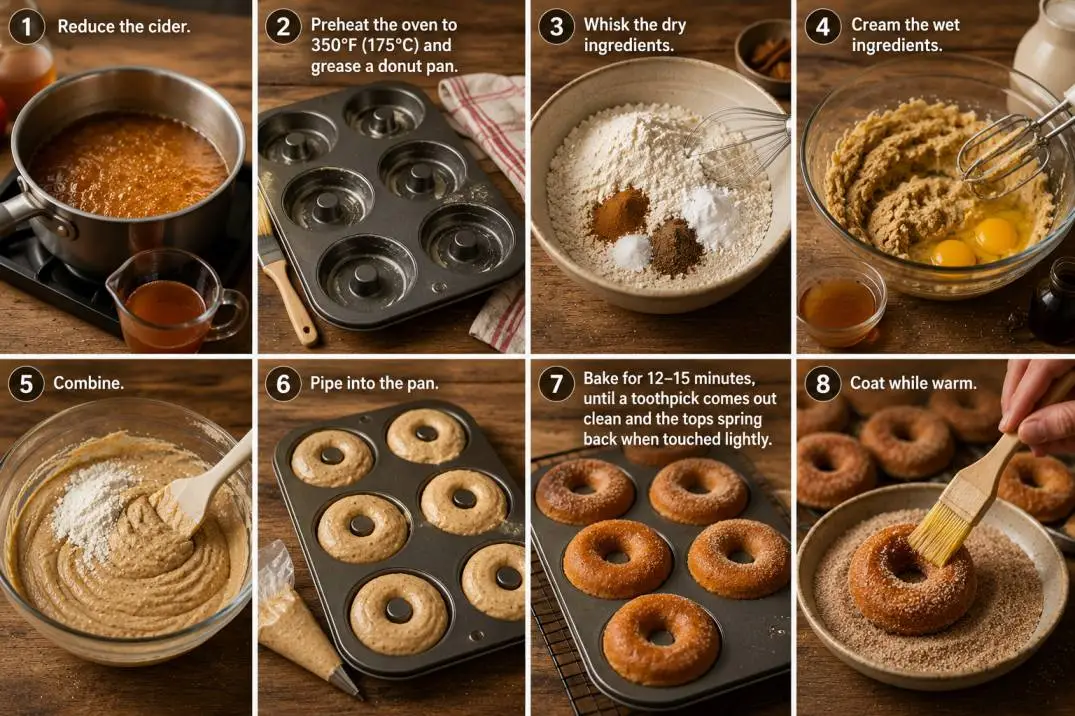
1-Reduce the cider.
Simmer 2 cups of apple cider in a small saucepan over medium heat for 15–20 minutes, until reduced to about 1/2 cup. Set aside to cool.
2-Preheat the oven
to 350°F (175°C) and grease a donut pan.
3-Whisk the dry ingredients.
In a bowl, combine the flour, baking powder, baking soda, cinnamon, nutmeg, and salt.
4-Cream the wet ingredients.
In a separate bowl, beat the softened butter and brown sugar until fluffy. Add the eggs one at a time, then mix in the buttermilk, vanilla, and cooled cider reduction.
5-Combine.
Fold the dry ingredients into the wet mixture until just combined — don’t overmix, or the donuts will turn dense instead of tender.
6-Pipe into the pan.
Transfer the batter to a piping bag (or a zip-top bag with the corner snipped) and pipe into the donut pan cavities, filling each about two-thirds full.
7-Bake
for 12–15 minutes, until a toothpick comes out clean and the tops spring back when touched lightly.
8-Coat while warm.
Let the donuts cool for 2–3 minutes, then brush each one with melted butter and roll in the cinnamon-sugar mixture while still warm — this is what makes the coating stick properly.
Variation tip: Swap half the granulated sugar in the coating for turbinado sugar for extra crunch, or drizzle with a simple maple glaze instead of the cinnamon-sugar for a different finish.
What’s the Best Oil (or Fat) for Apple Cider Donuts?
If you go the fried route instead for your apple cider donut recipe, oil choice matters more than most people realize. A neutral oil with a high smoke point — vegetable, canola, or peanut oil — is the standard choice, since it won’t compete with the cinnamon and cider flavors the way olive oil would. Most bakeries and large chains rely on the same category of neutral frying oil rather than shortening, mainly for consistency and shelf life at scale, though shortening can produce a slightly more tender crumb in small-batch home frying.
A common mistake worth avoiding, whether baking or frying: not letting the batter or dough rest briefly before cooking. A five-minute rest lets the baking powder start working and the flour hydrate evenly, which noticeably improves texture. And yes, most apple cider donut recipes do include eggs — they’re part of what gives the donut its structure and that slightly rich, cake-like bite.
Key Takeaways
Before you head to the kitchen, here’s what actually matters for a reliable apple cider donuts recipe:
- Reducing apple cider to a concentrated syrup is the single most important step in any real apple cider donuts recipe.
- Baked donuts are easier and less messy; fried donuts deliver a crisper, more traditional texture.
- 350°F (175°C) for 12–15 minutes is the standard baking range for a tender, fully cooked donut.
- Store donuts at room temperature in an airtight container, not the fridge.
- Coat donuts in cinnamon sugar while still warm so it actually sticks.
Frequently Asked Questions
A few things that come up constantly when people search for an apple cider donuts recipe:
Is it better to fry or bake apple cider donuts?
Neither is objectively “better” — frying gives a crisper, richer classic texture, while baking is easier, less messy, and still produces a moist, well-spiced donut. Home bakers without a fryer or deep pot generally get more consistent results going the baked route.
Should apple cider donuts be refrigerated?
No — keep them at room temperature in an airtight container. Refrigeration dries out the crumb and speeds up staling rather than preserving freshness, so they’re best enjoyed within 2–3 days on the counter.
What flour is best for baked apple cider donuts?
Standard all-purpose flour works well and is what most recipes call for. What matters more than the flour type is fresh baking powder and not overmixing the batter, both of which have a bigger impact on getting a light, fluffy crumb.
Do apple cider donuts have eggs in them?
Yes, most recipes include eggs, which help bind the batter and contribute to the donut’s dense, cake-like structure. It’s part of what distinguishes them from a lighter, airier yeast-raised donut.
Bring the Orchard Home
You don’t need an orchard trip or a long line to get a good apple cider donut — just a proper cider reduction, the right bake time, and a warm cinnamon-sugar coating at the end. Once you’ve made a batch from scratch, it’s hard to go back to the bagged version, and this apple cider donuts recipe is flexible enough to become a fall tradition of its own, whether you bake it every weekend in October or save it for one big batch before the season ends.
If this guide helped, save it for later and follow along for more seasonal, no-fuss recipes on Pinterest @PalatableRecipesDotCom — new fall recipes and cozy baking ideas get pinned there first. And if snacks and small bites are more your speed, this collection of snacks and appetizers is worth a browse for what to serve alongside your donuts. Baked yours yet? Let me know how the cinnamon-sugar coating turned out — that’s usually where people either nail it or learn the hard way why “warm” matters.