
Table of Contents
There’s a specific kind of Tuesday that calls for pesto pasta. You know the one — work ran long, the fridge looks suspiciously empty, and the idea of chopping six ingredients for dinner feels like a personal attack. That’s exactly the kind of night this pesto pasta recipe was built for. No fancy technique, no obscure ingredients, just a jar of pesto (or a food processor, if you’re feeling ambitious) and about twenty minutes between you and a bowl that tastes like you tried way harder than you actually did.
I’ve made some version of this pesto pasta recipe more times than I can count, and somewhere along the way I figured out the handful of small moves that separate “fine” pesto pasta from the kind people ask you to make again. That’s what this post is — not a fussy recipe, just the real version, the one that actually works on a Tuesday.
Key Takeaways
- Jarred pesto works great — the trick is loosening it with starchy pasta water instead of dumping it straight onto dry noodles.
- Short, ridged pasta shapes (fusilli, casarecce, penne) hold sauce better than long strands like spaghetti.
- Stir pesto in off the heat, not in a hot pan — direct heat dulls the basil and breaks the oil.
- A squeeze of lemon plus reserved pasta water turns “good” pesto into a genuinely silky sauce.
- Leftovers keep about 3 days refrigerated, though fresh basil pesto is always happiest the day it’s made.
Why This Pesto Pasta Recipe Earns a Spot in Regular Rotation
This pesto pasta recipe leans hard on that fact. Pesto pasta has a reputation as a “cheat” meal, and I understand why — nothing here simmers for two hours. But the reason it works so well isn’t laziness, it’s chemistry. Basil pesto is already a finished sauce: oil, garlic, cheese, and nuts blitzed into something that clings to noodles on contact. Cook the pasta right, save a splash of water, and dinner is basically done before you’ve decided what to drink with it. It’s also forgiving — toss in whatever vegetable or protein happens to be sitting in your fridge, and it still tastes like you planned it.
What You’ll Need
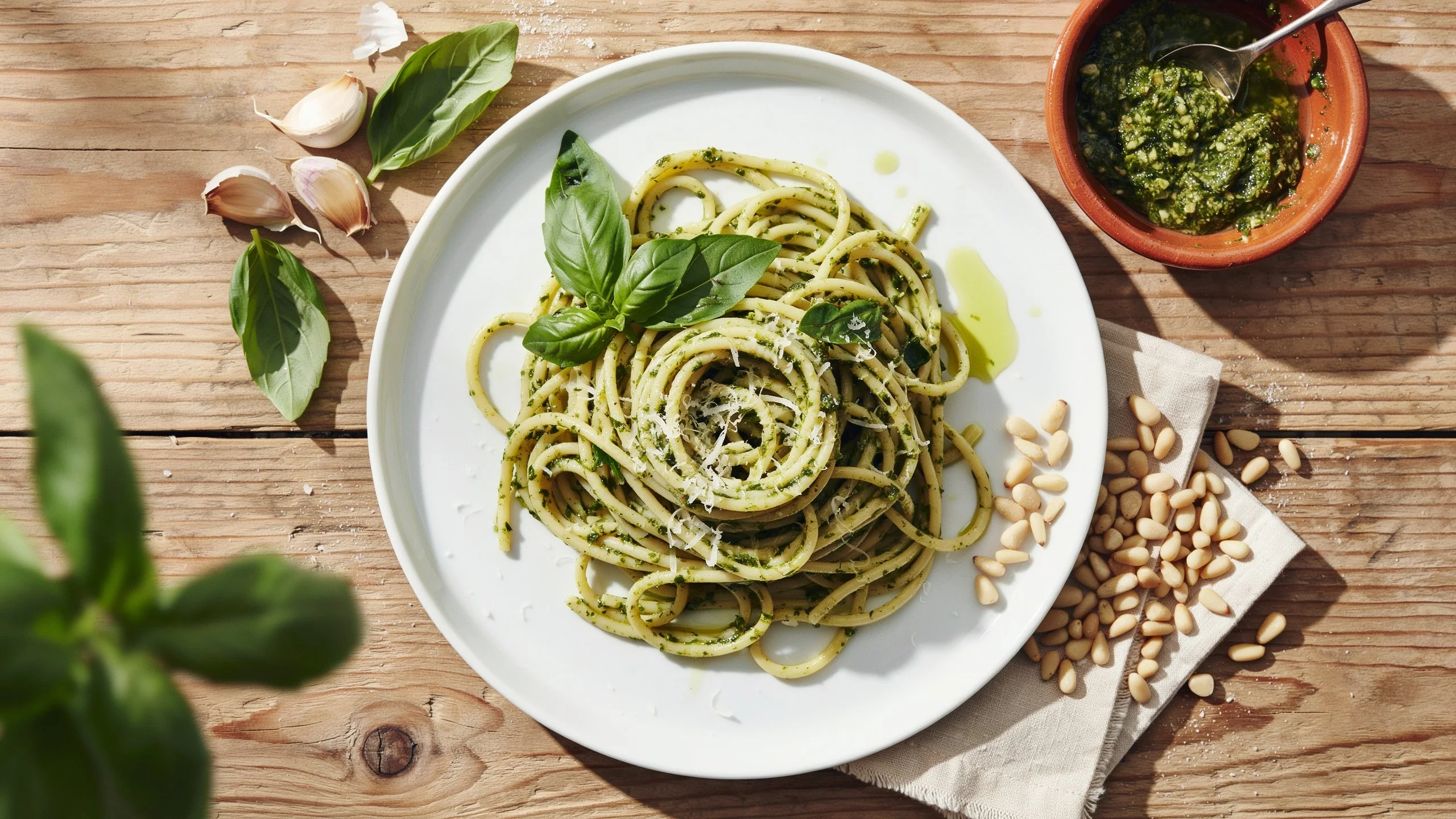
The Pesto Pasta Recipe I Make When I Don’t Want to Think About Dinner
Ingredients
If you’d rather make pesto from scratch — and homemade really is a different animal, brighter and looser than anything from a jar — Love and Lemons has a method I find myself coming back to. You can check out their pesto pasta recipe here if you want to compare notes before deciding which way to go.
Step-by-Step: How to Make Pesto Pasta
- Salt your water properly. The first real step in this pesto pasta recipe is also the easiest to skip: pasta water should taste like the sea — it’s the only chance the noodles get to be seasoned from the inside.
- Cook the pasta to one minute short of al dente. It’ll finish cooking in the sauce, and slightly underdone pasta holds its shape better once everything’s tossed together.
- Reserve at least a cup of pasta water before draining. This is the step people skip and then wonder why their pesto pasta looks dry and clumpy instead of glossy.
- Take the pot off the heat. This matters more than it sounds like it should. Pesto hates direct heat — it turns a dull, army green and the oil separates if you cook it in a hot pan. Stir it into the warm (not boiling) pasta, off the burner, letting the residual heat do the work.
- Loosen with reserved water, a little at a time. Add a few tablespoons, stir, and keep going until the sauce coats every piece without pooling at the bottom of the bowl.
- Fold in the tomatoes, lemon juice, and parmesan. Taste. Adjust the salt, add more cheese if you’re feeling generous, finish with black pepper and a few red pepper flakes if you want some bite.
Serve this pesto pasta recipe right away, while it’s still warm enough that the cheese is just barely melting into everything. This is not a dish that improves with patience.
Pasta Shape Actually Matters More Than You’d Think
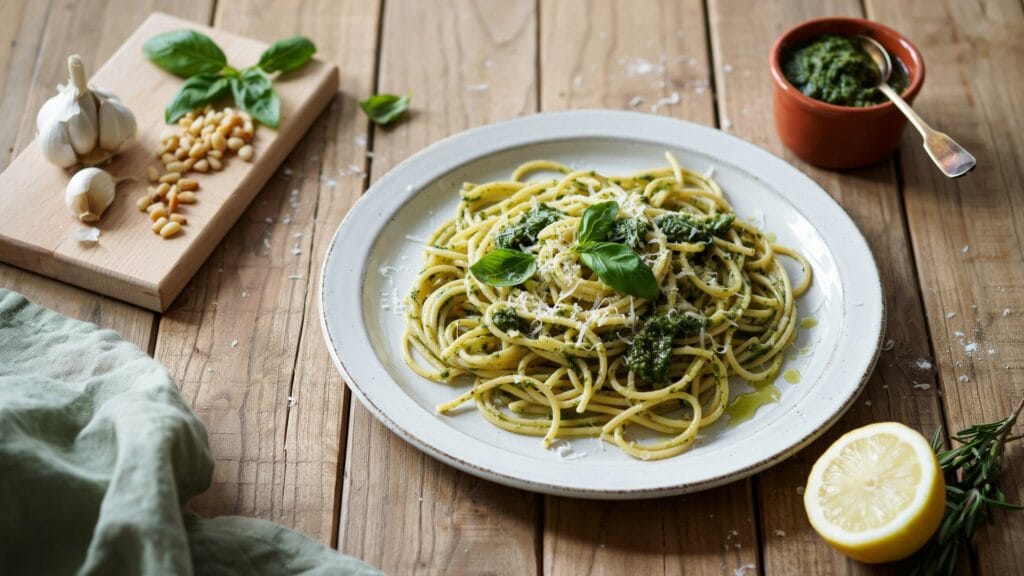
Shape is one of the easiest ways to upgrade any pesto pasta recipe, and it’s the part people skip most often. Long, smooth strands like spaghetti let pesto slide right off, which is why so many people end up with a pool of sauce at the bottom of the bowl and bare noodles on top. Short, ridged shapes — fusilli’s spirals, casarecce’s twists, penne’s grooves — physically trap the sauce instead of shedding it. If you only remember one thing from this section, make it this: texture beats elegance when pesto is involved.
Make It Your Own
Once the base is right, this pesto pasta recipe turns into a pretty flexible canvas. A handful of arugula stirred in at the end adds a peppery bite. Grilled chicken or shrimp turns it into a full dinner instead of a side. Roasted zucchini or blistered cherry tomatoes add sweetness, and toasted pine nuts on top bring back some of the crunch that gets lost once everything’s tossed together. None of these are required — they’re just where I’d start if you’re cooking this on repeat and want some variation.
A Quick Note for Anyone Watching Blood Sugar
A couple of smart swaps can make this pesto pasta recipe fit more eating plans without losing the flavor. Pesto itself is mostly oil, nuts, and cheese, so it’s calorie-dense but doesn’t carry much sugar on its own — the bigger variable is the pasta. Swapping in a whole wheat, chickpea, or lentil-based pasta adds fiber and protein, which can soften the blood sugar spike compared to standard white pasta, and keeping the portion size in check matters more than which pesto you use. I’m not a dietitian, so if you’re managing diabetes specifically, it’s worth running your usual portion and pasta choice by your doctor or a registered dietitian rather than taking recipe-blog advice as medical guidance.
Pesto Pasta Recipe FAQs
What do you mix with pesto for pasta?
Cherry tomatoes, a squeeze of lemon, and reserved pasta water are the non-negotiables for me — they keep the sauce bright and loose instead of heavy. Beyond that, grilled chicken, shrimp, roasted vegetables, or a handful of arugula all pair well with this pesto pasta recipe without fighting the basil flavor.
Do you just add a jar of pesto to pasta?
You can, but straight-from-the-jar pesto tends to sit thick and oily on top of the noodles instead of coating them. Stirring it into warm (not boiling) pasta along with a splash of reserved pasta water turns that same jar into a real pesto pasta recipe sauce — same ingredient, much better texture.
What kind of pasta goes with pesto?
Short, ridged shapes hold up best. Fusilli, casarecce, and penne all have enough surface area and texture to grip the sauce, where long, smooth strands like spaghetti tend to let it slide off and pool at the bottom of the bowl.
Is pesto good for diabetics?
Pesto itself is low in sugar, though it’s rich in fat and calories from the oil, nuts, and cheese. Pairing it with a fiber-rich pasta and watching portion size is generally a smarter combination than worrying about the pesto specifically — but check with your doctor or dietitian for guidance tailored to you.
Final Thoughts
This pesto pasta recipe isn’t trying to reinvent anything — it’s just the version that’s earned its place in my regular rotation because it’s fast, forgiving, and actually tastes like effort even on nights when there wasn’t much. If you’re looking for more weeknight-friendly ideas like this one, I keep a running collection of lunch recipes over on Palatable Recipes that are built around the same idea: minimal cleanup, maximum flavor.
If you make this, I’d genuinely love to know how it turned out — drop a comment below, or save it for later by pinning it on Pinterest. And if you tweak this pesto pasta recipe with your own mix-ins, tell me what you added. I’m always looking for the next thing to throw into the bowl.