
Table of Contents
Let me tell you something about the first time I made homemade pimento cheese. I grabbed a block of sharp cheddar, a jar of diced pimentos, and some mayo — threw it all in a bowl, stirred it up, and thought, “That’s it? That’s the legendary Southern spread everyone goes on about?”
It was fine. Really, it was just… fine. And fine is the enemy of memorable.
Here’s what I didn’t know then: pimento cheese is deceptively simple on the outside, but the details are everything. The cheese you pick, how you grate it, the ratio of cream cheese to mayo, whether you go chunky or smooth — every little choice stacks up into either something transcendent or something forgettable. After years of tinkering, I’m finally at a place where people ask me for the recipe. So let’s get into it.
Key Takeaways at a Glance
- Always grate your own cheese — pre-shredded blocks kill the texture
- The secret is the cheese blend: sharp cheddar + a mild white cheddar
- Yes, cream cheese belongs in pimento cheese — it makes it lusciously spreadable
- Homemade beats store-bought every single time (and it takes about 15 minutes)
- It keeps in the fridge for up to a week — if it lasts that long
What Even Are Pimento Cheese Ingredients?
At its core, a classic pimento cheese recipe has just three non-negotiables: cheese, pimentos, and mayo. That’s the holy trinity. But if you stop there, you’re leaving flavor on the table.
The cheese question trips people up. Most folks default to a single block of sharp cheddar, and while that’s not wrong, it’s not all the way right either. The best pimento cheese I’ve ever had — and the one I now make — uses a blend. Sharp yellow cheddar gives you that bold, tangy backbone. Add in some mild white cheddar and you get a creamier, more mellow counterpoint. Some pitmasters and Southern grandmothers swear by a dash of pepper jack for heat. Experiment and find your blend.
About pimentos — are they just roasted red bell peppers? Technically, yes. Pimentos (also spelled pimientos) are a specific variety of sweet red pepper, mild and slightly fruity. The jarred kind you find in the pickle aisle work perfectly here. Don’t substitute with just any roasted red pepper unless you want your spread to taste more like bruschetta topping than classic Southern pimento cheese.
And cream cheese — should pimento cheese have cream cheese in it? Purists might scoff, but honestly, a few ounces of softened cream cheese turns a stiff, crumbly spread into something that glides across a cracker like a dream. It’s not traditional everywhere, but it’s the move.
What Are the Most Common Pimento Cheese Mistakes?
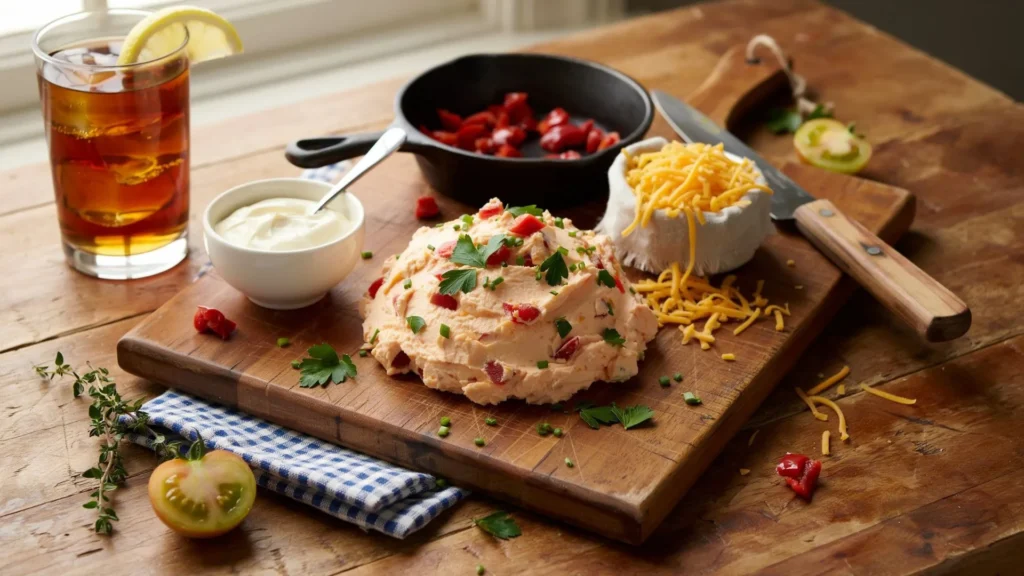
I’ve made all of these. Every single one. Learn from my pain:
Mistake #1
Using pre-shredded cheese. The anti-caking coatings on bagged shredded cheese are pimento cheese’s worst enemy. Always grate from the block.
Mistake #2
Not draining the pimentos. That liquid in the jar is not your friend. Dump it out completely, then pat the pimentos dry with a paper towel. A watery pimento cheese is a sad pimento cheese.
Mistake #3
Skimping on the mayo. Mayo is the emulsifier, the binder, the thing that makes it spreadable. Use real, full-fat mayonnaise. Duke’s if you’re in the South; Hellmann’s everywhere else.
Mistake #4
Under-seasoning. Cheese and mayo are rich and fatty — they absorb a surprising amount of seasoning. Be brave with your salt, pepper, and spices.
Mistake #5
Serving it straight from the fridge. Ice-cold pimento cheese is stiff and the flavors are muted. Pull it out 15 minutes before serving. Room temperature brings out every nuance you worked to build.
What’s the Secret to Really Good Pimento Cheese?
Ask five Southerners this question and you’ll get six different answers. But after obsessing over this spread longer than I’d like to admit, here’s what I’ve landed on:
🧀
The Three-Cheese Rule
Sharp cheddar + mild white cheddar + cream cheese. Each does a different job. Together, they’re magic.
🌶️
A Tiny Kick
Cayenne or a dash of hot sauce. You shouldn’t taste heat — you should taste depth that makes you take another bite.
⏳
The Overnight Rest
Make it the night before. The flavors meld into something far more complex than day-one.
🥄
Texture Contrast
Keep some cheese grated coarser for chunks. Spreadability + texture = the best of both worlds.
“A good pimento cheese recipe isn’t about the ingredients you add — it’s about knowing which ones to leave alone.”
Is Homemade Pimento Cheese Actually Better Than Store-Bought?
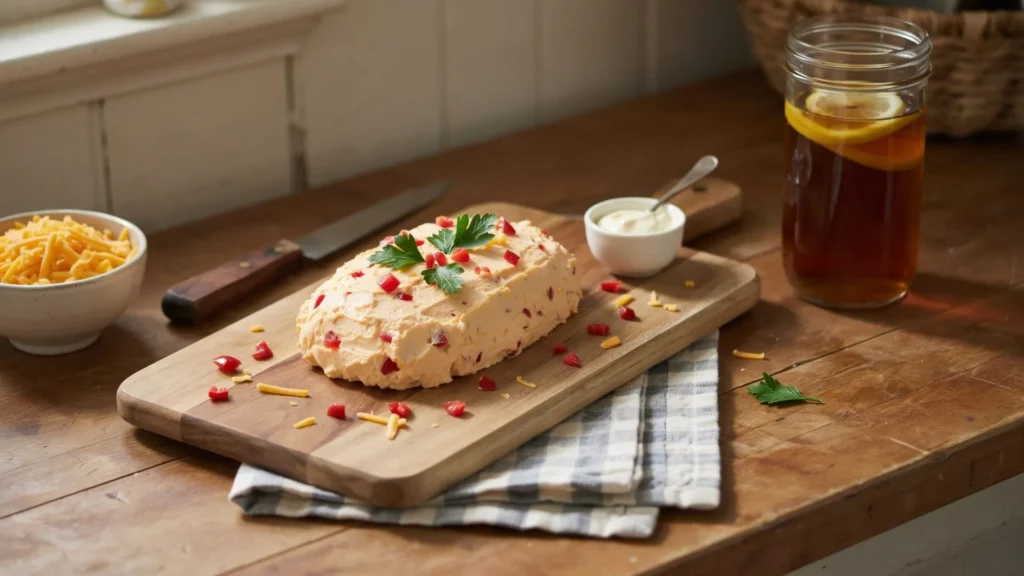
Oh, without a doubt. And I say this as someone who spent years perfectly content buying the green tub from the grocery store.
Store-bought pimento cheese has to survive weeks on a shelf. That means preservatives, stabilizers, and a sodium load that would make a cardiologist wince. The flavor is engineered to be inoffensive — mild enough that nobody sends it back, but never exciting enough that you’d specifically request it again.
Homemade pimento cheese is the opposite of inoffensive. It has character. It has bite. It has that sharp, tangy, creamy complexity that makes you understand why this stuff has been a Southern staple for over a century. And as for how long it lasts: stored in an airtight container in the fridge, you’re looking at a solid 5–7 days. In my house, it rarely survives past Tuesday.
For an exceptionally thorough take on ingredients and ratios, Cookie and Kate’s best pimento cheese recipe is one of the most careful guides I’ve come across — worth reading alongside this one.
How to Serve It: Beyond the Cracker
The classic move is pimento cheese on crackers or white bread finger sandwiches. Both are excellent. But don’t stop there:
- Stuffed into celery sticks for a snack board centerpiece
- Spread on a burger just before it comes off the grill (genuinely life-changing)
- Dolloped onto scrambled eggs in the morning
- As a dip for kettle chips or pita crisps at your next gathering
- Melted into a grilled cheese for something dangerously good
If you love building snack boards and party spreads around crowd-pleasing flavors like this, Palatable Recipes’ snacks & appetizers section is a treasure trove of ideas to pair alongside your pimento cheese.
Classic Homemade Pimento Cheese
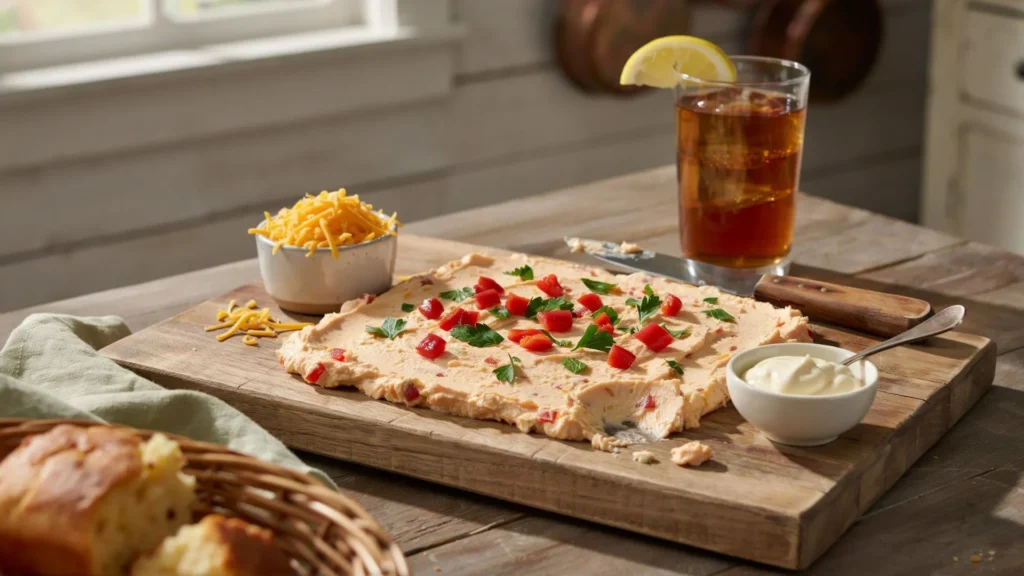
Rich, creamy, and packed with sharp cheddar flavor — the only pimento cheese recipe you’ll ever need.
🕐 Prep: 15 min❄️ Chill: 30 min🍽️ Serves: 8–10📦 Keeps: 5–7 days
Ingredients
- 2 cups freshly grated sharp yellow cheddar (from a block, not a bag)
- 1 cup freshly grated mild white cheddar
- 4 oz (115g) full-fat cream cheese, softened to room temperature
- ⅓ cup real mayonnaise (Duke’s or Hellmann’s)
- 1 jar (4 oz / 113g) diced pimentos, well drained and patted dry
- ¼ tsp cayenne pepper (adjust to taste)
- ½ tsp garlic powder
- 1 tsp Worcestershire sauce
- ½ tsp onion powder (optional but recommended)
- Kosher salt and freshly cracked black pepper to taste
Equipment
- Box grater or food processor with grating disk
- Large mixing bowl
- Rubber spatula or wooden spoon
- Airtight container for storing
Step-by-Step Instructions
This is where the magic happens. Follow these steps carefully the first time — once you’ve made it twice, you’ll have it memorized and you’ll be making it on autopilot every time someone mentions a party.
- Pull Everything Out of the Fridge EarlyAbout 20 to 30 minutes before you plan to mix, set your cream cheese, mayonnaise, and block cheeses on the counter. Cold ingredients don’t blend — they clump. Room-temperature cream cheese, in particular, transforms from a stubborn brick into something silky and cooperative. This single habit is what separates a smooth, cohesive pimento cheese from a lumpy, uneven one. Don’t skip it, even when you’re in a hurry.💡 Tip: Place cream cheese on a small plate — it softens faster than in the package.
- Grate Your Cheese Fresh — Both BlocksThis is the single most important step in the entire recipe, and the one most people skip. Pre-shredded cheese is coated in cellulose powder and potato starch to prevent clumping in the bag. Those coatings prevent the cheese from melting together properly, leaving you with a gritty, dry texture in your finished spread. Grate your sharp yellow cheddar using the large holes of a box grater for a chunkier texture. Switch to the medium holes for the white cheddar — the finer shreds will blend into the base more smoothly, creating that layered, complex texture that makes people go back for a third cracker.💡 Tip: Chill your cheese for 10 minutes before grating — cold cheese grates cleaner and doesn’t smear.
- Drain and Dry the Pimentos ThoroughlyOpen your jar of diced pimentos and pour everything into a fine-mesh strainer. Let them drain for a full two minutes, pressing lightly with the back of a spoon to push out liquid. Then transfer them onto a folded paper towel and press gently again. This might seem overly fussy, but pimentos hold onto a surprising amount of brine, and even a small amount of extra liquid will make your pimento cheese runny and cause it to weep in the container over the next few days. Dry pimentos = stable, creamy spread.💡 Tip: If you want more pepper flavor, roughly chop the pimentos before adding — it releases more of their natural sweetness.
- Beat the Cream Cheese and Mayo Together FirstIn your large mixing bowl, add the softened cream cheese and mayonnaise. Using a rubber spatula (or a hand mixer on low if you want it ultra-smooth), beat these two together until they form a unified, creamy base — about 60 seconds of stirring by hand. This is your emulsified foundation. Getting this step right before adding the cheese means everything else will fold in evenly instead of leaving streaks of dry cream cheese or puddles of mayo. Think of it like building a vinaigrette: you emulsify the base, then add the other elements.💡 Tip: A small whisk works well here to break up any remaining cream cheese lumps quickly.
- Fold in the Cheese and PimentosAdd both batches of grated cheese to the bowl along with your well-dried pimentos. Using your spatula, fold everything together with slow, deliberate strokes — turning the mixture over from the bottom rather than stirring in circles. You’re looking for even distribution without pulverizing the cheese into a paste. Stop when you can still see distinct pieces of pimento and bits of cheese in the mix. That visual variety isn’t just pretty — it’s how you know the texture will be interesting rather than uniform. Some people love a smooth, whipped pimento cheese (and if that’s you, use a hand mixer). But chunky is where the character lives.💡 Tip: Fold, don’t stir. Overmixing = paste. Underfold for the good chunky texture.
- Season in Layers — Then TasteAdd the cayenne, garlic powder, onion powder, and Worcestershire sauce. Crack in a generous amount of black pepper. Fold to combine, then stop and taste. This is the step most recipes skip, and it’s where you make the recipe yours. Does it need more heat? Add a little more cayenne, or a dash of your favorite hot sauce. More depth? A tiny splash more Worcestershire. Tanginess? A small squeeze of apple cider vinegar works wonders. Add kosher salt carefully and in pinches — the cheddar is already salty, so taste between additions. Season until the flavors feel bright, balanced, and just a little bold. The fridge will mellow everything slightly, so go a touch further than you think you need to.💡 Tip: Write down what you adjusted — you’ll want to recreate this exact version next time.
- Cover and Refrigerate for at Least 30 MinutesTransfer your pimento cheese to an airtight container, press a piece of plastic wrap directly against the surface (this prevents a dry skin from forming on top), and refrigerate for a minimum of 30 minutes before serving. An hour is better. Overnight is best. During this resting time, the flavors meld together in a way that’s genuinely remarkable — the cayenne softens into warmth rather than spike, the Worcestershire deepens into something almost smoky, and the cheese and mayo unify into a single, harmonious spread. If you’re making this for a party or gathering, make it the night before. You will not regret it.💡 Tip: Pimento cheese made 24 hours ahead is noticeably more flavorful than same-day.
- Serve at the Right TemperaturePull your pimento cheese from the fridge about 15 minutes before you plan to serve it. Cold pimento cheese is stiff and the flavors are dulled — fat-based foods always taste more alive at slightly warmer temperatures. Give it a quick stir to loosen it up if needed. Serve with butter crackers, toasted baguette slices, celery sticks, or cucumber rounds. For parties, a small butter knife resting against the bowl goes a long way — it signals to guests that this is something to spread, not just scoop. Watch it disappear.💡 Tip: Leftover pimento cheese lasts up to 7 days refrigerated in an airtight container.
Frequently Asked Questions
These are the questions people actually search for most when they’re learning to make pimento cheese — pulled straight from real search data, answered honestly.
Is homemade pimento cheese better than store-bought?
Yes — and it’s not even close. Store-bought pimento cheese is formulated to sit on a shelf for weeks, which means it relies on preservatives, stabilizers, and a heavy sodium load to stay “fresh.” The flavor is engineered to be universally acceptable, which is another way of saying it’s never particularly exciting.
Homemade pimento cheese uses real block cheese you grate yourself, full-fat mayo, and fresh seasonings. There are no fillers, no anti-caking agents, and no mystery stabilizers. The texture is better — creamier and chunkier at once — and the flavor is sharper, more layered, and actually worth talking about. It also takes about 15 minutes to make. Once you’ve had a properly made homemade version, the tub at the store is going to feel like a consolation prize.
Should pimento cheese have cream cheese in it?
This is a genuinely contested question in Southern cooking circles, and strong opinions exist on both sides. Traditionalists will tell you that the original three-ingredient pimento cheese — shredded cheese, jarred pimentos, mayonnaise — needs nothing else. And they’re not wrong that the old-school version has its own humble charm.
That said, adding cream cheese does something none of those three ingredients can do on their own: it makes the spread genuinely luscious and stable. Cream cheese acts as a binder that keeps the pimento cheese cohesive even after a day or two in the fridge, and it adds a mild, tangy richness that plays beautifully against the sharpness of the cheddar. Four ounces of softened cream cheese per batch is the sweet spot — enough to smooth things out without making it taste like a cream cheese dip with cheese mixed in. Start there and decide for yourself.
What are the most common pimento cheese mistakes?
The biggest mistake — by a wide margin — is using pre-shredded cheese from a bag. The cellulose coating prevents the cheese from blending properly and gives the finished spread a slightly dry, grainy texture. Always grate from a block.
Close behind that: not draining the pimentos thoroughly. Even a small amount of extra brine makes the spread runny and causes it to separate in the fridge. Drain them in a strainer, then press them on paper towels. The third common mistake is under-seasoning — cheese and fat absorb a lot of flavor, so be more generous with your cayenne, garlic powder, and Worcestershire sauce than you think you need to be. And finally, serving it ice-cold directly from the fridge. The fat in cold pimento cheese mutes all the flavors. Let it sit out for 15 minutes before it hits the table.
How long does homemade pimento cheese stay fresh?
Stored in an airtight container in the refrigerator, homemade pimento cheese will keep well for 5 to 7 days. Press a layer of plastic wrap directly against the surface of the spread before sealing the container — this prevents a dry skin from forming on top and keeps the texture consistent throughout its fridge life.
One important note: the flavor actually improves over the first 24 hours as everything melds together, so making it a day ahead isn’t just convenient — it’s actively better. After about five days, the fresh cheese flavor starts to fade and the texture can loosen slightly as the pimentos continue to release moisture. It’s still safe to eat at day seven, but the quality peaks somewhere around days two and three. Pimento cheese does not freeze well — the mayo breaks and the cheese becomes grainy when thawed — so make only what you’ll use within the week.
Tried This Recipe?
I’d genuinely love to hear how yours turned out — what cheese blend you used, whether you snuck in a secret ingredient, or if your family declared it the best thing you’ve made all year. Drop a comment, share the post, or come find me on Pinterest where I save all my favorite savory bites like this one.🧀 More Recipe Tips 🍽️ More Snack Ideas Follow on Pinterest