
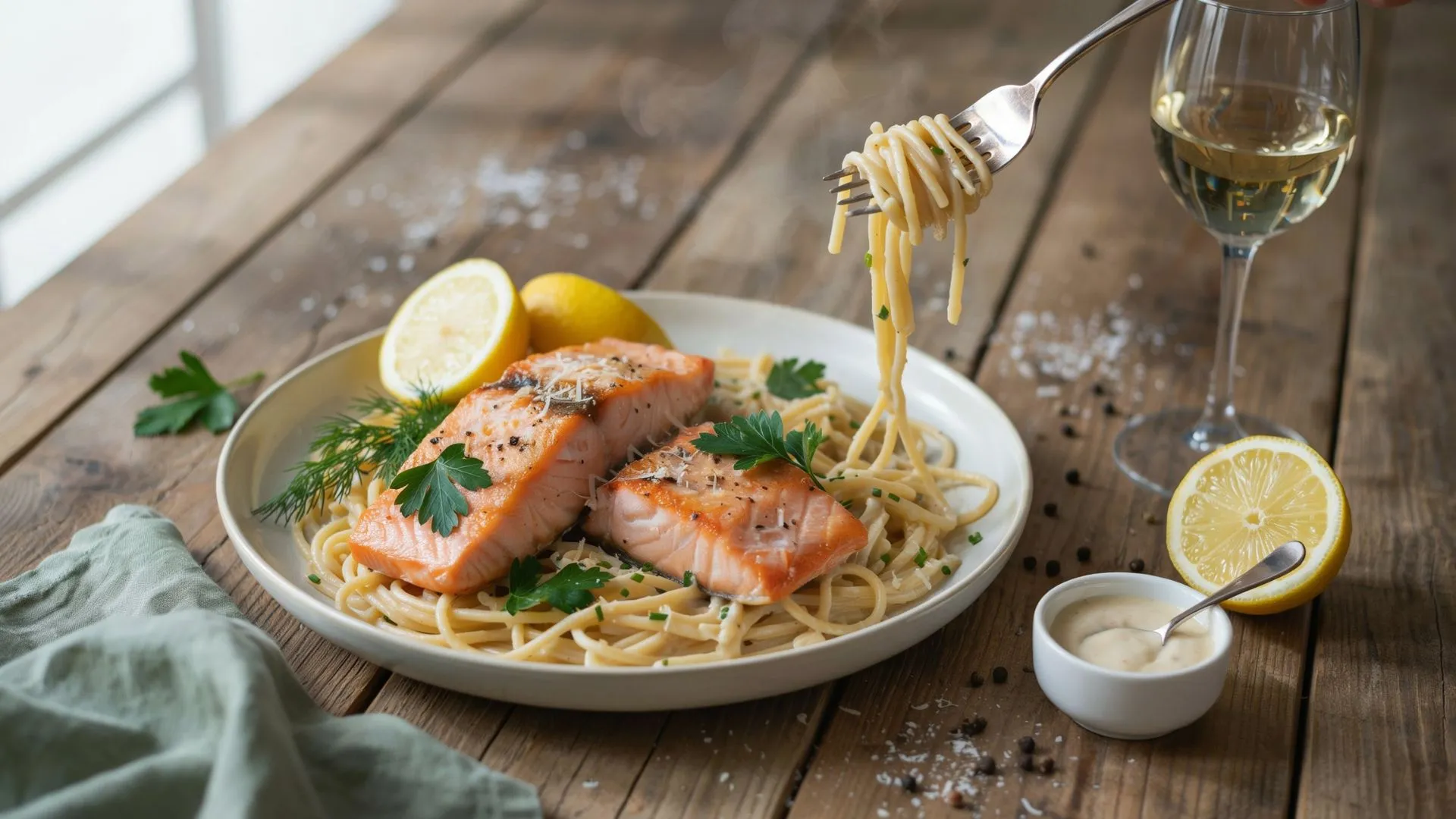
Table of Contents
I burned the first salmon fillet I ever cooked. Properly burned — kitchen-smoke-alarm, open-the-windows burned. That was almost a decade ago, and somewhere between that disaster and tonight, salmon pasta became the dish I reach for when I want dinner to feel special without actually working for it. This is the salmon pasta recipe I’ve quietly perfected over dozens of Tuesday nights, the one my husband now requests instead of asking where we’re ordering takeout from.
What I love about it is how forgiving it is. The sauce comes together in the same pan you cooked the salmon in, which means less cleanup and more flavor — all those crispy bits left behind become the backbone of the sauce. No fancy technique required, just a few ingredients that know how to work together.
Whether you’re new to cooking fish or just want a reliable salmon pasta recipe for busy weeknights, this one is built to be close to foolproof.
Why This Salmon Pasta Recipe Works Every Time
Most salmon pasta recipes either drown the fish in too much cream or treat it like an afterthought tossed on top at the end. This one does neither. The salmon gets seared first so it keeps its texture, then it’s gently broken into the sauce so every bite of pasta picks up a little bit of it. The sauce itself leans on garlic, sun-dried tomatoes, and a splash of pasta water to keep things silky instead of heavy.
It’s also genuinely quick. Start to finish, you’re looking at about 30 minutes — which puts it solidly in weeknight territory, even though it tastes like something you’d order at a coastal Italian restaurant.
What You’ll Need for This Salmon Pasta Recipe
Serves 4.
- 12 oz (340g) fettuccine or penne
- 2 salmon fillets (about 6 oz / 170g each), skin removed
- 2 tbsp olive oil
- 3 garlic cloves, minced
- 1/3 cup sun-dried tomatoes, chopped
- 3/4 cup heavy cream
- 1/2 cup grated parmesan, plus more for serving
- 2 cups baby spinach
- 1/2 cup reserved pasta water
- Salt, black pepper, and a pinch of red pepper flakes
- Fresh lemon wedge and chopped parsley, to finish
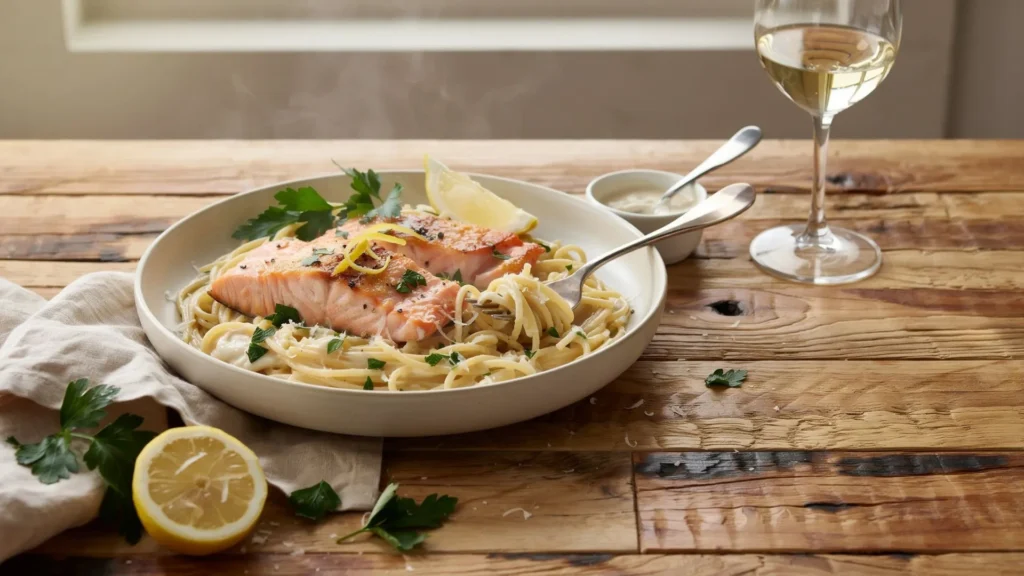
Step-by-Step: How to Make This Creamy Salmon Pasta Recipe
Step 1 — Cook the pasta. Bring a large pot of salted water to a boil and cook your pasta until just shy of al dente — it’ll finish cooking a bit more once it hits the sauce. Before draining, scoop out and reserve about half a cup of that starchy pasta water. It’s the unsung hero of a silky sauce.
Step 2 — Sear the salmon. Pat the fillets dry and season generously with salt and pepper. Heat the olive oil in a large skillet over medium-high heat until it’s shimmering. Lay the salmon in and let it sit, undisturbed, for about 4 minutes per side. Resist the urge to move it around — that’s how you get a proper golden crust instead of a sad, steamed piece of fish. Once cooked through, transfer it to a plate and let it rest.
Step 3 — Build the sauce in the same pan. This is the step that gives the whole salmon pasta recipe its flavor base. Lower the heat to medium and add the garlic and sun-dried tomatoes to the same skillet, scraping up any browned bits left behind. Sauté for about a minute, just until the garlic turns fragrant — don’t let it brown, or it’ll turn bitter.
Step 4 — Add the cream. Pour in the heavy cream and let it come to a gentle simmer. Stir in the parmesan a little at a time until it melts smoothly into the sauce. Add the reserved pasta water gradually until the sauce loosens to a consistency that coats a spoon without feeling thick or gluey.
Step 5 — Wilt the spinach. Toss in the spinach and stir just until it wilts into the sauce, which takes less than a minute. It adds color and a bit of freshness that balances out the richness of the cream.
Step 6 — Bring it together. Flake the rested salmon into large, bite-sized pieces and fold it gently into the sauce along with the drained pasta. Toss everything together off the heat — this keeps the salmon from breaking down too much and turning mushy.
Step 7 — Finish and serve. Taste and adjust the seasoning, add a pinch of red pepper flakes if you like a little heat, and finish with a squeeze of lemon and a scatter of fresh parsley. Serve immediately with extra parmesan on the side.
Key Takeaways From This Salmon Pasta Recipe:
- Sear the salmon separately so it keeps its texture, then fold it in at the end.
- Reserved pasta water is what gives this salmon pasta recipe its silky texture without extra cream.
- Don’t skip resting the salmon for a few minutes off the heat — it keeps it from falling apart in the sauce.
- This recipe is endlessly adaptable: swap spinach for peas, or sun-dried tomatoes for roasted red peppers.
A Few Notes From My Own Kitchen Trial and Error With This Salmon Pasta Recipe
If there’s one mistake I see people make with this salmon pasta recipe, it’s overcooking the fish before it even reaches the sauce. Salmon keeps cooking a little from residual heat after it leaves the pan, so pulling it slightly before it looks fully done is the move — it’ll finish perfectly by the time you fold it into the pasta. I also learned the hard way that pre-shredded parmesan from a bag doesn’t melt the same way as freshly grated. It clumps instead of turning silky, so block parmesan, freshly grated, makes a real difference here.
If you want to go even richer, RecipeTinEats has a salmon alfredo pasta version that leans more decadent — worth trying if cream-forward is exactly your mood that night.
Frequently Asked Questions About This Salmon Pasta Recipe
What sauce goes best with salmon pasta?
A light cream-based sauce with garlic and parmesan is the most popular pairing for this kind of salmon pasta recipe because it’s rich enough to coat the pasta without overpowering the salmon’s natural flavor. Lemon-butter work beautifully too if you want something lighter, while a tomato-based sauce can work for a brighter, more acidic take.
What pasta shape pairs best with salmon?
Long noodles like fettuccine or linguine are ideal because they hold onto creamy sauces well, but short shapes like penne or rigatoni work great too since their ridges and hollow centers catch flaked bits of salmon in every bite.
Can I make creamy salmon pasta without cream?
Yes — for a salmon pasta recipe without cream, a mix of Greek yogurt or cottage cheese blended smooth, or a roux made with milk and a little flour, can mimic that same creamy texture with less richness. Some people also use a small mashed potato or extra reserved pasta water with parmesan to thicken things naturally.
Can I use canned salmon instead of fresh?
You can, and it’s a great budget-friendly shortcut. Just drain it well and fold it into the sauce at the very end rather than searing it, since canned salmon is already cooked and only needs to warm through.
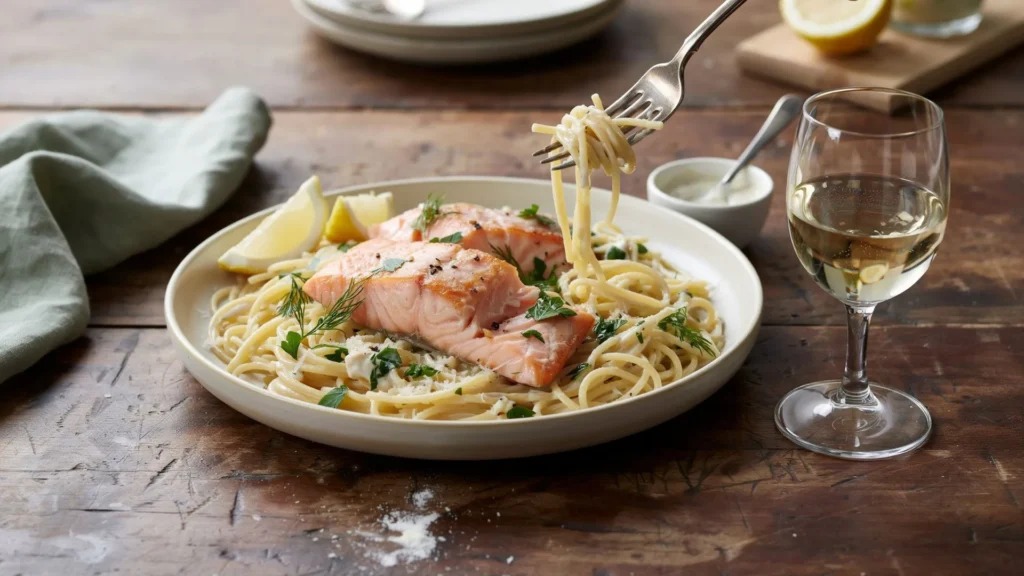
Final Thoughts
This salmon pasta recipe earned its permanent spot in my rotation because it never feels routine, even after making it more times than I can count. It’s the kind of dinner that looks like effort but really isn’t, which might be the highest compliment a weeknight recipe can earn. Once you’ve got the basic method down, it’s easy to riff on — different greens, different pasta shapes, a different finishing herb — but the core technique stays the same.
If you make this salmon pasta recipe, I’d genuinely love to know how it turned out for you, and whether you stuck to the recipe or made it your own. Looking for something to serve alongside it? Browse our snacks and appetizers collection for a few easy starters that pair well with an Italian-style dinner like this one.
Loved this salmon pasta recipe?
Save it for later and find more dinner inspiration on our Pinterest page — and drop a comment below letting us know how yours turned out!