
Table of Contents
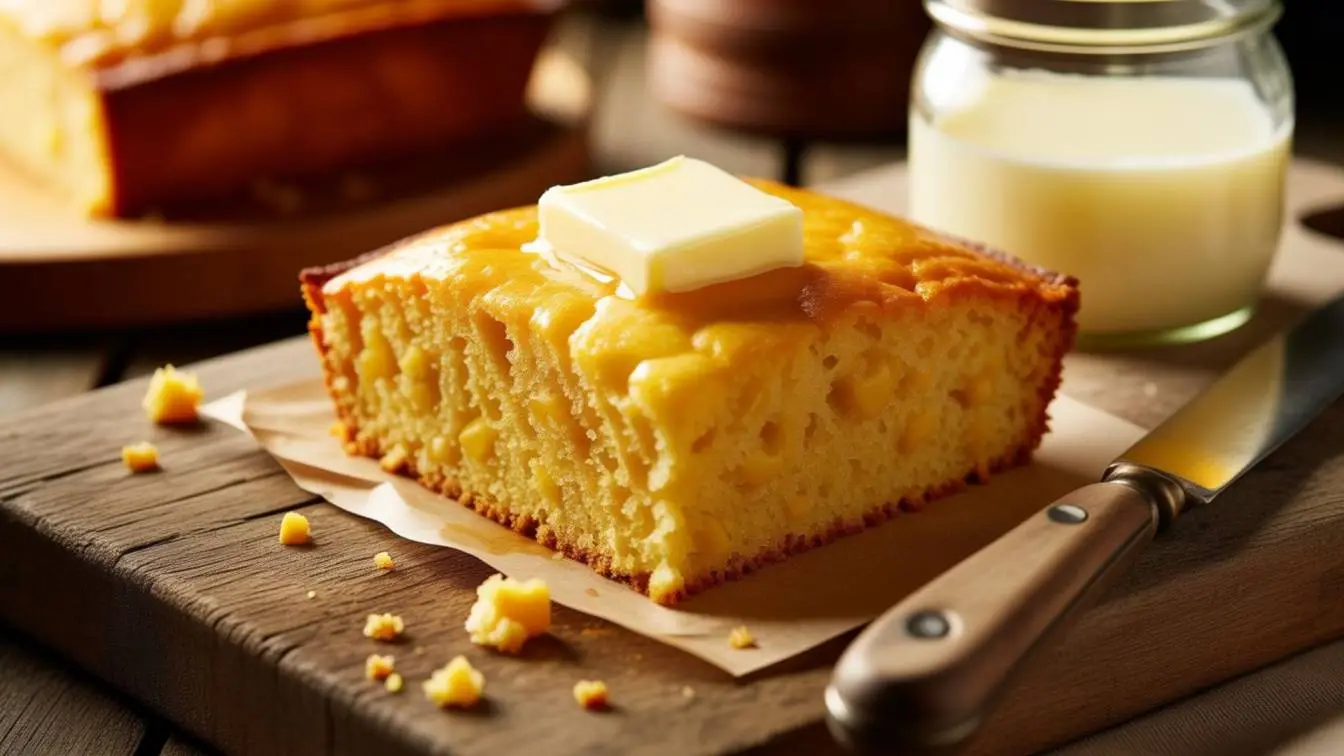
My grandmother made cornbread every single Sunday, and for years I thought I was making the same recipe she was. Same cornmeal, same cast iron skillet, same oven temperature. Mine came out fine. Hers came out unforgettable — golden on the outside, tender enough to fall apart with a fork, with a tang that made you go back for a second piece before you’d finished the first. It took me embarrassingly long to figure out the difference: buttermilk. That one swap changes everything about how it turns out, and once you understand why, you’ll never look at a carton of regular milk the same way again.
This isn’t just another cornbread recipe. It’s the one I make now, built on everything I’ve learned about what buttermilk actually does to the batter, the mistakes that quietly ruin a good pan of it, and the small technique details that separate “fine” from “the best thing on the table.”
Key Takeaways
- Buttermilk’s acidity reacts with baking soda to create a lighter, more tender crumb than milk ever will.
- The most common mistakes are overmixing the batter and skipping the hot skillet step.
- Buttermilk beats regular milk for flavor and texture, though a quick DIY substitute works in a pinch.
- The real secret to good cornbread isn’t a hidden ingredient — it’s technique, timing, and using the right pan.
Why Buttermilk Changes Everything
Here’s what nobody tells you when you’re standing in the dairy aisle wondering if it’s worth buying a whole carton of buttermilk for one recipe: it’s not just a flavor thing. Buttermilk is acidic, and that acidity does real chemical work in your batter. When it meets baking soda, it triggers a reaction that produces carbon dioxide, which is what gives you that light, tender crumb instead of a dense, gritty brick.
Regular milk doesn’t do this. It’s nearly neutral, so if your recipe calls for baking soda and you swap in regular milk, that soda has nothing to react against — and it will taste faintly metallic and won’t rise the way it should. Buttermilk also brings a subtle tang that balances the sweetness of the cornmeal, which is exactly what made my grandmother’s version taste like something more than “bread made with corn.” It also plays well with the flour: many bakers find that a blend of cornmeal and a moderate amount of all-purpose flour, hydrated with buttermilk, gives you structure without sacrificing that classic crumbly texture.
So if you’ve ever wondered what buttermilk actually does for cornbread — this is it. Tenderness, lift, and flavor, all from one ingredient swap.
Step-by-Step Buttermilk Cornbread Recipe
This recipe makes one 9-inch skillet of cornbread, golden and crisp-edged, with a soft, moist center. It’s the version I make when I want people to ask for the recipe before they’ve finished their plate.
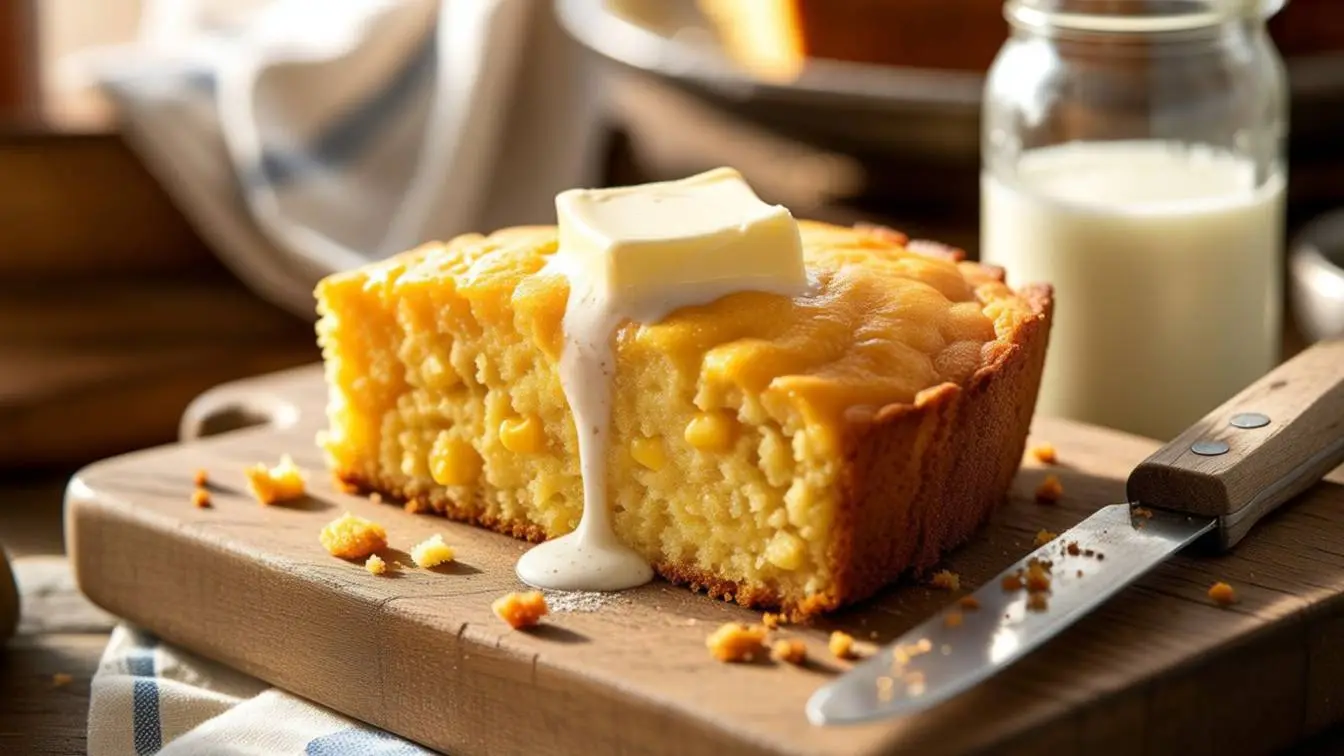
Buttermilk Cornbread
Ingredients
Instructions
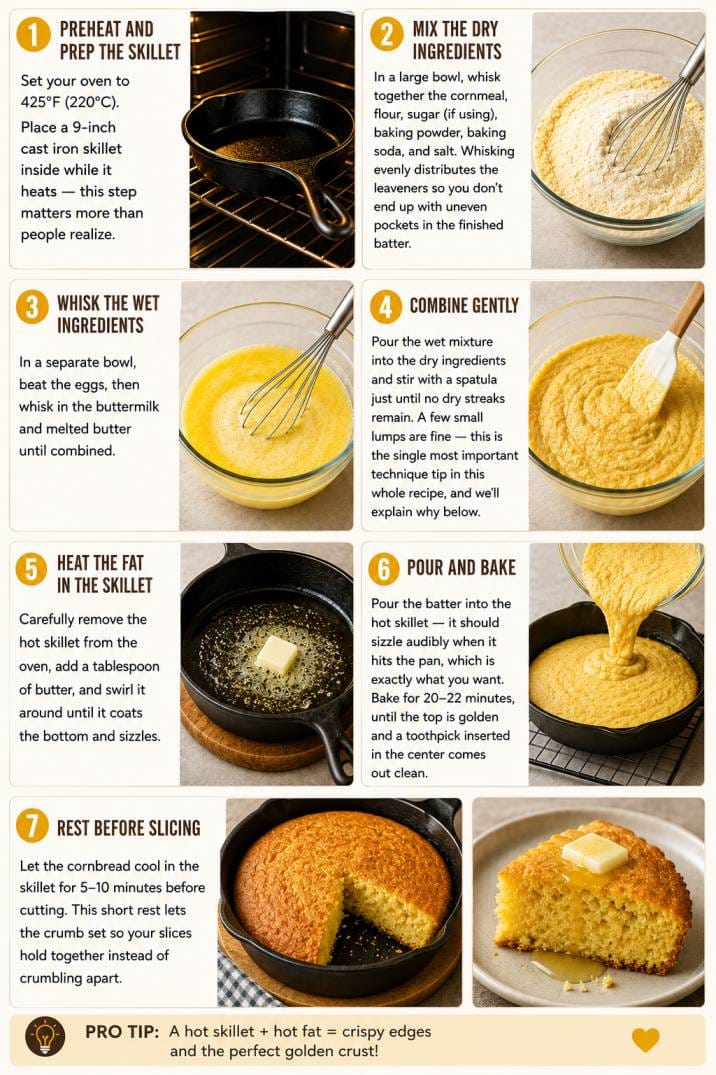
Preheat and prep the skillet.
Set your oven to 425°F (220°C). Place a 9-inch cast iron skillet inside while it heats — this step matters more than people realize, and we’ll get to why in a moment.
Mix the dry ingredients.
In a large bowl, whisk together the cornmeal, flour, sugar (if using), baking powder, baking soda, and salt. Whisking evenly distributes the leaveners so you don’t end up with uneven pockets in the finished batter.
Whisk the wet ingredients
In a separate bowl, beat the eggs, then whisk in the buttermilk and melted butter until combined.
Combine gently.
Pour the wet mixture into the dry ingredients and stir with a spatula just until no dry streaks remain. A few small lumps are fine — this is the single most important technique tip in this whole recipe, and we’ll explain why below.
Heat the fat in the skillet
Carefully remove the hot skillet from the oven, add a tablespoon of butter, and swirl it around until it coats the bottom and sizzles.
Pour and bake
Pour the batter into the hot skillet — it should sizzle audibly when it hits the pan, which is exactly what you want. Bake for 20–22 minutes, until the top is golden and a toothpick inserted in the center comes out clean.
Rest before slicing
Let the cornbread cool in the skillet for 5–10 minutes before cutting. This short rest lets the crumb set so your slices hold together instead of crumbling apart.
Milk or Buttermilk? Settling the Debate
If you’re deciding between milk and buttermilk, the honest answer is: buttermilk wins, almost every time. Beyond the chemical reaction with baking soda we already covered, it’s thicker and richer, which gives the finished loaf a more custardy, moist interior. A pan made with plain milk tends to bake up flatter and drier, with less of that signature tang.
That said, if you’re working with a boxed mix like Jiffy, you can absolutely substitute buttermilk for the milk it calls for — it only improves the result, adding moisture and flavor the mix alone doesn’t have. And if you’re out of buttermilk entirely, you’re not stuck: stir a tablespoon of white vinegar or lemon juice into a cup of regular milk, let it sit for five minutes until it thickens slightly, and you’ve got a serviceable substitute that will still trigger that all-important reaction with your baking soda.
The Mistakes That Quietly Ruin a Good Pan
Most disappointing results don’t come from a bad recipe — they come from a technique problem. Here are the ones I see (and have made myself) most often:
Overmixing the batter. This batter isn’t cake batter. The more you stir, the more gluten develops in the flour, and the tougher and denser the result becomes. Stir until just combined and stop.
Skipping the hot skillet. That sizzle when batter hits the pan isn’t just satisfying — it’s what gives the loaf its crisp, almost fried bottom crust. Pour batter into a cold pan and you lose that entirely.
Using stale cornmeal. Cornmeal contains natural oils that go rancid over time, and that staleness comes through as a flat, slightly bitter flavor. Buy in smaller quantities and store it in the fridge or freezer if you don’t bake often.
Not letting the batter rest. Giving the mixed batter five to ten minutes before it hits the pan allows the cornmeal to hydrate fully, which noticeably improves the texture — softer, less gritty, more evenly baked.
Cutting it too soon. As tempting as it is, slicing straight out of the oven means a crumbly, messy result. That short rest really does make a difference.
The Real Secret to Great Cornbread
People ask me all the time if there’s a secret ingredient — a splash of something unexpected that makes it taste like it came from a restaurant kitchen. The truth is a little less exciting and a lot more useful: the secret is buttermilk plus cast iron plus restraint with the mixing spoon. That combination does more for the final result than any specialty ingredient ever will.
If you want to push it further, a tablespoon of sour cream folded into the batter adds even more richness, and a handful of shredded sharp cheddar or a few tablespoons of corn kernels stirred in right before baking can turn a simple side into the star of the table. But master the basics first — buttermilk, hot skillet, gentle hands — and everything else is just a bonus.
Frequently Asked Questions
What does buttermilk do for cornbread?
Buttermilk’s acidity reacts with baking soda to create lift and a tender crumb, while also adding a subtle tang and extra moisture that regular milk can’t replicate.
What are common mistakes to avoid when making buttermilk cornbread?
The biggest ones are overmixing the batter, pouring it into a cold skillet instead of a preheated one, using stale cornmeal, and slicing the cornbread before it’s had time to rest and set.
Is cornbread better made with milk or buttermilk?
Buttermilk is almost always the better choice — it produces a moister, more tender cornbread with more flavor. Regular milk works, but the result tends to be flatter and less rich.
What is the secret to making good cornbread?
There’s no hidden ingredient — it comes down to technique: use buttermilk, preheat your skillet so the batter sizzles when it hits the pan, and mix gently so you don’t overwork the batter.
Final Thoughts
Cornbread is one of those recipes that seems almost too simple to get wrong — until you do, and you’re left wondering why it came out dry or dense or bland. The good news is that fixing it doesn’t require a complicated recipe overhaul. It’s buttermilk instead of milk, a hot skillet instead of a cold one, and a light hand with the spoon. Small changes, big difference.
If you give this recipe a try, I’d genuinely love to hear how it turns out for you — drop a comment below and let me know if it reminded you of anyone’s kitchen the way it does mine. For more comfort food inspiration, check out this excellent buttermilk cornbread recipe from Food & Wine, and browse more cooking techniques and timing guides over on Palatable Recipes. You can also follow along for more recipe ideas on our Pinterest page — that’s where I pin everything before it makes it to the blog.