
Table of Contents
I ruined three batches of pickles before I finally figured out what I was doing wrong. Mushy, flat-tasting, sad little cucumber slices floating in vinegar — not exactly the crisp, garlicky bite I remembered from my grandmother’s kitchen. It took some trial and error (and a few frustrated late-night Google searches) before I cracked the code. Now, homemade dill pickles are one of the things I’m actually proud to hand someone straight out of my fridge.
If you’ve ever wondered why your homemade dill pickles turned out soft, or you’re just starting out and want to skip the mistakes I made, this guide walks you through everything: the crunch factor, the brine ratio that never fails, and a full step-by-step recipe you can start today.
Why Most Homemade Dill Pickles Turn Out Soggy
Here’s the truth nobody tells beginners: cucumbers are mostly water, and that water is working against you the second you slice into them. If your cucumbers sit around too long, get pickled while warm, or spend too much time in a hot canning bath, the cell walls break down and you’re left with limp pickles instead of that satisfying snap.
The good news is that crunch is almost entirely about technique, not luck. A few small habits make a massive difference:
- Start cold. An ice bath for your cucumbers before pickling firms up the flesh and helps lock in texture.
- Trim the blossom end. That little nub on the flower end of the cucumber contains enzymes that actively soften pickles over time — always slice it off.
- Use fresh, firm cucumbers. Pickling cucumbers (like Kirby) are bred for crunch. Regular slicing cucumbers, sadly, just don’t hold up.
- Add a crisping agent. A pinch of calcium chloride (sold as “Pickle Crisp”) or a grape leaf tossed into the jar are two old tricks that genuinely work.
- Don’t over-process. If you’re canning, over-boiling is the fastest way to turn crunchy cucumbers into mush.
None of this requires special equipment. It’s really just about slowing down at the steps people tend to rush.
The 3-2-1 Rule: The Brine Ratio That Never Fails
If you remember nothing else from this article, remember this ratio. The classic 3-2-1 rule for pickle brine is: 3 parts vinegar, 2 parts water, 1 part sugar (by volume). It’s the backbone of nearly every solid dill pickle recipe, and once you’ve made it a couple of times, you won’t even need to look it up again.
A few notes on getting the brine right:
- Vinegar: Distilled white vinegar (5% acidity) is the standard and safest choice for pickling because the acidity level is consistent and reliable.
- Salt: Use pickling or canning salt, not iodized table salt — iodine can cloud your brine and dull the flavor.
- Dill: For a quart jar, about 1-2 heads of fresh dill or 1 tablespoon of dill seed gives you that unmistakable dill-forward flavor.
- Do you need to boil the vinegar? For refrigerator (quick) pickles, no — you just need to dissolve the salt and sugar, which warm water handles fine. For shelf-stable canned pickles, yes, bringing the brine to a boil is a food-safety step, not optional.
Speaking of safety: botulism is the word that scares most new picklers, and rightly so. The way to avoid it is simple — always use a tested, acid-balanced recipe (don’t eyeball your vinegar-to-water ratio), and if you’re canning for shelf storage rather than refrigerating, follow proper water-bath processing times. Refrigerator pickles sidestep most of this risk entirely, which is exactly why they’re the easiest entry point for beginners.
Should You Soak Cucumbers Before Making Dill Pickles?
Short answer: it depends on the texture you’re chasing. Soaking sliced or whole cucumbers in ice water for 1-2 hours before brining is one of the simplest ways to boost crunch, especially in warmer months when cucumbers arrive from the store already a little tired.
Some traditional recipes also call for a salt soak — layering cucumbers in salt for a few hours to draw out excess moisture before pickling. If you go this route, rinse the salt off thoroughly before adding your brine, or your finished pickles will taste overly salty and unbalanced.
Neither soaking method is strictly required, but if your homemade dill pickles have come out soft in the past, this is usually the missing step.
How to Make Really Good Homemade Dill Pickles: Full Recipe
This is my go-to refrigerator dill pickle recipe — no canning equipment needed, ready to eat within 24 hours, and best within about 2-3 weeks in the fridge.
Ingredients (makes one 1-quart jar)
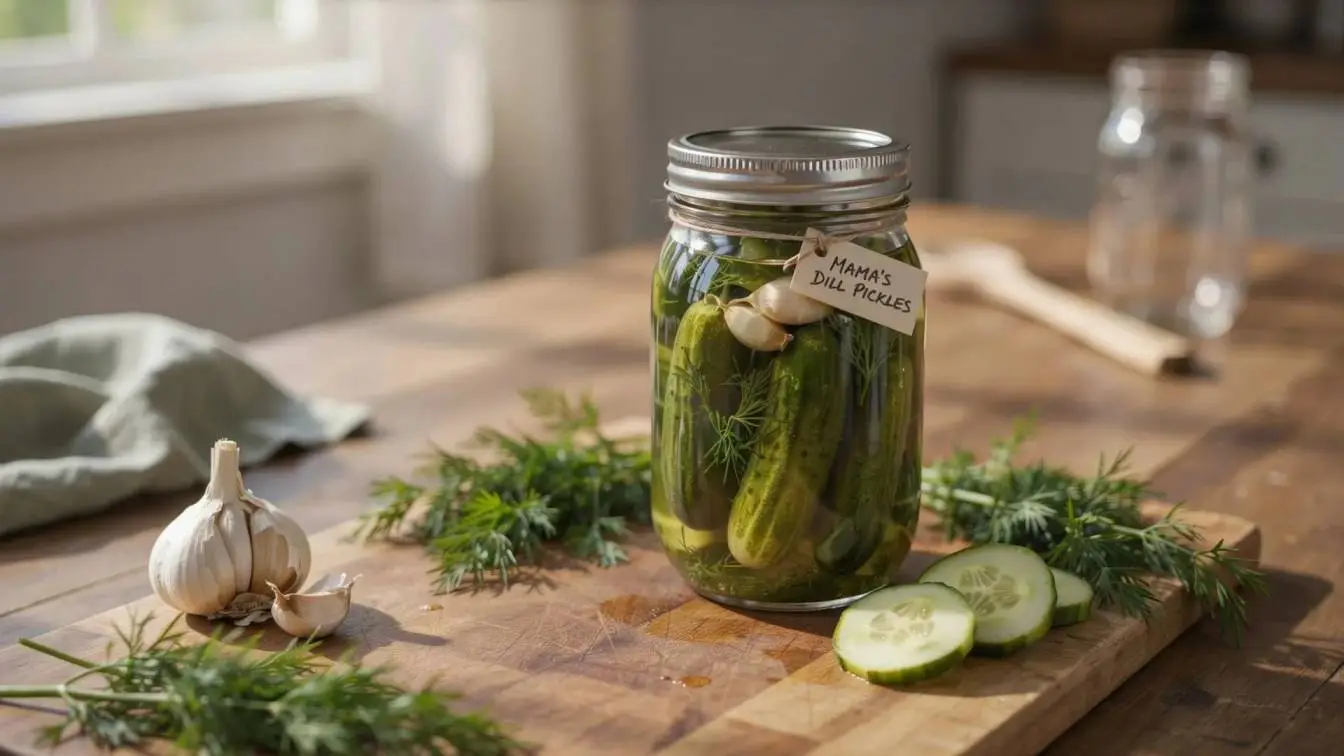
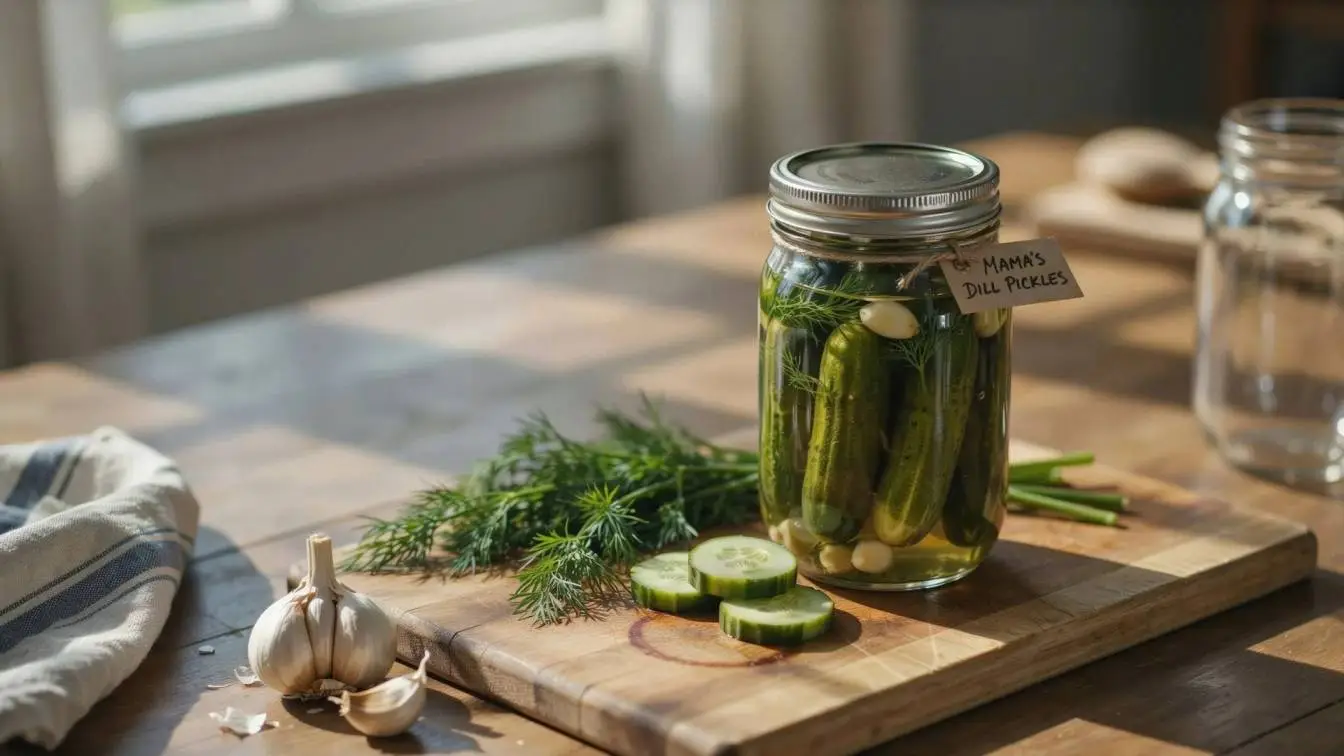
Homemade Dill Pickles
Ingredients
Step-by-Step Instructions
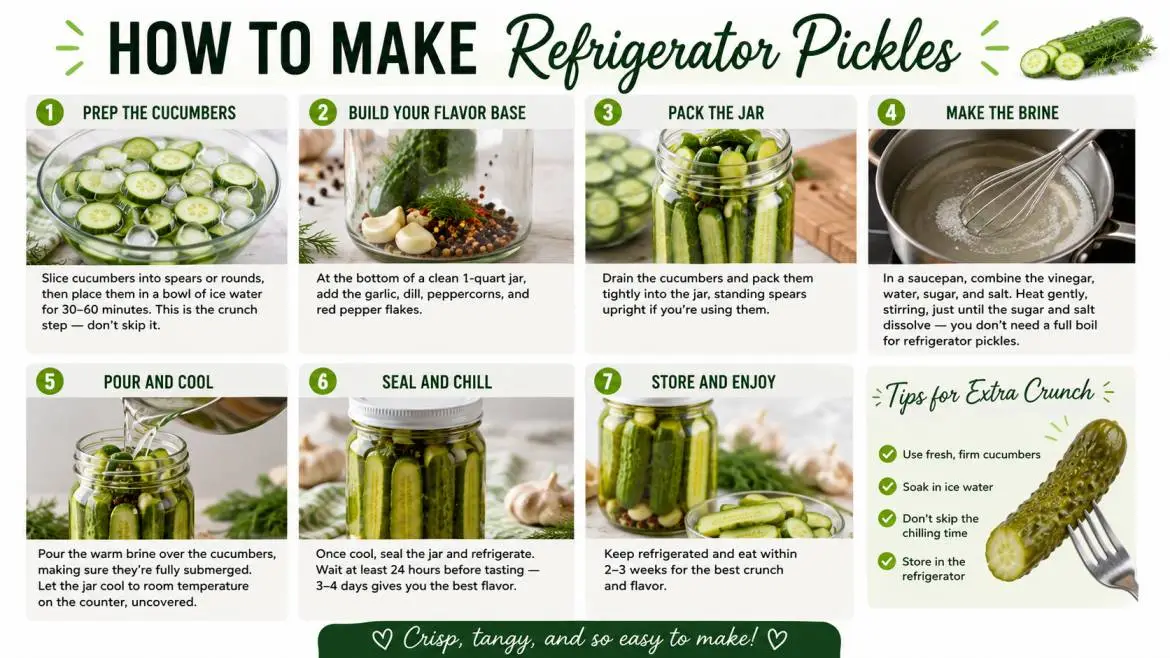
Prep the cucumbers
Slice cucumbers into spears or rounds, then place them in a bowl of ice water for 30-60 minutes. This is the crunch step — don’t skip it.
Build your flavor base
At the bottom of a clean 1-quart jar, add the garlic, dill, peppercorns, and red pepper flakes.
Pack the jar
Drain the cucumbers and pack them tightly into the jar, standing spears upright if you’re using them.
Make the brine
In a saucepan, combine the vinegar, water, sugar, and salt. Heat gently, stirring, just until the sugar and salt dissolve — you don’t need a full boil for refrigerator pickles.
Pour and cool
Pour the warm brine over the cucumbers, making sure they’re fully submerged. Let the jar cool to room temperature on the counter, uncovered.
Seal and chill
Once cool, seal the jar and refrigerate. Wait at least 24 hours before tasting — 3-4 days gives you the best flavor.
Store and enjoy
Keep refrigerated and eat within 2-3 weeks for the best crunch and flavor.
Once you’ve nailed this base recipe, it’s easy to make it your own — a splash of hot sauce, a few coriander seeds, or extra garlic if that’s your thing. This is exactly how good homemade dill pickles recipes evolve into family staples over time.
Key Takeaways
- Crunch comes from cold cucumbers, trimmed blossom ends, and not over-processing — not luck.
- The 3-2-1 brine ratio (vinegar-water-sugar) is a reliable formula worth memorizing.
- Refrigerator pickles are the safest, easiest starting point for beginners.
- An ice-water soak before brining is the single biggest fix for soft pickles.
Frequently Asked Questions
What can I put in my pickles to keep them crunchy?
A pinch of calcium chloride (Pickle Crisp) or a fresh grape leaf added to the jar both help preserve crunch. Combined with an ice-water soak and trimmed blossom ends, this gives you the best odds of a crisp result.
What is the 3-2-1 rule for pickles?
It’s a simple brine ratio: 3 parts vinegar, 2 parts water, 1 part sugar. It’s the most common starting formula for a balanced, tangy-sweet dill pickle brine.
Do you have to boil vinegar for pickling?
Only if you’re shelf-canning for long-term storage — boiling is part of the safe processing method. For quick refrigerator pickles, gently warming the brine to dissolve the salt and sugar is enough.
Should I soak cucumbers before making dill pickles?
It’s not mandatory, but it helps. A short ice-water soak firms up the cucumbers before they hit the brine, which is one of the easiest ways to get a crunchier final pickle.
Final Thoughts
Making your own homemade dill pickles isn’t complicated once you understand the handful of things that actually matter: cold cucumbers, a reliable brine ratio, and a little patience while they chill. Once you’ve made one batch, you’ll probably never buy a jar from the store again — there’s something genuinely satisfying about pulling your own jar out of the fridge and knowing exactly what went into it.
I actually leaned on this canning-focused dill pickle recipe while testing my own shelf-stable version, and it’s a solid resource if you want to go the full water-bath canning route instead of refrigerator pickles. And if homemade dill pickles get you in the mood for more kitchen projects, you’ll find a whole lineup of ideas in our snacks and appetizers collection.
Made a batch? I’d genuinely love to hear how they turned out — drop a comment below and let me know if you went sweet, spicy, or classic. And if you’re the type who likes to save recipes for later, come find more ideas on our Pinterest — that’s where I pin everything before it makes it to the blog.