
Table of Contents
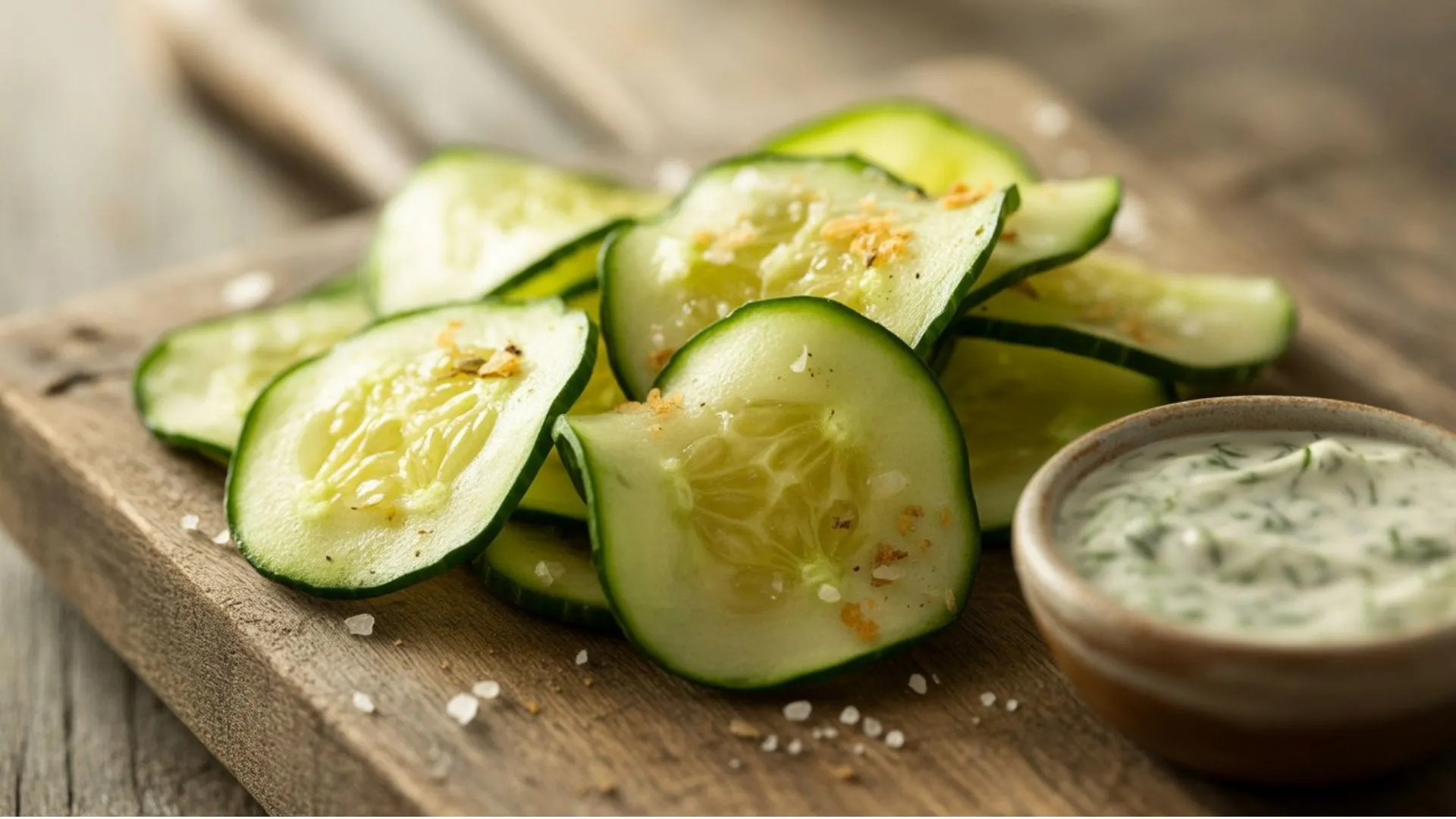
I’ll be honest — the first time my neighbor handed me a bag of homemade cucumber chips, I was skeptical. Cucumbers are supposed to be crunchy for about four minutes after you slice them, and then they turn into sad, watery discs. But she’d figured out something I hadn’t: with the right method, cucumber chips can go from “soggy vegetable” to “snack you actually crave” in under two hours, no deep fryer required. That one bag turned into a full-blown kitchen obsession, and after more test batches than I care to admit, I finally landed on a version that comes out crisp, savory, and dangerously easy to finish in one sitting.
If you’ve typed “are cucumber chips good for you” or “how to make cucumber chips at home” into a search bar at 9 p.m. while staring into your fridge, this post is for you. We’re covering why cucumber chips deserve a permanent spot in your snack rotation, a foolproof oven-baked recipe, a surprising skin-health bonus, and answers to the questions people ask most.
Key Takeaways
- Cucumber chips are a low-calorie, high-water-content alternative to potato chips, made by thinly slicing and slow-baking (or dehydrating) fresh cucumbers.
- Oven-baking at a low temperature is the easiest at-home method for crisp cucumber chips without special equipment.
- Salting and patting the slices dry before baking is the single biggest trick for avoiding soggy cucumber chips.
- Beyond snacking, cucumbers are widely used in skincare routines for their hydrating and soothing properties.
- Properly dried cucumber chips can be stored for days to weeks when kept airtight and away from moisture.
Why Cucumber Chips Deserve a Spot in Your Snack Rotation
Let’s address the question everyone actually wants answered first: are cucumber chips good for you? In short, yes — and by a wide margin compared to what’s usually sitting in the pantry. A standard cucumber is roughly 95% water, which means cucumber chips start with a nutritional advantage that fried potato chips simply can’t match. You get volume and crunch without the calorie density, and because cucumbers carry natural potassium, vitamin K, and a modest dose of vitamin C, you’re snacking on something that’s doing a little more for your body than filling a craving.
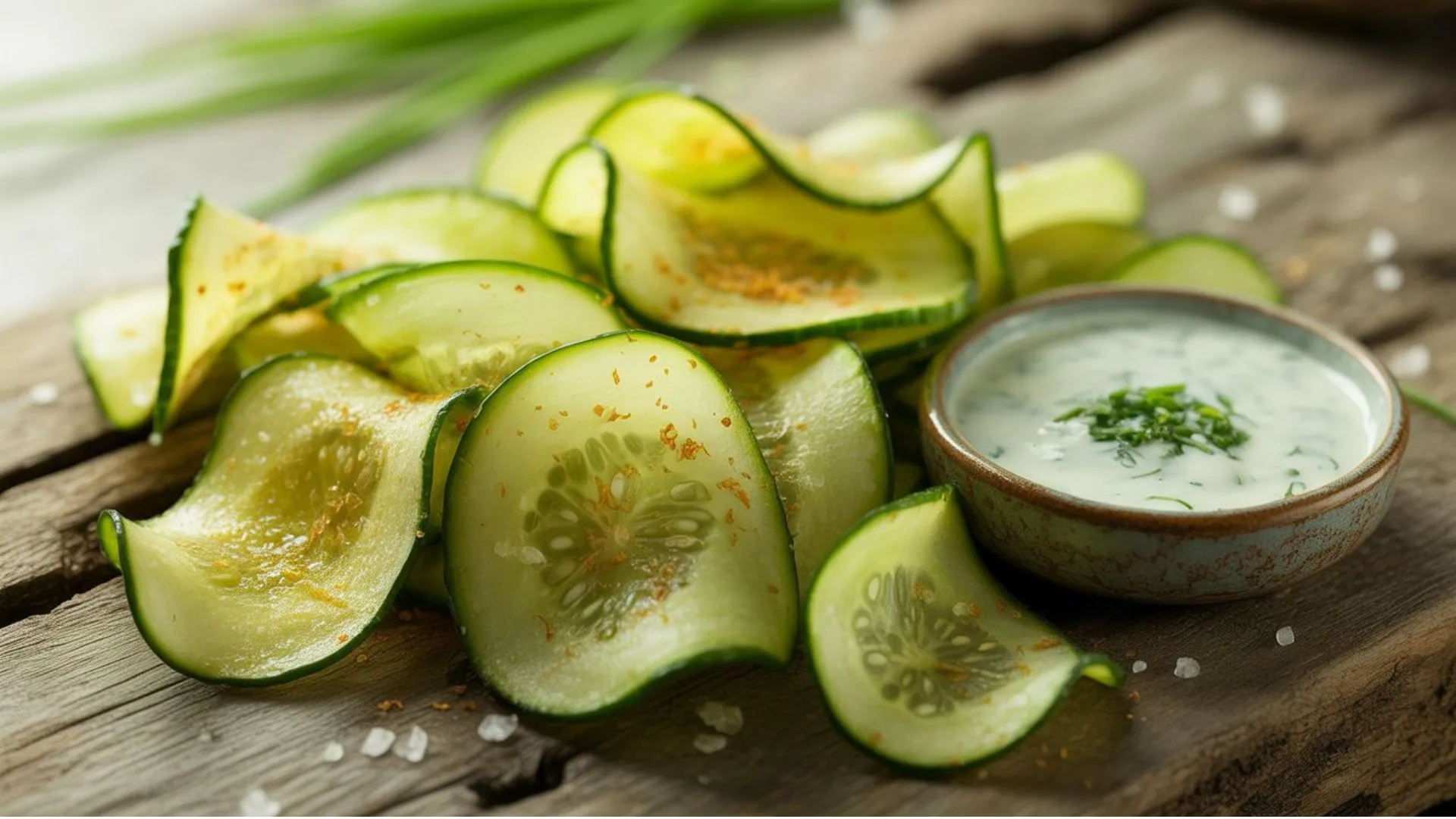
I get asked a lot whether cucumber chips taste like “nothing,” since raw cucumber has such a mild flavor. Cooked or dehydrated, that changes. The slow removal of water concentrates the cucumber’s natural flavor, and once you add salt, pepper, or your favorite seasoning blend, cucumber chips develop a savory, almost umami edge that surprises people expecting something bland. They’re also incredibly forgiving of add-ins — garlic powder, smoked paprika, everything-bagel seasoning, even a light vinegar brine before baking all work beautifully.
Compare that to the “most unhealthy potato chip” conversation that pops up constantly in nutrition circles — the ones loaded with saturated fat, sodium, and preservatives — and cucumber chips start to look less like a diet compromise and more like a genuinely smart swap. Plenty of people also ask whether it’s okay to eat cucumber every day, and for most healthy adults, incorporating cucumber (chips included) into a daily routine is perfectly reasonable as part of a varied diet.
How to Make Cucumber Chips at Home: The Oven-Baked Method
This is the method I keep coming back to, because it doesn’t require a dehydrator or an air fryer — just an oven, a sharp knife, and a little patience. The goal with oven-baked cucumber chips is low, slow heat that pulls moisture out gradually so the slices crisp instead of steaming into mush. Below is the exact process I use, along with the mistakes I made so you don’t have to repeat them.
Ingredients
Cucumber Chips
Ingredients
Equipment
Step-by-Step Instructions
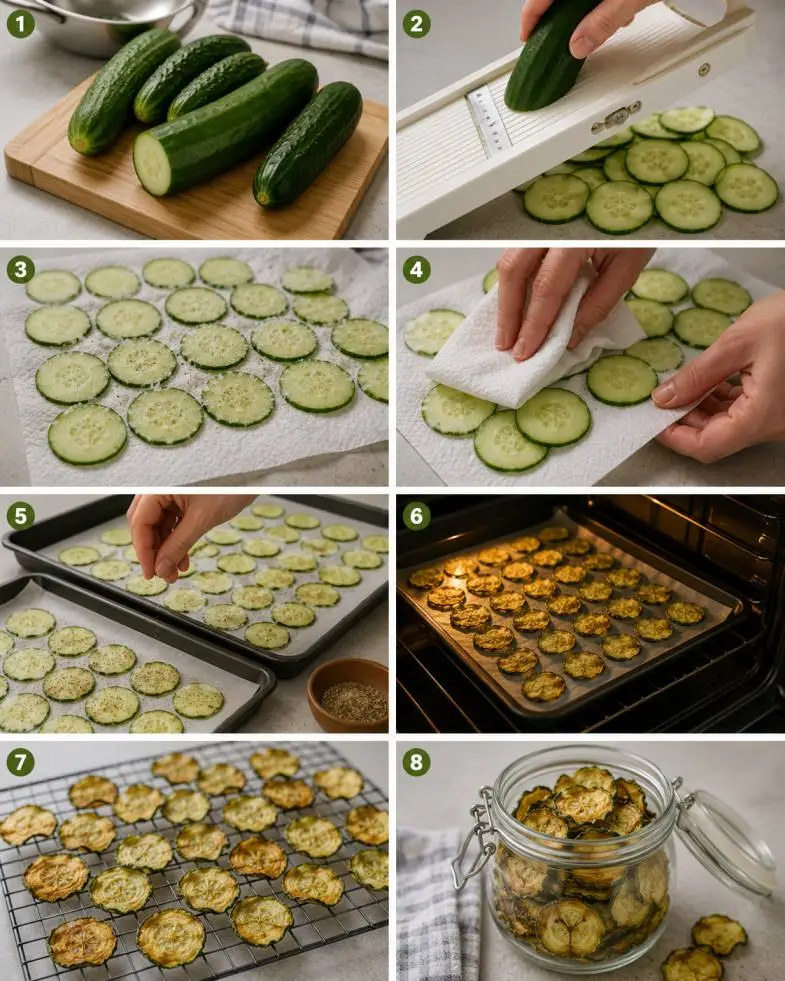
Step 1: Choose and prep your cucumbers
Not all cucumbers are created equal when it comes to chip-making. Standard slicing cucumbers work, but they carry more water and larger seeds, which means a soggier result and a longer bake time. English cucumbers (the long ones usually sold shrink-wrapped) or smaller Persian cucumbers have thinner skin, fewer seeds, and less water content, making them the better starting point for crisp cucumber chips. Wash them thoroughly and pat dry.
Step 2: Slice thin and even.
This is the step people rush, and it’s the one that matters most. Using a mandoline set to about 1/8-inch (roughly 3mm) thickness, slice the cucumbers into even rounds. Uneven slices are the number one reason a home batch ends up half-burnt, half-soggy in the same tray — the thin ones crisp fast while the thick ones are still releasing water. If you don’t have one, a steady hand and a sharp knife will do — just take your time and aim for consistency.
Step 3: Salt and sweat the slices.
Lay the cucumber slices in a single layer across a few sheets of paper towel or a clean kitchen towel. Sprinkle evenly with about half the salt. Let them sit for 15 to 20 minutes. You’ll see beads of moisture rise to the surface — that’s the salt doing its job by drawing out excess water through osmosis. This single step is what separates a crisp final result from a disappointing one, because you’re removing moisture before the oven even gets involved.
Step 4: Pat thoroughly dry.
Once the sweating time is up, press each slice firmly between fresh paper towels. Don’t rush this part — the drier your cucumber slices are going into the oven, the less time they’ll need to bake and the crispier the final texture will be. I usually go through two rounds of towels to make sure I’ve pulled out as much surface moisture as possible.
Step 5: Season and arrange.
Preheat your oven to 200°F (about 95°C) — yes, that low. High heat cooks the outside before the inside has a chance to dry out, which is the fastest route to floppy, unevenly done cucumber chips. Line two baking sheets with parchment paper and lightly spray or brush with a thin layer of oil. Arrange the cucumber slices in a single layer with a little space between each one; overcrowding traps steam and prevents proper crisping. Sprinkle the remaining salt, the black pepper, and any optional seasoning evenly across the top.
Step 6: Bake low and slow.
Place the trays in the oven and bake for 2 to 3 hours, flipping the slices halfway through at around the 90-minute mark. Every oven runs a little differently, so start checking at the two-hour mark. You’re looking for slices that are dry to the touch, slightly curled at the edges, and light golden — not deeply browned. If some slices are thinner than others, pull them out early so they don’t scorch while the thicker ones catch up.
Step 7: Cool completely before storing.
This step trips up a lot of first-timers. Cucumber chips will feel soft straight out of the oven — that’s normal, not a failure. As they cool on a wire rack for 15 to 20 minutes, residual moisture evaporates and they firm up into their final crisp texture. Storing them warm traps steam inside the container and undoes all your hard work, so resist the urge to seal them up right away.
Step 8: Store properly.
Once fully cooled, transfer your cucumber chips to an airtight container or a resealable bag with as much air pressed out as possible. Kept in a cool, dry spot, homemade cucumber chips typically stay crisp for about 3 to 5 days. If you live somewhere humid, they’ll soften faster, so a food-safe silica packet or a few grains of uncooked rice tucked into the container can help absorb stray moisture and extend crispness.
Troubleshooting Tips
If your batch came out chewy instead of crisp, the most likely culprit is moisture — either the slices were too thick, the salting step got skipped, or they went into an oven that wasn’t fully preheated. If they browned unevenly, your slices probably weren’t uniform in thickness, so investing a few extra minutes in even slicing (or actually using a mandoline) pays off enormously. And if you’re short on time, you can bump the oven to 225°F (about 107°C) and cut the bake time to roughly 1.5 hours, though you’ll want to watch them more closely since the margin for burning narrows.
Want to experiment beyond the classic salt-and-pepper version? A light dusting of nutritional yeast adds a cheesy note without dairy, while a few drops of rice vinegar brushed on before baking gives the cucumber chips a tangy, almost pickle-adjacent flavor that pairs particularly well with a yogurt-based dip. However you season them, the base technique for making cucumber chips at home stays exactly the same — it’s really just about controlling moisture from start to finish.
Can Cucumber Chips Help Your Skin, Too?
Here’s a question that comes up almost as often as the recipe itself: can cucumber help with acne? Cucumbers have a long history in skincare, largely thanks to their high water content and cooling properties, which is why you’ll still see cucumber slices placed over eyes in spa treatments. Some people find that a diet including regular hydrating foods like cucumber supports clearer-looking skin over time, though it’s worth being clear that eating cucumber chips isn’t a substitute for a proper skincare routine or dermatologist guidance if acne is a persistent concern. Think of it as a small, tasty piece of a bigger hydration puzzle rather than a cure-all.
Frequently Asked Questions About Cucumber Chips
What do cucumber chips taste like?
On their own, baked or dehydrated cucumber chips have a mild, slightly sweet, concentrated cucumber flavor with a satisfying crunch. Once seasoned with salt, pepper, or spices, they take on a savory profile that many people compare to a lighter, fresher version of a vegetable chip.
Can you air fry cucumbers into chips?
Yes. An air fryer set to a low temperature, around 250°F (120°C), can produce cucumber chips in roughly 45 minutes to an hour, though you’ll usually need to work in batches and check frequently since air fryers vary widely in strength and airflow.
How long will dehydrated cucumber chips last?
Properly dehydrated cucumber chips, stored in an airtight container in a cool, dry place, can last anywhere from one to two weeks, and sometimes longer if all moisture was thoroughly removed during drying. Any softening or visible moisture inside the container is a sign it’s time to eat them or start a fresh batch.
Is it okay to eat cucumber as a snack every day?
For most healthy adults, yes — cucumber, including cucumber chips, is low in calories and can fit easily into a daily eating pattern. As with any single food, variety is still a good idea, so it’s best treated as one part of a broader, balanced diet rather than the only snack in rotation.
Final Thoughts
What started as a slightly skeptical taste test at my neighbor’s kitchen table turned into one of my favorite ways to snack without the usual guilt spiral. Cucumber chips aren’t trying to be a perfect replica of a potato chip — they’re their own thing: lighter, a little more delicate, and genuinely satisfying once you nail the technique. The oven-baked method above is forgiving enough for a first attempt and reliable enough to become a regular in your kitchen, the way it has in mine.
If you make a batch, I’d love to see how they turn out — snap a photo of your cucumber chips before they disappear (they go fast) and let me know what seasoning combination you tried. For another take on this snack, check out this cucumber chips recipe from Easy Healthy Recipes, and if you’re hungry for more ideas after this one, browse the full snacks and appetizers collection over on Palatable Recipes.
And if you’re the type who likes to save recipes for later instead of losing them in a browser tab graveyard, pin this one on my Pinterest, Palatable Recipes — it’s where I keep every snack experiment that actually worked. Happy baking, and enjoy the crunch.