
Table of Contents
Prep Time: 15 minutes | Chill Time: 8 hours (overnight) | Cook Time: 45 minutes | Servings: 8 | Calories: 310 per serving
The first time I made a french toast casserole for a family brunch, I pulled it out of the oven looking golden and gorgeous on top. I sliced into it in front of everyone, and the middle was basically egg soup. My mother-in-law was too polite to say anything, but my brother-in-law was not. “Is this supposed to be like this?” he asked, poking at the wet bread with his fork. It was mortifying, and it was also the moment I decided I was going to figure out exactly what goes wrong with this dish and fix it for good.
Turns out, I wasn’t alone. A soggy casserole is one of the most common breakfast disasters out there, and almost every version of it comes down to the same handful of mistakes. Once you understand why it happens, this dish goes from a gamble to something you can make with total confidence, whether it’s a holiday morning or a lazy Sunday with coffee in hand. Let’s walk through what actually causes the sog, then get into the step-by-step recipe that fixes it.
Why Your Bake Turns Out Soggy
Nine times out of ten, a soggy casserole comes down to one of three culprits: fresh bread that can’t absorb custard without falling apart, too much liquid relative to bread, or not enough oven time to fully set the eggs in the center. Fresh, soft bread soaks up custard like a sponge but has nowhere for that liquid to go, so it just sits there wet. Day-old or stale bread, on the other hand, has dried out enough to actually pull the custard in and hold its structure while baking.
The other sneaky issue is soaking time. Leave your bread sitting in egg-and-milk mixture too long and the outside layer starts to break down before it even hits the oven, which is exactly why some people describe their finished dish as tasting more like scrambled eggs than toast. A good custard soak is generous but not a swim.
The Bread Secret Nobody Tells You
If there’s one single fix that solves 80% of soggy-casserole complaints, it’s this: dry out your bread before you touch the custard. Cut your loaf into cubes and leave them uncovered on the counter overnight, or speed things up by baking them at 300°F for about 10 to 12 minutes until they feel firm and slightly crisp on the outside. Stale, sturdy bread like brioche, challah, or a thick-cut French loaf is ideal because it holds its shape while still soaking up plenty of flavor.
Skipping this step is the single biggest reason it ends up wet in the middle. It only takes a few extra minutes of planning, and it changes the entire texture of the finished bake.
Step-by-Step French Toast Casserole Recipe
Ingredients
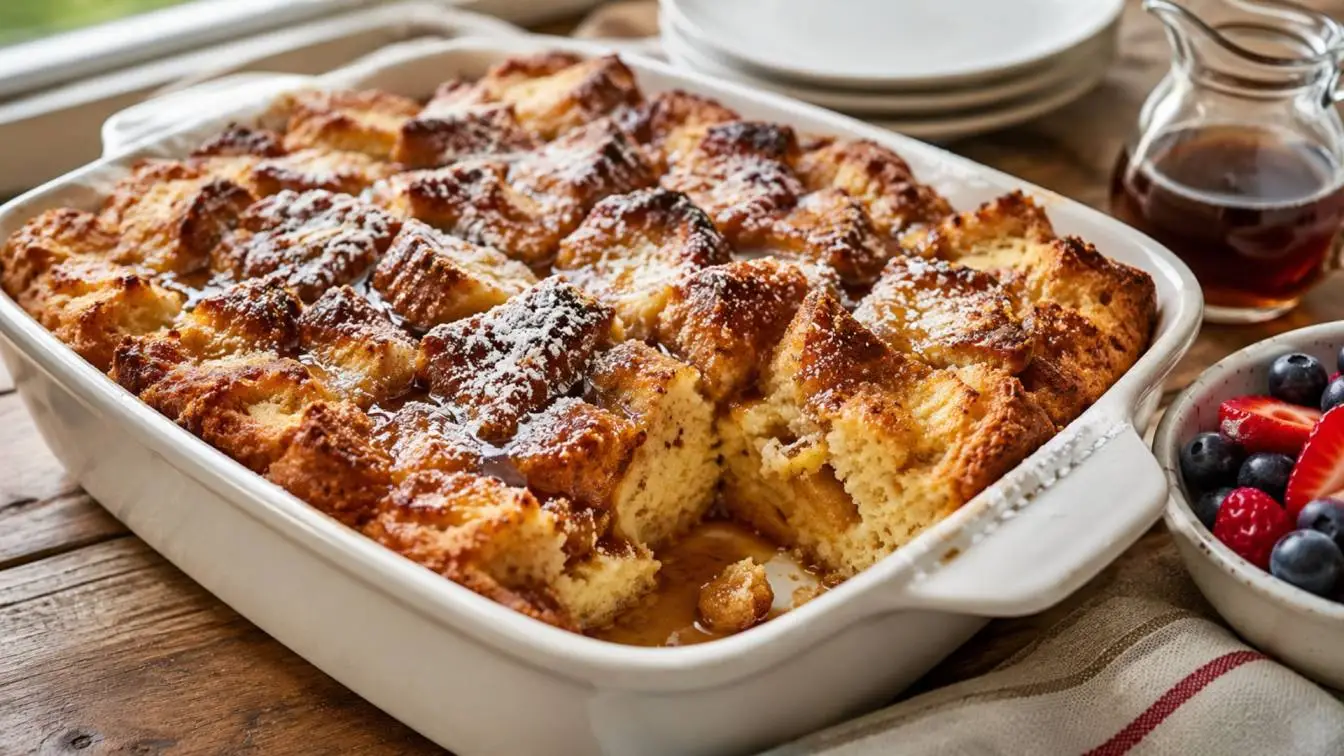
French Toast Casserole
Ingredients
Instructions
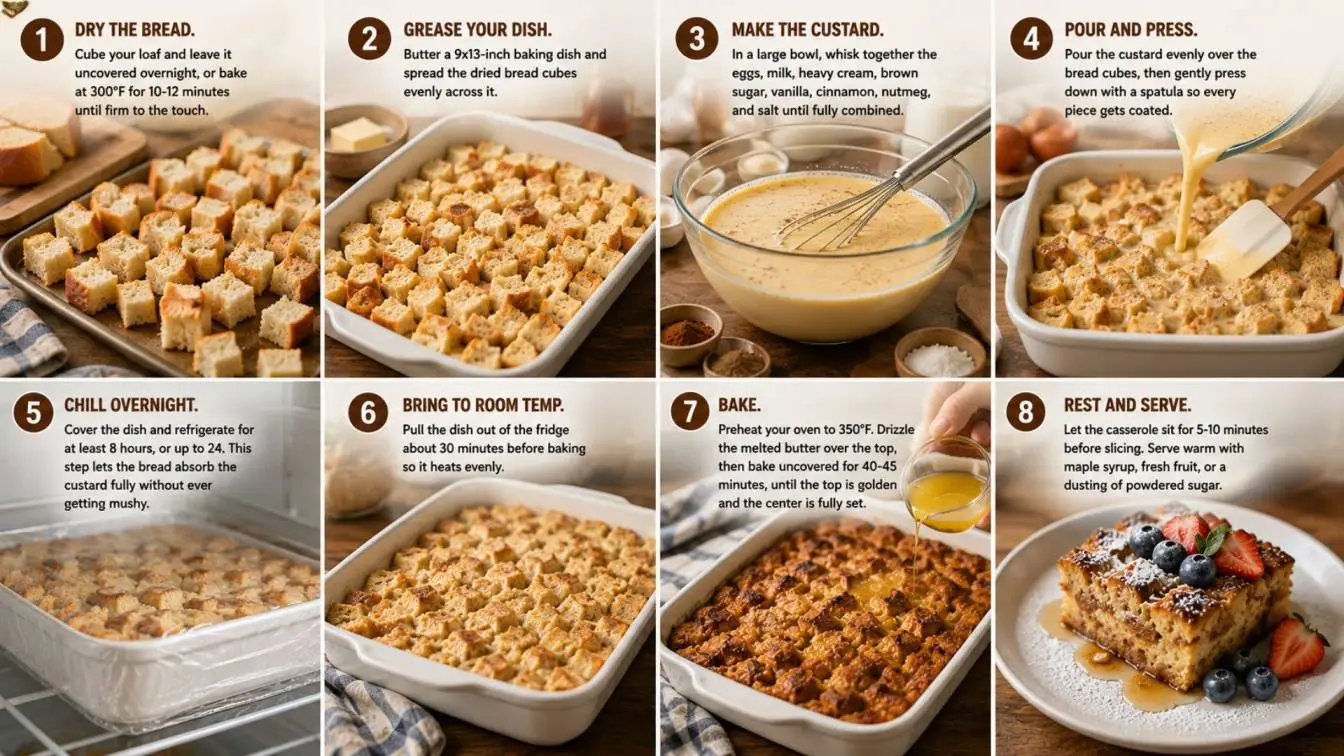
1-Dry the bread.
Cube your loaf and leave it uncovered overnight, or bake at 300°F for 10-12 minutes until firm to the touch.
2-Grease your dish.
Butter a 9×13-inch baking dish and spread the dried bread cubes evenly across it.
3-Make the custard.
In a large bowl, whisk together the eggs, milk, heavy cream, brown sugar, vanilla, cinnamon, nutmeg, and salt until fully combined.
4-Pour and press
Pour the custard evenly over the bread cubes, then gently press down with a spatula so every piece gets coated.
5-Chill overnight.
Cover the dish and refrigerate for at least 8 hours, or up to 24. This step lets the bread absorb the custard fully without ever getting mushy.
6-Bring to room temperature
Pull the dish out of the fridge about 30 minutes before baking so it heats evenly.
7-Bake.
Preheat your oven to 350°F. Drizzle the melted butter over the top, then bake uncovered for 40-45 minutes, until the top is golden and the center is fully set (a knife inserted in the middle should come out clean, not wet).
8-Rest and serve.
Let the casserole sit for 5-10 minutes before slicing. Serve warm with maple syrup, fresh fruit, or a dusting of powdered sugar.
Pro Tips for a Crispy, Never-Soggy Texture
- Don’t skip the overnight chill. It gives the bread time to absorb custard slowly and evenly, which is very different from a quick 20-minute soak.
- Use a thermometer if you’re unsure. The center should reach around 160°F when it’s fully cooked through.
- Butter or oil, not both at once. Butter on top gives you that golden, slightly crisp finish; oil alone tends to leave the surface flatter and less flavorful.
- Bake uncovered. Covering the dish traps steam and is one of the fastest ways to end up with a soggy casserole instead of a set one.
- Let it rest before cutting. Cutting into it straight from the oven releases steam and moisture that makes each slice look wetter than it actually is.
Frequently Asked Questions
Why is my french toast casserole soggy?
It almost always comes down to fresh bread that hasn’t been dried out, too much custard for the amount of bread, or not baking long enough for the center to fully set. Dry, sturdy bread and a full bake time are the fix.
What is the most common mistake in making french toast?
Using bread that’s too soft and fresh, or getting the egg-to-milk ratio wrong. Too many eggs and not enough milk can leave you with a texture closer to scrambled eggs than toast.
What is the trick to not soggy french toast?
Dry your bread first, don’t over-soak it, and bake uncovered so moisture can escape instead of getting trapped under the surface.
Should you dry out bread for french toast casserole?
Yes, always. Whether you let it sit out overnight or dry it in a low oven for about 10 minutes, this one step does more to prevent a soggy casserole than almost anything else on this list.
The Bottom Line
A great french toast casserole isn’t about luck, it’s about a few small, deliberate steps: dry bread, a balanced custard, an overnight rest, and enough time in the oven for everything to set properly. Once you’ve made it the right way one time, you’ll never go back to guessing.
If you want to see this exact method in action with extra step-by-step photos, check out the full baked recipe here. And if brunch went well and you’re now thinking about what to make for dinner, browse more dinner recipes here for your next meal plan.
Made this and want to save it for later? Pin it and follow along for more recipes on Pinterest — I’d love to see how yours turns out, so tag me or drop a comment below and let me know if the overnight-chill trick fixed your sogginess problem too.