
Table of Contents
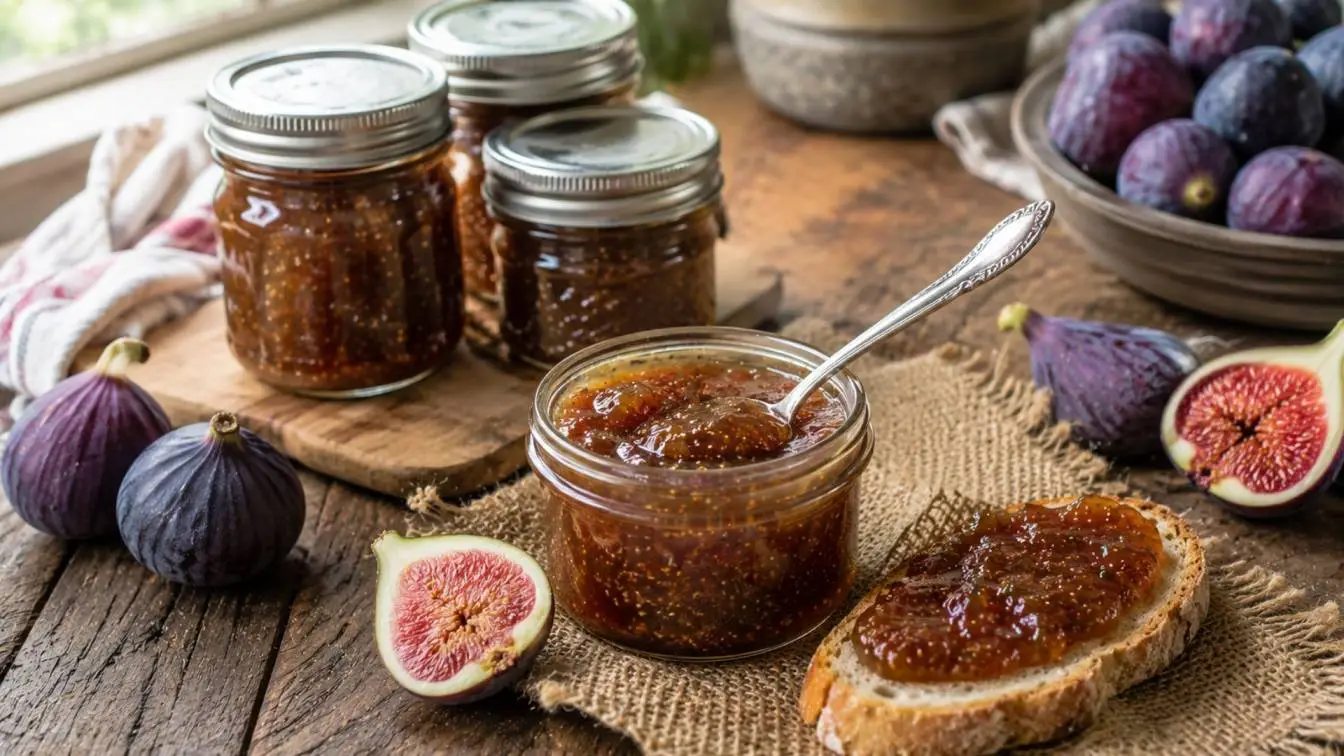
Every September, my neighbor’s fig tree drops more fruit than one household could ever eat, and every September, she shows up on my porch with a grocery bag full of them, looking slightly desperate. For years I just ate them fresh or gave half of them away again, until the summer I finally sat down with a pot, a wooden spoon, and way too many figs, and made my first batch of fig jam. It was messy, it took longer than I expected, and it was, without exaggeration, one of the best things I’ve ever put on a piece of toast. I haven’t let a fig season pass without making it since.
If you’ve got your own overflowing fig tree, a farmers market haul, or just a craving for something jammy and a little different from the usual strawberry or blueberry, this fig jam recipe is exactly what you need. No pectin, no fuss, just figs, sugar, and lemon, cooked down slowly until they turn into something rich, sticky, and deeply worth the effort.
Prep Time: 15 minutes
Cook Time: 40 minutes
Total Time: 55 minutes
Servings: Makes about 3 half-pint jars (48 servings, 1 tablespoon each)
Calories: Approximately 25 calories per serving (1 tablespoon)
Why You’ll Love This Fig Jam Recipe
Figs have a natural honeyed sweetness that barely needs help, which is part of why this jam comes together with so few ingredients. There’s no added pectin in this version; figs and lemon juice, cooked low and slow, thicken into a beautifully rustic, spoonable jam entirely on their own. It’s forgiving, it’s genuinely simple, and it turns a fruit most people only think to eat fresh into something you can enjoy on toast, cheese boards, and roasted meats for months to come.
What You’ll Need
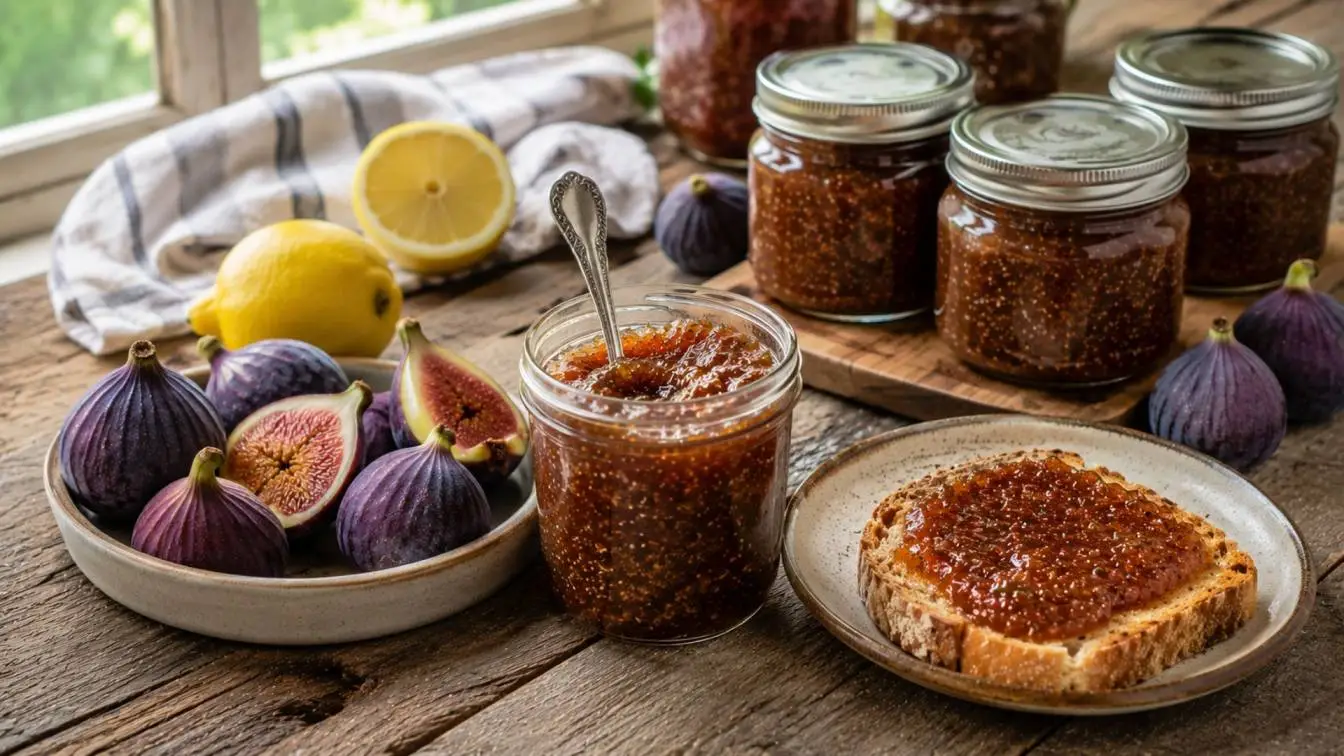
Fig Jam Recipe
Ingredients
A quick note on the figs themselves: you don’t need to peel them. The skins are perfectly edible, they soften completely as the jam cooks, and leaving them on actually gives the finished jam a nicer texture, with tiny flecks of skin throughout instead of a totally smooth puree. Just trim off the tough little stem at the top of each fig and you’re good to go.
Step-by-Step: How to Make Fig Jam
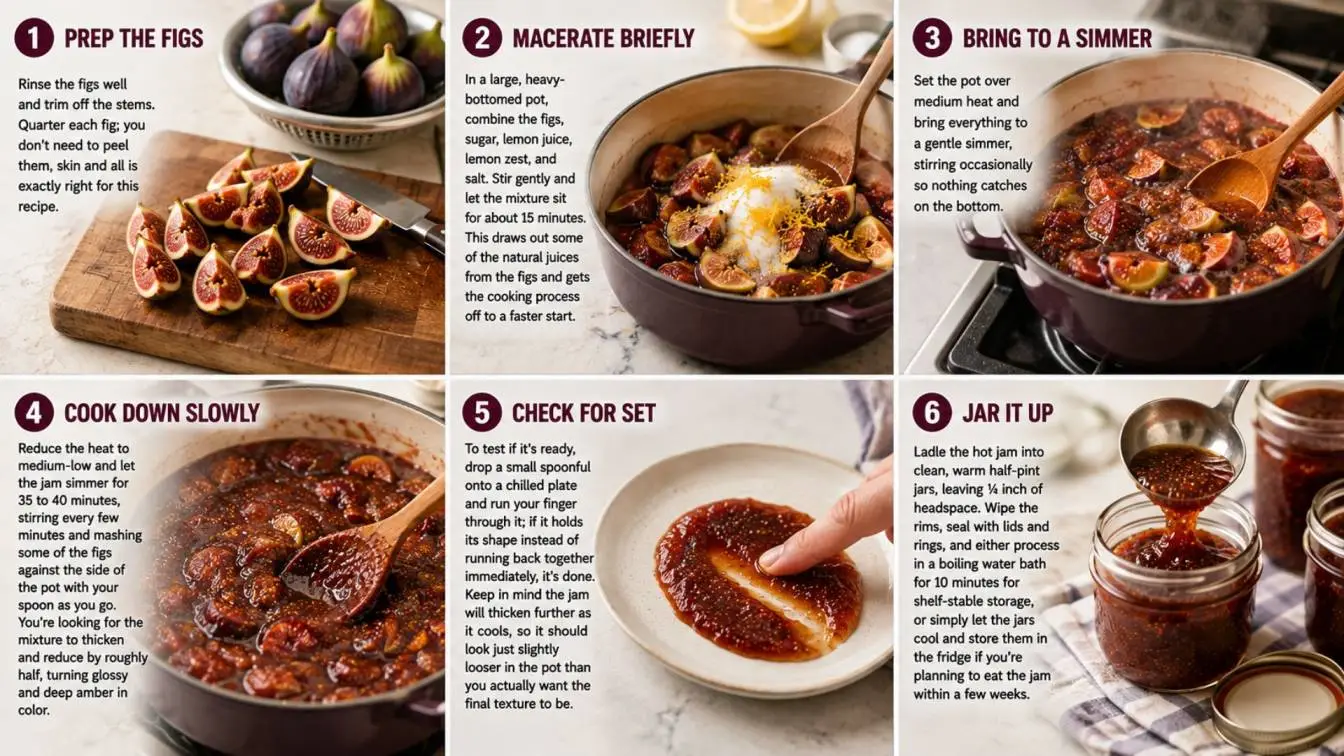
1. Prep the figs
Rinse the figs well and trim off the stems. Quarter each fig; you don’t need to peel them, skin and all is exactly right for this recipe.
2. Macerate briefly
In a large, heavy-bottomed pot, combine the figs, sugar, lemon juice, lemon zest, and salt. Stir gently and let the mixture sit for about 15 minutes. This draws out some of the natural juices from the figs and gets the cooking process off to a faster start.
3. Bring to a simmer
Set the pot over medium heat and bring everything to a gentle simmer, stirring occasionally so nothing catches on the bottom.
4. Cook down slowly
Reduce the heat to medium-low and let the jam simmer for 35 to 40 minutes, stirring every few minutes and mashing some of the figs against the side of the pot with your spoon as you go. You’re looking for the mixture to thicken and reduce by roughly half, turning glossy and deep amber in color.
5. Check for set
To test if it’s ready, drop a small spoonful onto a chilled plate and run your finger through it; if it holds its shape instead of running back together immediately, it’s done. Keep in mind the jam will thicken further as it cools, so it should look just slightly looser in the pot than you actually want the final texture to be.
6. Jar it up
Ladle the hot jam into clean, warm half-pint jars, leaving ¼ inch of headspace. Wipe the rims, seal with lids and rings, and either process in a boiling water bath for 10 minutes for shelf-stable storage, or simply let the jars cool and store them in the fridge if you’re planning to eat the jam within a few weeks.
Fig Jam vs. Fig Preserves: What’s the Difference?
These two get mixed up constantly, but the difference actually comes down to texture. Fig jam is cooked down and mashed until the fruit breaks apart into a smooth, spreadable consistency, which is exactly what this recipe makes. Fig preserves, on the other hand, keep the fruit in larger, more intact pieces or even whole small figs suspended in a thick syrup. Neither is “better” exactly, it depends what you’re using it for; jam spreads more easily on toast, while preserves shine spooned over cheese or yogurt where you want to see and bite into actual pieces of fruit.
Do You Need Pectin for Fig Jam?
Not for this recipe, and honestly, not for most fig jam. Figs contain some natural pectin, and combined with the acid from fresh lemon juice and a long, slow simmer that evaporates excess liquid, you get a proper set without adding any commercial pectin at all. The tradeoff is time; a no-pectin jam like this one takes longer on the stove than a pectin-added version would, but a lot of home canners feel the deeper, more concentrated fig flavor you get from that extra cooking time is well worth the wait.
Flavor Variations Worth Trying
Once you’ve made the classic version, this fig jam recipe is a great base for experimenting. A splash of balsamic vinegar stirred in during the last five minutes of cooking gives the jam a deeper, slightly tangy complexity that pairs beautifully with cheese boards and roasted pork. A cinnamon stick or a few whole cloves simmered in with the figs adds warmth that’s especially good in the fall. Vanilla bean, orange zest instead of lemon, or a pinch of black pepper are all worth a try too; fig jam is remarkably good at carrying other flavors without losing its own character. For more inspiration on pairing preserves like this, The Mediterranean Dish’s fig jam recipe is worth a look; it leans into a slightly different spice profile that’s a nice contrast to this version.
Storage and Shelf Life
Properly processed, sealed jars will keep in a cool, dark pantry for up to a year. Once opened, fig jam should be refrigerated and is best used within three to four weeks. If you skipped the water bath and stored your jars straight in the fridge, plan to use the jam within about a month for the best flavor and texture.
Frequently Asked Questions About Fig Jam
Do you have to peel figs for jam?
No, peeling isn’t necessary. Fig skins soften completely during cooking and are perfectly fine to eat; leaving them on actually adds nice texture and saves you a tedious prep step. If you strongly prefer a completely smooth jam, you can peel the figs first, but it’s a matter of preference rather than necessity.
What’s the difference between fig jam and fig preserves?
Fig jam is cooked down and mashed until smooth and spreadable, while fig preserves keep the fruit in larger, more whole pieces suspended in syrup. Both start from the same basic ingredients; the difference comes down entirely to how much you break down the fruit during cooking.
Should I add pectin to fig jam?
It’s optional, not required. Figs have enough natural pectin, especially when combined with lemon juice and a longer simmer, to set properly without any added pectin. Adding pectin will shorten your cooking time and give a firmer set if you’re short on time, but a traditional, longer-cooked fig jam has a richer flavor that many people prefer.
Do you refrigerate fig preserves after opening?
Yes. Once a jar of fig jam or preserves has been opened, it should go in the refrigerator and be used within three to four weeks for the best quality and safety, even if the jar was originally shelf-stable and processed for pantry storage.
Final Thoughts
There’s something genuinely satisfying about turning a bowl of figs that would otherwise go soft and forgotten on the counter into jars of jam that’ll last you well into winter. This fig jam recipe doesn’t ask for anything fancy, just a bit of time and a good pot, and the payoff is a spread that tastes like nothing you’ll find on a grocery store shelf. If you’re looking for more ways to use it up, browse our full collection of snacks and appetizer recipes for pairing ideas, from cheese boards to crostini.
Give this recipe a try the next time figs come into season, and let me know in the comments what you paired your jam with. Save it for later on our Pinterest so it’s easy to find when fig season rolls around again.