
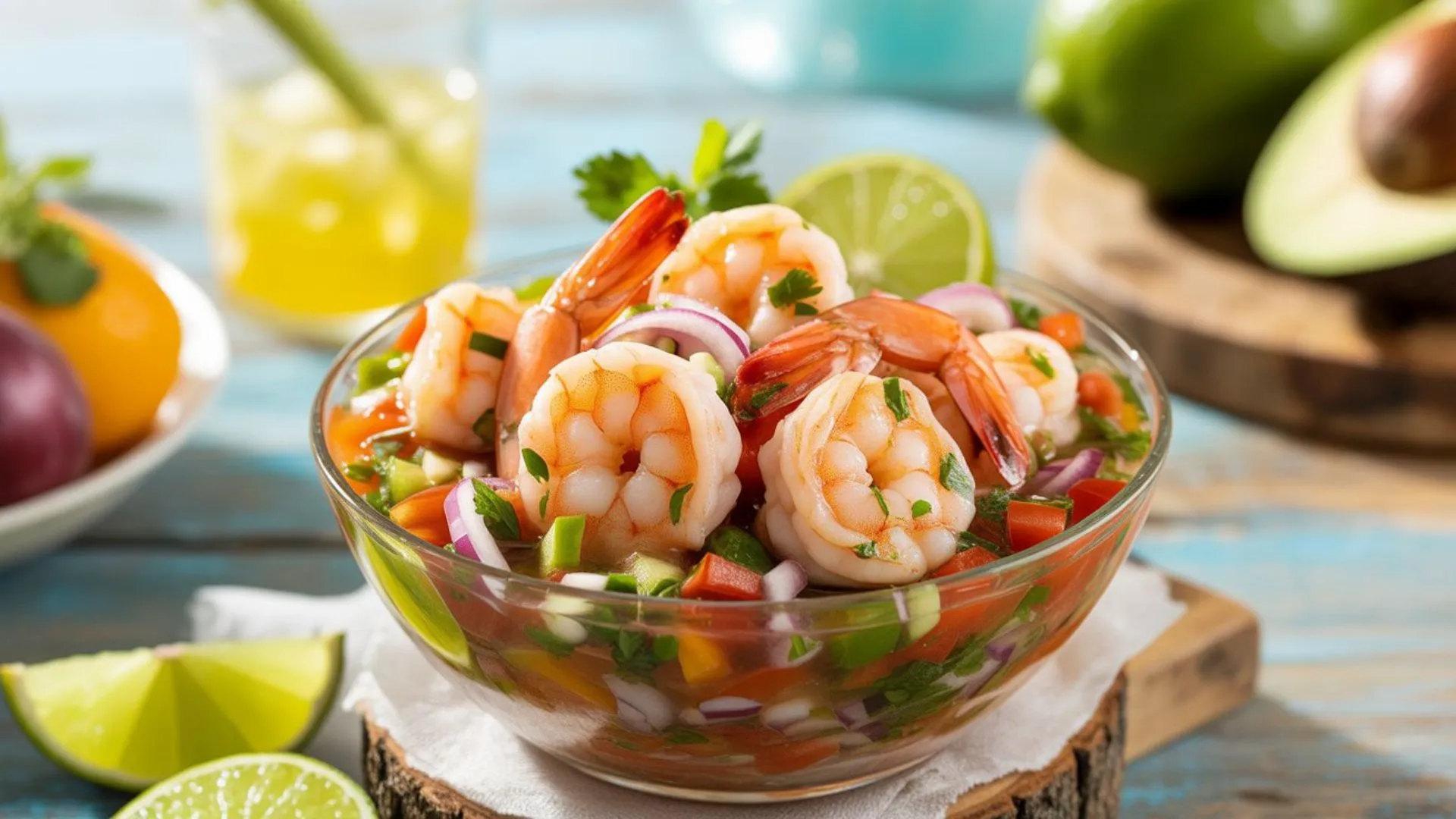
Table of Contents
The first time I made shrimp ceviche at home, I stood over the bowl for a solid five minutes staring at the shrimp — waiting for something to feel wrong. I’d read conflicting things online. Is it raw? Is the lime juice really enough? What if I get sick? Sound familiar?
Here’s the thing: shrimp ceviche is one of the most nutritious, refreshing, and genuinely simple dishes in Latin American cuisine. But this classic shrimp ceviche comes with a cloud of confusion around food safety, cholesterol, and technique that stops a lot of home cooks before they even start. This guide is here to clear all of that up — and give you a rock-solid shrimp ceviche recipe you can make with confidence.
What Exactly Is Shrimp Ceviche?
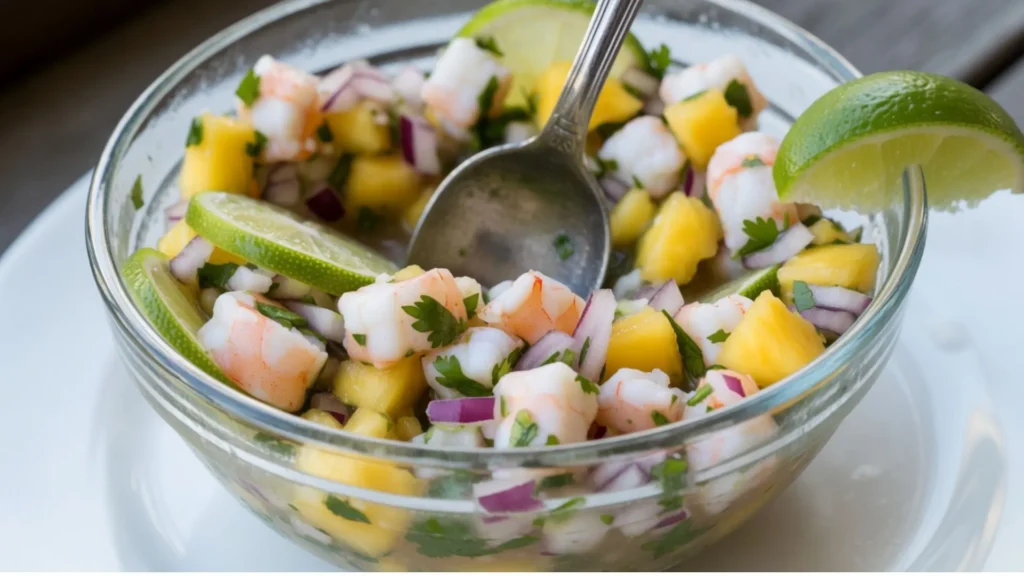
Shrimp ceviche is a cold dish made by “cooking” raw seafood in citrus juice — most commonly fresh lime juice. The acid in the lime (citric acid) denatures the proteins in the shrimp, giving them that firm, opaque, “cooked” appearance and texture without any heat. The liquid in ceviche is called leche de tigre (tiger’s milk), a citrus-based marinade that also includes the juices released by the shrimp themselves.
Classic shrimp ceviche also includes red onion, fresh cilantro, jalapeño or serrano chili, and sometimes cucumber or avocado. It’s bright, acidic, slightly spicy, and incredibly refreshing — especially in warm weather.
🕐 How long does shrimp ceviche need to marinate? For raw shrimp, you’ll want at least 20–30 minutes in lime juice for the acid to fully denature the proteins. However, many experienced cooks (and this shrimp ceviche recipe) use a quick-blanch method first, which gives you more control and significantly reduces food safety concerns.
Shrimp Ceviche Health Benefits Are Actually Impressive
One of the most common questions people search about shrimp ceviche is whether it lowers cholesterol. The answer is nuanced — and more positive than you might think.
Shrimp is low in saturated fat and high in lean protein, omega-3 fatty acids, and astaxanthin (a powerful antioxidant). While shrimp does contain dietary cholesterol, research increasingly suggests that dietary cholesterol has less impact on blood cholesterol levels than previously believed. The bigger picture here is that ceviche replaces calorie-heavy, saturated-fat-laden meals with something genuinely light and nutrient-dense.
| Nutrient | Per Serving (approx.) | Why It Matters |
|---|---|---|
| Protein | 22–25g | Keeps you full, supports muscle repair |
| Calories | ~150–180 kcal | Very low for a satisfying meal |
| Omega-3 fatty acids | ~0.4g | Anti-inflammatory, heart-healthy |
| Vitamin C | High (from lime + veggies) | Immune support, collagen production |
| Saturated fat | Very low (<1g) | No impact on LDL cholesterol |
For people watching their blood pressure, shrimp ceviche is generally a solid choice — it’s naturally low in sodium (as long as you don’t go overboard with added salt), and the fresh vegetables add potassium and fiber. As always, speak with your doctor if you have specific cardiovascular concerns.
Classic Shrimp Ceviche
Bright, fresh, and loaded with flavor — this shrimp ceviche recipe answers every question at once.
Prep Time
20 min
Marinate
20 min
Servings
4
Difficulty
Easy
Ingredients
- 1 lb (450g)raw shrimp, peeled and deveined (medium or large)
- ¾ cupfresh lime juice (about 6–8 limes) —do not use bottled
- ¼ cupfresh lemon juice (optional, adds depth)
- ½red onion, finely diced
- 2Roma tomatoes, seeded and diced
- 1jalapeño or serrano pepper, finely minced
- ½ cupfresh cilantro, roughly chopped
- 1cucumber, peeled, seeded, and diced
- 1avocado, diced (add just before serving)
- 1 tspsea salt, plus more to taste
- Pinchof black pepper
Step-by-Step Instructions
- Prep the shrimp. If using grocery store shrimp (totally fine — see FAQ below), rinse under cold water and pat dry. Cut each shrimp into thirds or halves so the lime juice penetrates faster and evenly. Smaller pieces also make for a better texture in every bite.
- Quick-blanch for safety (recommended). Bring a pot of salted water to a boil. Drop the shrimp in for 60–90 seconds only — just until they turn pink and curl slightly. Immediately transfer to an ice bath to stop cooking. This step eliminates the raw shrimp food safety debate entirely, and your shrimp ceviche will still taste completely fresh and vibrant.
- Marinate in lime juice. Place the shrimp in a glass or non-reactive bowl. Pour the fresh lime juice over the top — the shrimp should be fully submerged. Cover and refrigerate for 20–30 minutes. If you blanched first, 15–20 minutes is enough for the flavor to develop. You’ll notice the shrimp firms up and lightens in color.
- Prep your vegetables while you wait. Dice the red onion, tomatoes, cucumber, and jalapeño. Soak the onion in cold water for 5 minutes if you want a milder flavor — this removes some of the harsh bite while keeping that satisfying crunch. Chop the cilantro just before mixing.
- Drain and combine. This is a key question many people wonder about: should you drain the lime juice? Yes — drain most of it, but keep 2–3 tablespoons in the bowl. That remaining leche de tigre is flavor gold. Add all the vegetables and cilantro to the shrimp. Toss gently to combine.
- Season and taste. Add sea salt, black pepper, and taste as you go. Ceviche should taste bright and punchy — if it tastes flat, it needs more lime or salt. If it’s too acidic, a tiny pinch of sugar or a bit of extra cucumber will balance it out.
- Add avocado and serve immediately. Fold in the diced avocado right before serving so it doesn’t brown. Serve your shrimp ceviche chilled in bowls or glasses, with tortilla chips, tostadas, or lettuce cups on the side. The best shrimp ceviche is eaten the same day — it doesn’t hold well overnight once the avocado is added.
Pro Tip — Can shrimp overcook in lime juice? Yes, absolutely. If you leave raw shrimp in lime juice for more than 2 hours, the acid continues to work and the shrimp becomes rubbery, chalky, and unpleasant. The sweet spot for pure acid-marinated shrimp is 20–45 minutes. The blanch-then-marinate method in this recipe gives you more control and a more consistent result every time.
Is the Shrimp in Shrimp Ceviche Actually Raw?
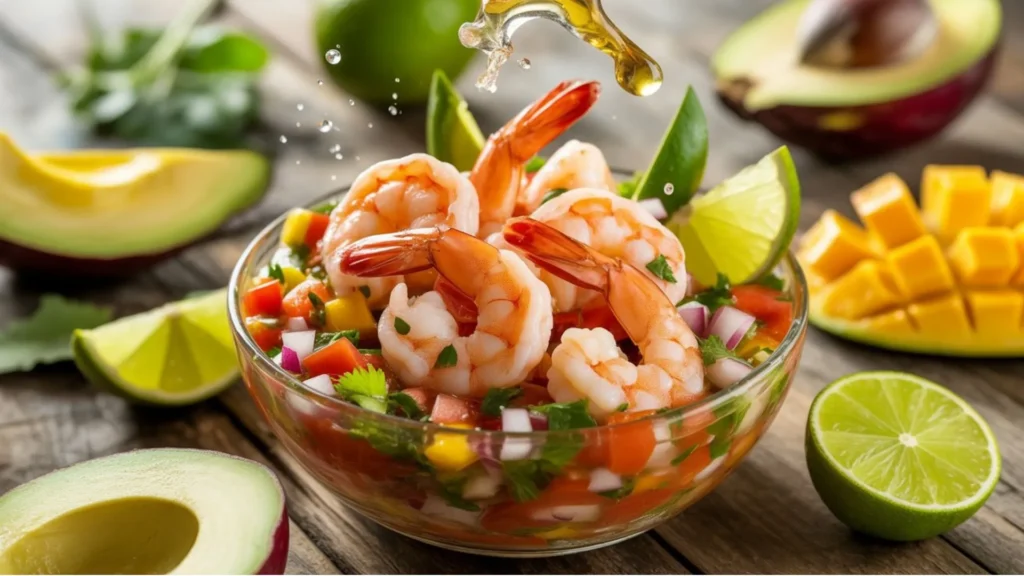
This is the one that keeps people up at night — and honestly, it deserves a straight answer. Traditional shrimp ceviche uses raw seafood that’s “cooked” only by acid. The citric acid in lime juice does denature the proteins, meaning the shrimp goes from translucent to opaque and takes on a cooked texture.
But does acid kill bacteria? Here’s the honest truth: citric acid reduces bacterial load significantly but may not eliminate all pathogens — particularly in shrimp that hasn’t been handled or stored properly. This is why the quick-blanch method in this recipe is the safer and smarter choice for home cooks, especially if you’re serving children, elderly family members, pregnant women, or anyone immunocompromised.
For a deeper dive into shrimp ceviche technique and food safety, Skinnytaste has an excellent shrimp ceviche version that’s also calorie-conscious and family-friendly. And for more seafood inspiration, check out the full collection at Palatable Recipes’ seafood section — there’s a lot more where this came from.
Is grocery store shrimp safe for shrimp ceviche? Yes — as long as it’s labeled “previously frozen” (most shrimp sold in the US is), which actually makes it safer. Freezing at commercial temperatures kills parasites. Buy from a reputable store, check the smell (it should be clean and oceanic, not ammonia-like), and cook or marinate within 1–2 days of purchase.
Shrimp Ceviche — Frequently Asked Questions
Can you eat shrimp raw in ceviche?
Technically, traditional ceviche uses raw shrimp that is “cooked” by lime juice acid, which denatures the proteins and changes the texture. However, acid alone does not reliably kill all bacteria or parasites the way heat does. For the safest result — especially at home — use the quick-blanch method (60–90 seconds in boiling water, then ice bath) before marinating. You get all the fresh flavor with none of the food safety worry. If you’re using sushi-grade or commercially frozen shrimp and you’re healthy and not pregnant, a full acid-only marinade of 25–30 minutes is also widely considered safe.
How long do shrimp need to sit in lime juice for ceviche?
If using raw shrimp with acid only, marinate for a minimum of 20–30 minutes, and no more than 45 minutes to 1 hour before the texture degrades. Yes, shrimp can “overcook” in lime juice — too long and they turn rubbery. If you blanched first, 15–20 minutes of marinating is plenty to build flavor. As for bottled lime juice: fresh is strongly preferred. Bottled juice is more acidic and less flavorful, and ceviche is one dish where the quality of your limes is front and center.
Does ceviche lower cholesterol?
Shrimp ceviche itself won’t dramatically lower your cholesterol, but it’s a genuinely heart-healthy food choice. Shrimp is high in lean protein and omega-3 fatty acids, low in saturated fat, and when paired with fresh vegetables, shrimp ceviche makes for one of the most nutrient-dense light meals you can eat. The omega-3s in shrimp support healthy HDL (“good”) cholesterol levels. If you’re managing high cholesterol, replacing a high-saturated-fat meal with shrimp ceviche a few times a week is a smart and delicious move — but consult your doctor for personalized guidance.
Why does my stomach hurt after eating ceviche?
There are a few possible reasons. First, the high acidity from lime juice can irritate a sensitive stomach, especially if eaten in large quantities on an empty stomach — try eating your shrimp ceviche with chips or tostadas to buffer the acid. Second, undercooked or improperly handled shrimp can cause foodborne illness (nausea, cramping, diarrhea within hours of eating). Third, some people have undiagnosed shellfish sensitivities that manifest as stomach discomfort. If you regularly feel unwell after eating ceviche, it’s worth speaking to a doctor to rule out a shellfish allergy or sensitivity.