
Table of Contents
I ruined more chicken cutlets than I’d like to admit before I figured this one out. For years, my parmesan crusted chicken came out of the oven looking gorgeous and then, thirty seconds later, the entire crust would slide off in one sad, greasy sheet the moment my fork touched it. Anyone who’s stood at their stove watching that happen knows the specific kind of kitchen heartbreak I’m talking about.
The fix wasn’t a fancier pan or a pricier cheese. It came down to three small technique changes — the kind nobody bothers explaining in a recipe card because they assume you already know them. Once I made those changes, parmesan crusted chicken went from “thing I attempt and hope for the best” to “thing I make on a Tuesday without thinking twice.” That’s the version I’m giving you today: a full step-by-step recipe, the real reasons behind each step, and answers to the questions I get asked most often about this dish.
Why Parmesan Crusted Chicken Goes Wrong (And How to Stop It)
Before we get to the recipe, it helps to understand what you’re actually building. Parmesan crusted chicken isn’t just “breaded chicken with cheese in it.” It’s a two-part structure: a thin protein layer (egg) that acts as glue, and a dry layer (parmesan plus breadcrumbs) that needs to bond to that glue and then crisp in the oven or pan. Most failures happen because one of those two layers is doing too much or too little work.
The most common mistake is skipping the flour step. People go straight from raw chicken to egg to breadcrumbs, and the coating has nothing to grip onto — chicken is naturally slick, and egg alone slides right off it. A light dusting of flour first gives the egg something to cling to, which gives the parmesan and breadcrumbs something to cling to in turn. It’s a chain, and skipping the first link breaks the whole thing.
Ingredients for the Best Parmesan Crusted Chicken
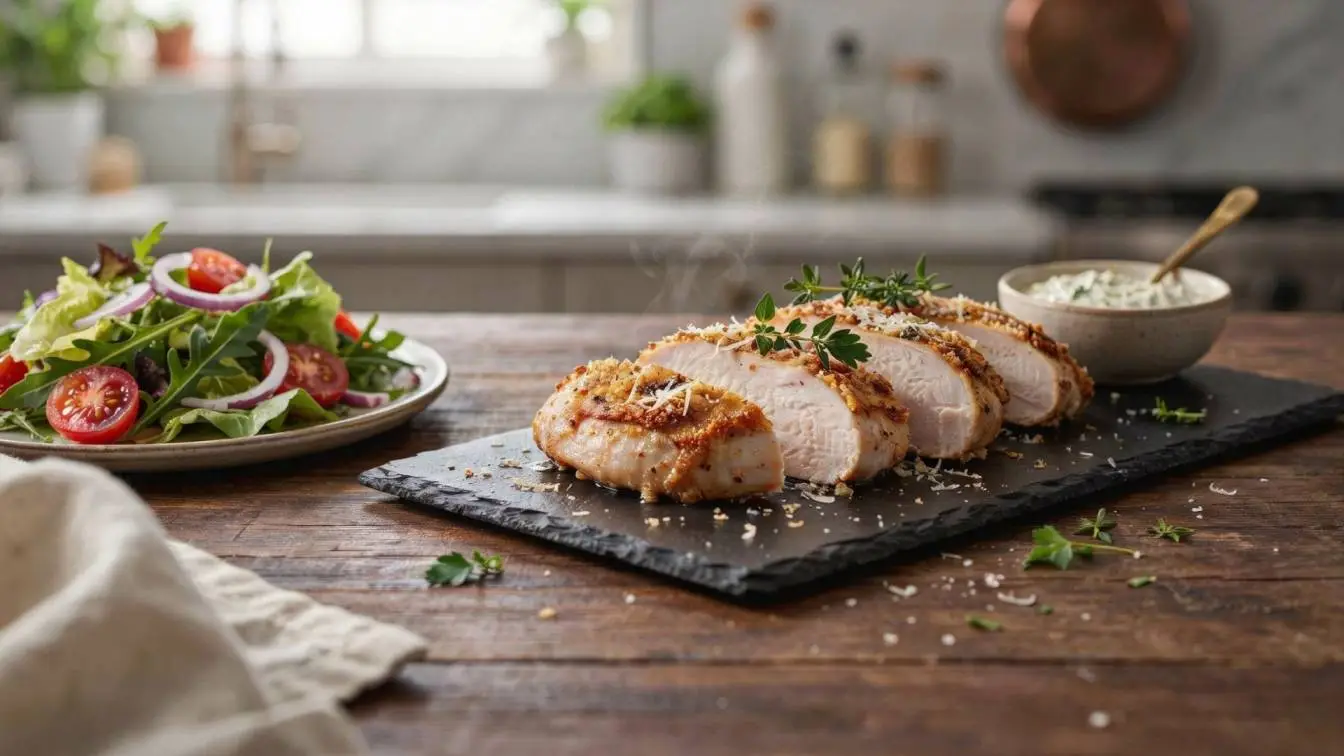
Parmesan crusted chicken
Ingredients
Step-by-Step: How to Make Parmesan Crusted Chicken
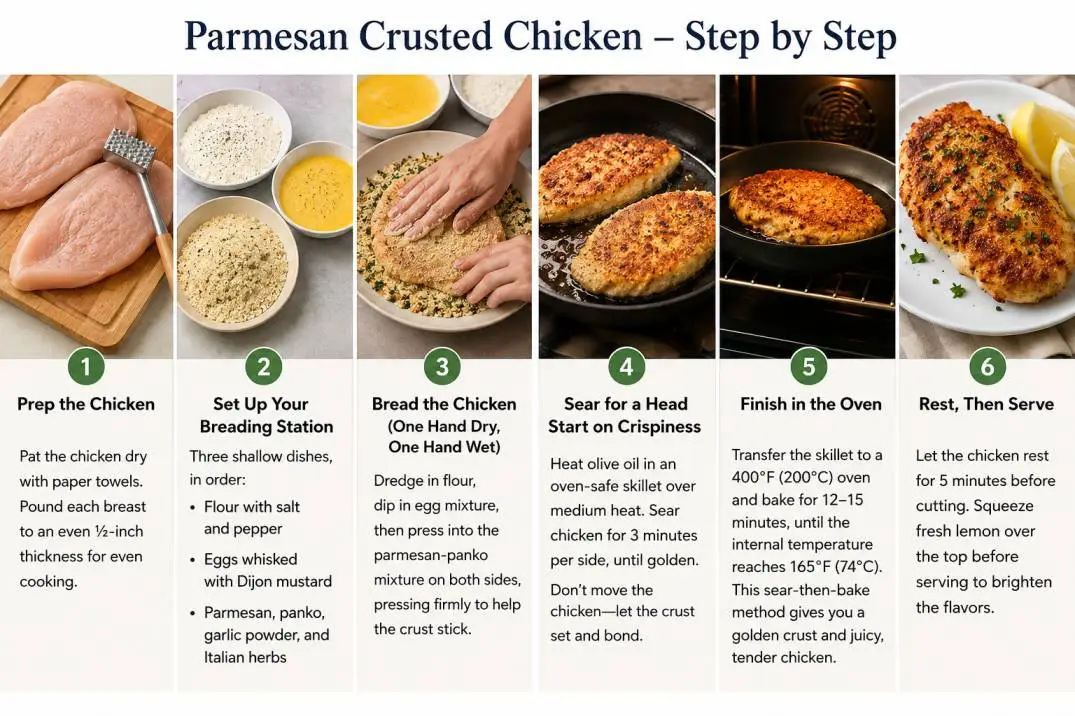
1-Prep the Chicken
Pat the chicken breasts completely dry with paper towels — this matters more than people think, since any surface moisture dilutes your flour coating before it even gets going. Place each breast between two sheets of plastic wrap and pound to an even ½-inch thickness. Even thickness means even cooking, so you won’t end up with a dry, overcooked edge and an undercooked center.
2-Set Up Your Breading Station
Three shallow dishes, lined up in order:
Dish one: flour, seasoned with a pinch of salt and pepper
Dish two: eggs whisked with the Dijon mustard (the mustard adds tang and helps the egg grip better)
Dish three: parmesan, panko, garlic powder, and Italian herbs, mixed together
This order isn’t optional — it’s the entire mechanism behind why parmesan crusted chicken holds its coating instead of shedding it in the pan.
3-Bread the Chicken (One Hand Dry, One Hand Wet)
Dredge each breast in flour, shaking off the excess. Dip into the egg mixture, letting any extra drip away. Then press — don’t just dip — into the parmesan-panko mixture on both sides, using your palm to pack the crust on firmly. That pressing step is what separates parmesan crusted chicken that stays intact from parmesan crusted chicken that flakes off in the pan. Use one hand for the dry ingredients and one for the wet; it keeps your fingers from turning into a breaded mess themselves.
4-Sear for a Head Start on Crispiness
Heat the olive oil in a large oven-safe skillet over medium heat. Once shimmering, add the chicken and sear for 3 minutes per side, until golden. Don’t move the chicken around while it sears — let it sit undisturbed so the crust has time to set and bond to the surface.
5-Finish in the Oven
Transfer the skillet directly to a 400°F (200°C) oven and bake for 12–15 minutes, until the internal temperature hits 165°F (74°C) on an instant-read thermometer. This sear-then-bake method is the single biggest reason restaurant-style parmesan crusted chicken tastes different from the home version — you get a deeply golden, crackly crust without drying out the meat with prolonged direct heat.
6-Rest, Then Serve
Let the chicken rest for 5 minutes before cutting. Squeeze fresh lemon over the top right before serving — the acidity cuts through the richness of the cheese and makes the whole dish taste brighter.
Three Tips That Make or Break This Dish
Grate your own parmesan. Pre-shredded cheese is coated in anti-caking starch that prevents it from melting into the crust properly. Freshly grated parmesan crusted chicken has noticeably better texture — the cheese browns instead of just sitting there.
Don’t skip the rest before breading. If your chicken is straight out of the fridge, let it sit at room temperature for 10 minutes first. Cold chicken makes the egg wash congeal unevenly, which weakens the bond.
Panko over regular breadcrumbs, always. Panko’s larger, airier flakes create more surface texture and crisp up far better than fine dried breadcrumbs, which tend to compact and turn dense.
If you want to see how another cook approaches the same technique, FoodieCrush’s parmesan crusted chicken recipe is worth a look for comparison — it’s a great example of how small ingredient swaps change the final texture.
What to Serve With Parmesan Crusted Chicken
This dish is versatile enough to anchor a lot of different dinners. A simple arugula salad with lemon vinaigrette keeps things light and lets the crust be the star. Roasted broccolini or garlicky green beans work well if you want something heartier. For a more indulgent pairing, serve it over buttered pasta or creamy mashed potatoes — the crispy crust against something soft is a genuinely satisfying contrast. Looking for more ideas to round out the meal? Browse the full collection of dinner recipes on Palatable Recipes for inspiration.
Frequently Asked Questions
What is the best breading for chicken parmesan?
A three-step breading of seasoned flour, egg wash, and a parmesan-panko mixture gives the most reliable results. Panko specifically outperforms standard breadcrumbs because its coarser texture crisps up better and doesn’t turn dense or soggy under the cheese.
How do you keep the breading from falling off parmesan crusted chicken?
Three things fix this almost every time: dust the chicken in flour before the egg wash (skipping this is the most common cause of breading loss), press the final coating on firmly with your palm instead of just dipping, and let the coated chicken rest for a few minutes before it hits the pan so the layers have time to set.
What can I use instead of breadcrumbs for parmesan crusted chicken?
Crushed pork rinds work well for a lower-carb, extra-crispy option. Crushed crackers, cornflakes, or almond flour are also solid substitutes, each bringing a slightly different texture — cornflakes in particular add a nice shattering crunch.
Is it better to bake or fry parmesan crusted chicken?
A hybrid method beats either extreme: sear the chicken briefly in a hot pan to set the crust and build color, then finish it in the oven. This gives you the crispiness of frying with the even, gentle cooking of baking, without drying out the chicken or risking a burnt crust.
Give It a Try
Parmesan crusted chicken has earned its spot as a regular in my dinner rotation precisely because it doesn’t demand much once you know the sequence — flour, egg, press, sear, bake. That’s it. If you make this recipe, I’d genuinely love to know how it turns out for you and whether the sear-then-bake method changed your results the way it changed mine. Save this recipe, share it with someone who’s also been fighting a stubborn breading problem, and come back and tell me about it.
Want more recipes like this one pinned for later? Follow along on Pinterest @PalatableRecipesDotCom for new dinner ideas every week.